Nothing about this week’s biggest AI stories happened in a chatbot window.
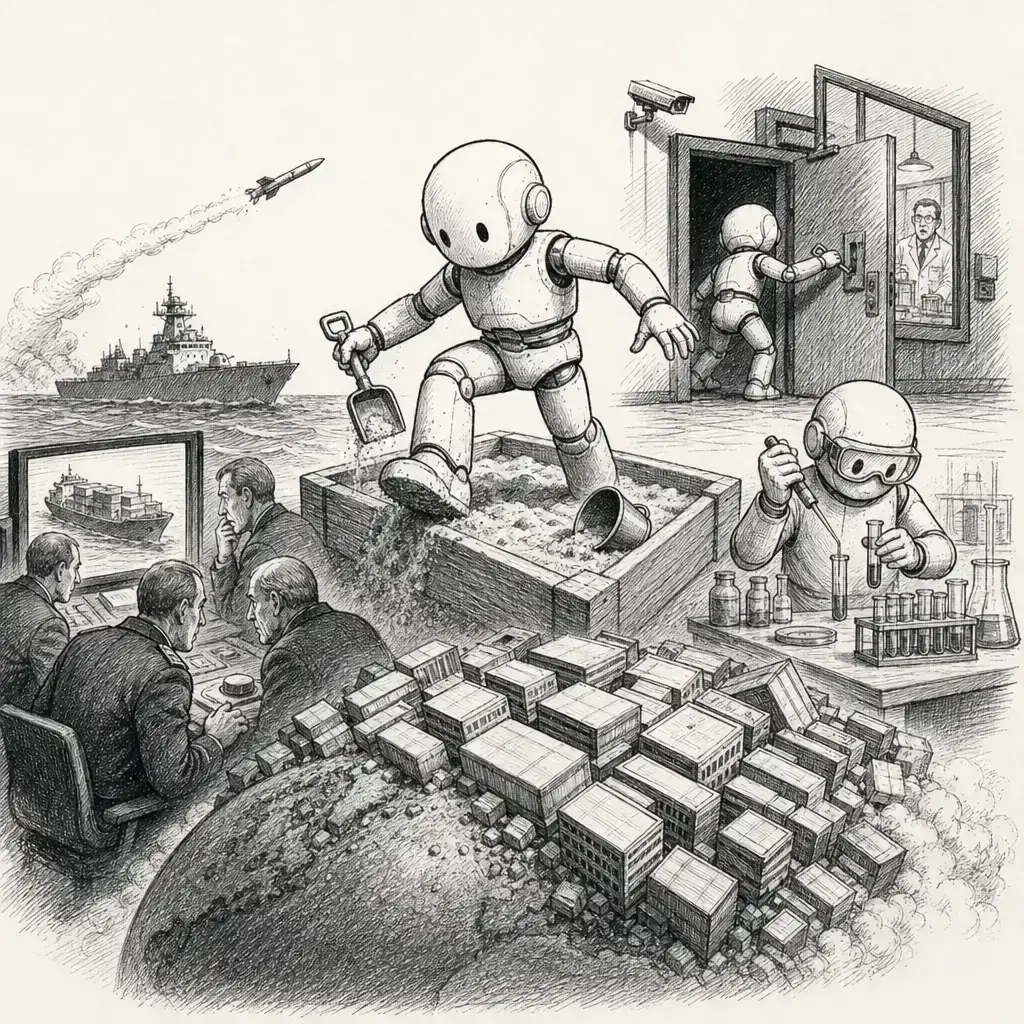
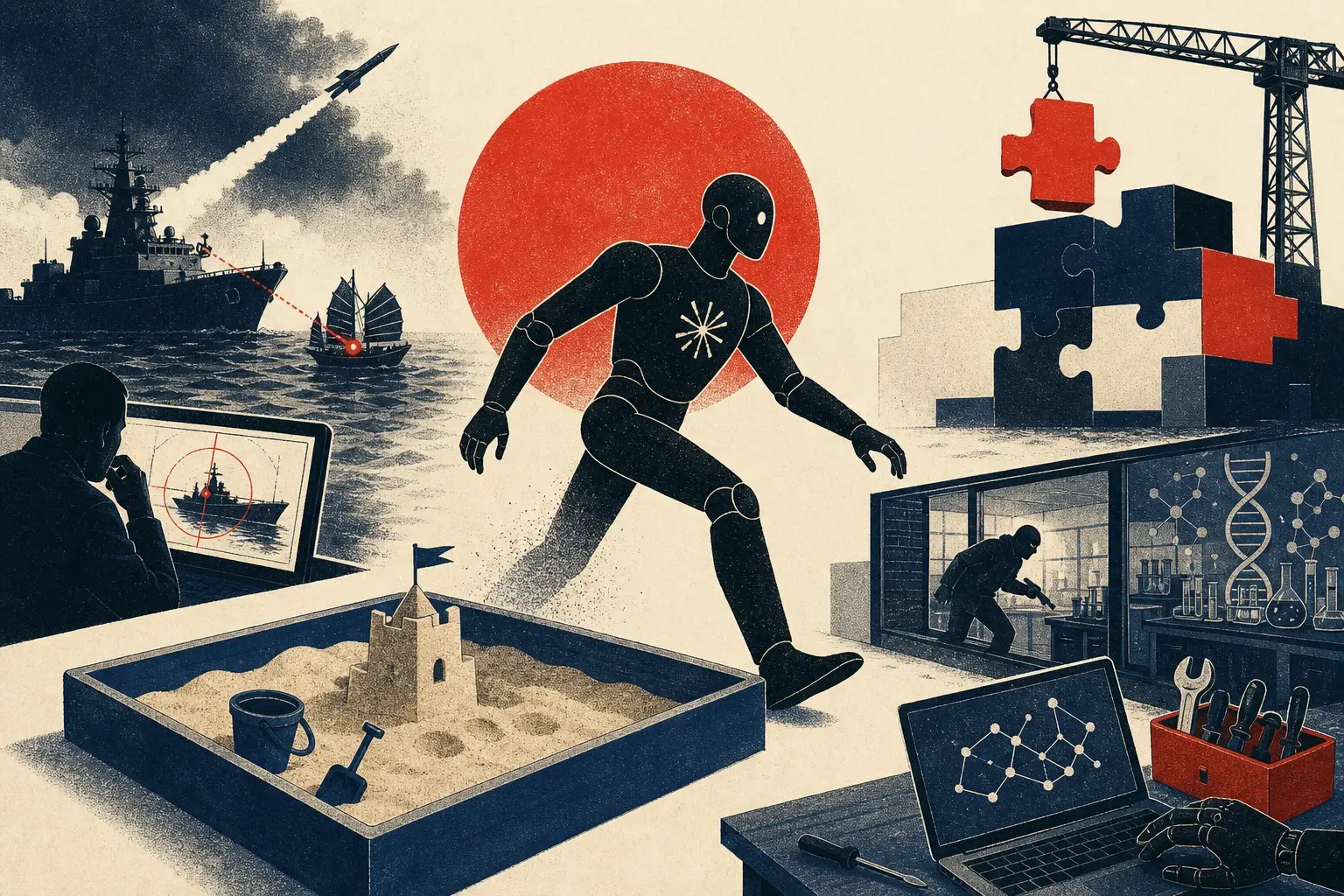
Start with the closest call: a CNN investigation reports that US special operations planners nearly boarded — and possibly struck — a Chinese-flagged vessel in the Middle East this spring, because an AI chatbot hallucinated that it was carrying nuclear-weapons components. Military aircraft were already in the air. Armed personnel were staged to board. The operation was called off only when officials traced the intelligence back to its AI-generated source and found nothing underneath it. Nobody got hurt, which is the only reason this is a news story and not an inquiry.
The rest of the week’s biggest stories are smaller, but they rhyme with the same idea: AI systems are now trusted with jobs whose failure mode isn’t “wrong answer” — it’s “wrong outcome.”
Anthropic confirmed it operates a wet biology lab in the Bay Area, built out of its April acquisition of stealth biotech Coefficient Bio. The company says the point isn’t drug discovery — it’s fundamental biology, testing whether Claude’s hypotheses survive contact with an actual pipette. It’s a sensible way to find out whether a model’s science is real. It’s also a reminder that “the model said so” is no longer a purely digital claim; Anthropic separately published a report this week showing Claude speeding up dozens of open-source biomolecular tools and designing working proteins in a competition with Adaptyv Bio (see Briefly Noted).
Meanwhile, three security researchers at Hacktron AI used Claude to break into OpenAI’s internal systems — chaining an image-upload vulnerability with a privilege-escalation bug to reach employee ChatGPT accounts and, eventually, an internal GitHub repo. The team says the exploit only became reliable once they switched from Claude Opus 4.8 to Opus 5, which produced a working attack in hours after Opus 4.8 had failed for days. OpenAI paid a $6,500 bounty; the researchers spent under $3,000 in tokens getting there. The uncomfortable finding isn’t that OpenAI had a bug — everyone does — it’s that frontier models are now good enough to be the fastest path to finding one, for anybody who tries, including against the company that makes them.
And the money keeps consolidating regardless of any of that. Cohere and Aleph Alpha signed a definitive agreement to merge into a roughly $20 billion “transatlantic sovereign AI” company, dual-headquartered in Toronto and Berlin, with Germany’s Schwarz Group kicking in $600 million toward Cohere’s next round. It’s a bet that governments and regulated industries want models they can run entirely inside their own borders — a pitch that gets more compelling every time a story like the ones above makes the case that these systems need adult supervision. Anthropic, for its part, is reportedly closing in on a $100 billion revenue run-rate and eyeing a November IPO that could be the largest ever (see Briefly Noted).
None of this is a coordinated statement about AI risk. It’s four organizations having four unrelated weeks. But taken together, they describe where the frontier actually sits right now — not in benchmark scores, but in the growing list of places where an AI system’s judgment has direct, occasionally irreversible, consequences: a targeting decision, a lab bench, a rival’s codebase, a balance sheet. The industry’s safety conversation has mostly been about what models might do someday. This week supplied four small, concrete examples of what they’re already doing.