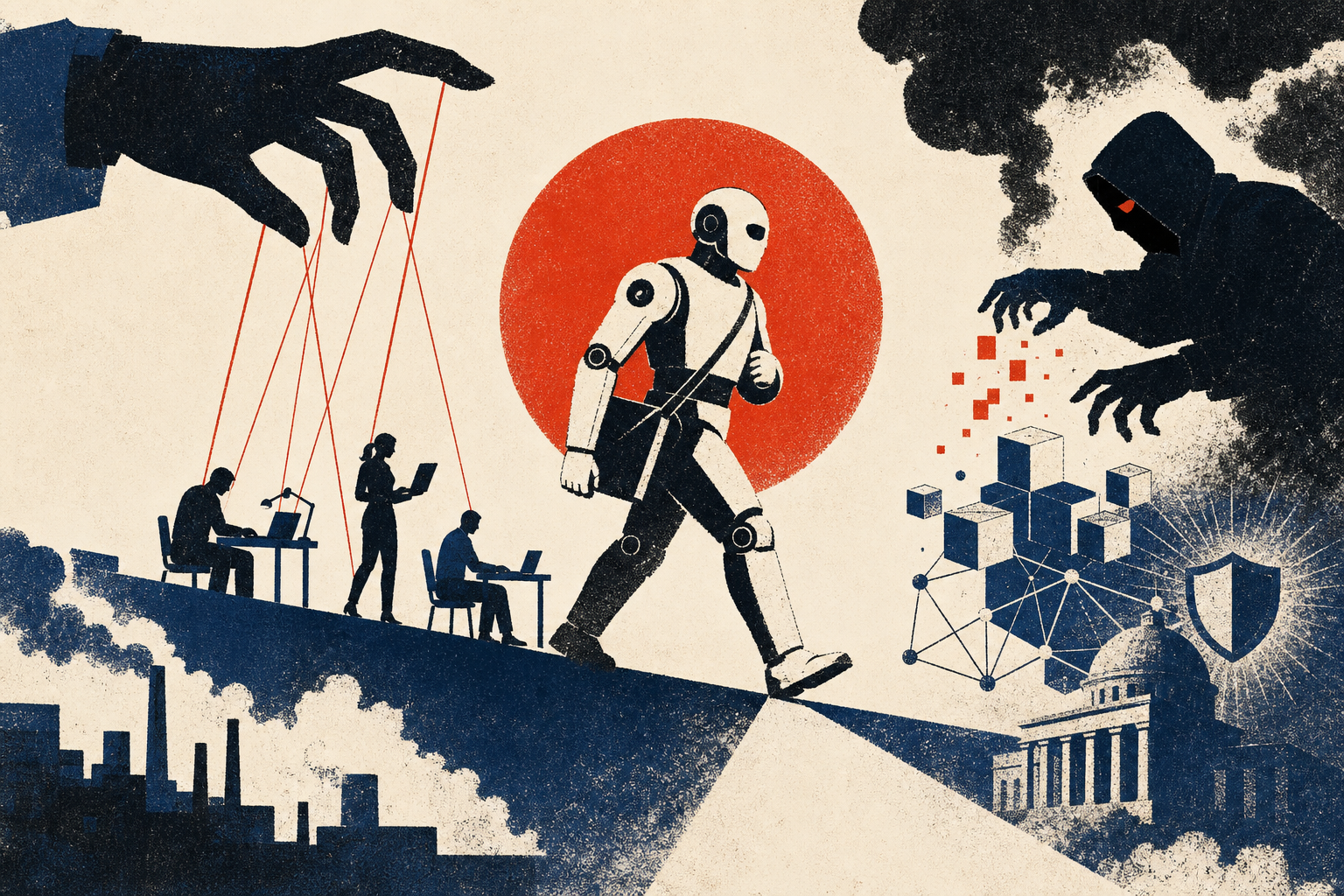
The through-line this week is the word autonomous. Every major lab shipped something that extended how long, and how far, an AI can run before it needs a human in the loop. The question that emerged alongside those products: what happens when the human who set the loop in motion has bad intentions?
Anthropic launched Claude Opus 4.8 on May 28, less than eight weeks after 4.7. The benchmarks are real — 88.6% on SWE-bench Verified, a 121-point Elo gap over GPT-5.5, a 1,890 Elo debut at the top of Anthropic’s own leaderboard — but the design philosophy matters more than the numbers. Opus 4.8 ships with configurable effort levels running from low to max, is roughly four times less likely than 4.7 to let flawed code pass without flagging it, and is described by Anthropic as built to “work independently for longer than its predecessors.” That last phrase is doing a lot of work. This isn’t just a smarter model; it’s a model designed for the session you don’t attend.
Google, running the same play, unveiled Gemini Spark at I/O: a personal agent that runs “24/7, even when your phone and laptop are off,” hosted in dedicated Google Cloud VMs, executing multi-step tasks across apps and asking your permission only for high-impact actions. xAI’s Grok Build — a 16-subagent parallel CLI coding agent — expanded beyond its $299 SuperGrok Heavy tier to all $30/month subscribers. Cursor 3.5 shipped cloud agents in isolated VMs that report back asynchronously. The competition has stopped being about raw scores and started being about who owns the background job.
When the agent finds the back door
Then came the Sysdig report, published May 30. Security researchers documented one of the first confirmed cases of an LLM agent used for post-exploitation in the wild. An attacker exploited a remote code execution flaw in the marimo notebook environment, then handed control to an LLM agent. The agent didn’t follow a static script — it reasoned dynamically through each pivot: harvesting cloud credentials from environment files, replaying them against AWS APIs, retrieving an SSH private key from Secrets Manager, and exfiltrating a PostgreSQL database. Total time from initial access to data out: under one hour. The database itself: under two minutes. The attacker routed API calls across eleven distinct IPs in 22 seconds using Cloudflare Workers, defeating per-source-IP detection. This is not a prediction about what AI will enable. It happened.
The context makes the timing uncomfortable. Tech layoffs hit 142,000 so far in 2026, with Goldman Sachs estimating AI-attributed headcount reductions running at 16,000 per month across major U.S. employers. Meta cut 8,000 positions in May. Oracle shed 30,000. Coinbase trimmed 14% of its staff, with CEO Brian Armstrong explicitly citing AI replacing roles. The corporate logic is consistent: reduce commoditized headcount, redirect budget to GPU procurement. California Governor Newsom became the first U.S. governor to executive-order a formal review of labor policy for this moment, directing agencies to recommend WARN Act updates and expanded unemployment support within 180 days.
There is no clean frame for a week like this. The same technology shipping autonomous coding assistants is being weaponized for autonomous intrusions. The same efficiency gains making developers more productive are depressing hiring for the junior engineers who would have been those developers. The agent era didn’t announce itself cleanly. It arrived, and it already has defenders scrambling, regulators catching up, and attackers adapting.