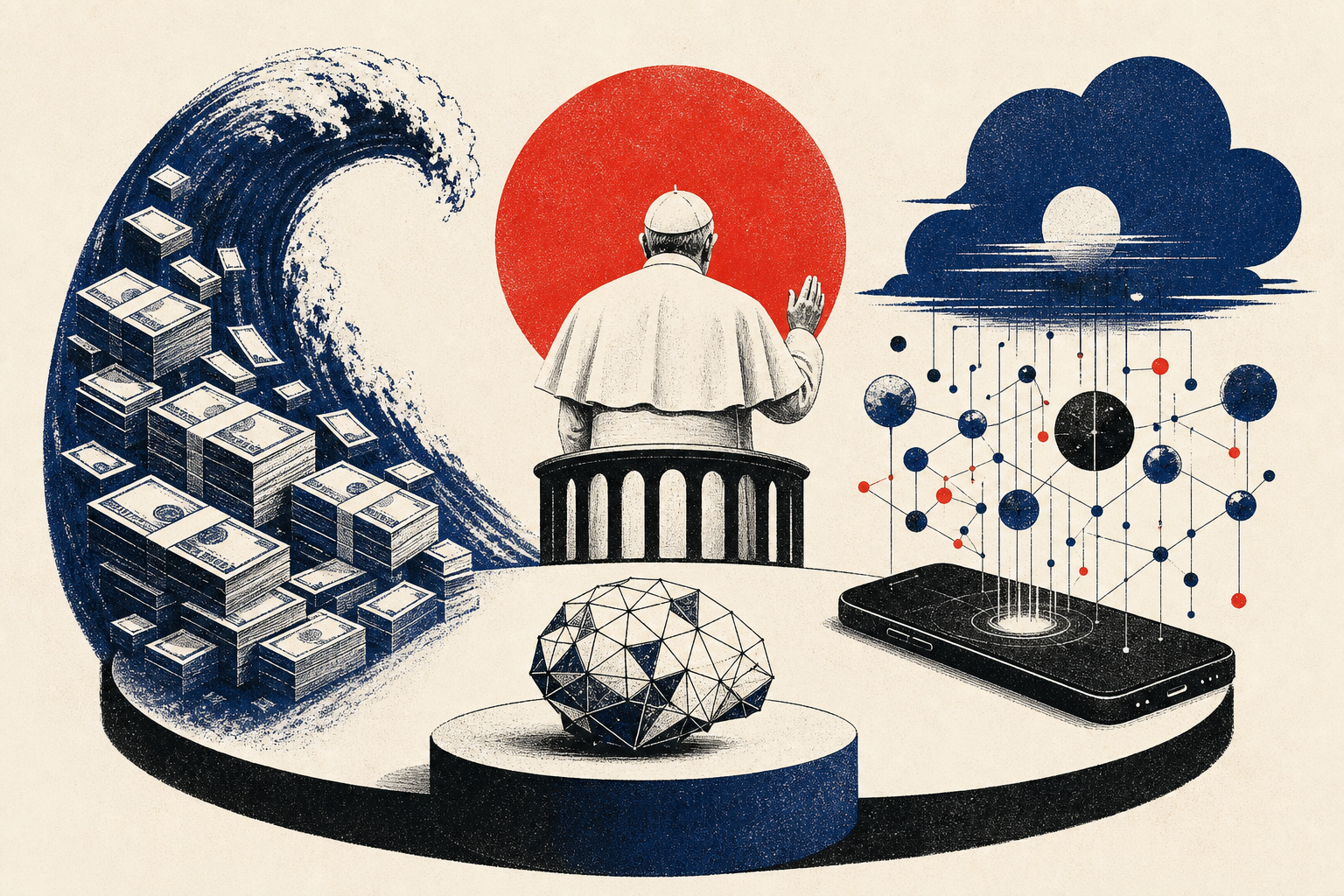
The numbers coming out of the AI industry this week have a certain quality to them — the kind where you read them twice to make sure you haven’t misplaced a zero.
Anthropic is set to close a $30 billion fundraising round as early as this week, at a valuation above $900 billion. That would make it, for the first time, the world’s most valuable private AI company — past OpenAI’s $852 billion valuation from March. For context on how fast things are moving: Anthropic was valued at $380 billion in February. The company is projecting $10.9 billion in Q2 revenue, up 130% from $4.8 billion in Q1.
OpenAI, meanwhile, filed a confidential S-1 with the SEC on May 22, targeting a Q4 2026 public listing with Goldman Sachs and Morgan Stanley leading. The company reports $25 billion in annual revenue and a projected $14 billion operating loss for 2026 — a figure that captures, more precisely than any think-piece, what running at the frontier actually costs.
On the compute side: SpaceX’s own IPO filing, released this week almost as a footnote, disclosed that Anthropic is paying SpaceX $1.25 billion per month to rent capacity at xAI’s Colossus data center in Memphis — 220,000 GPUs, over 300 megawatts, through May 2029, for a total of roughly $45 billion. AI’s capital intensity has always been clear in the abstract. The SpaceX filing makes it concrete in a way that abstractions never quite do.
Agents stop waiting
While the financial tables commanded attention, the week’s most substantive product move may have been Google’s rollout of Gemini Spark, announced at I/O last week and now entering beta for US Google AI Ultra subscribers. Spark is a 24/7 personal AI agent — the key detail being that “24/7” is literal. It runs on dedicated cloud infrastructure even when your phone is locked and your laptop is closed. Give it a task, walk away, and it executes. Consent is required only before high-impact actions like sending money or email.
This is a meaningful shift in the default interaction model. Every major AI product to this point has been reactive: it waits for you to open an app and type. Spark changes that. Mistral’s Work Mode for Le Chat, which shipped earlier this month, does the same thing across calendar, Jira, and Slack. The reactive model is starting to look like a transitional phase — something we’ll describe to people in five years the way we describe manually refreshing a webpage for updates.
Institutions catch up
Then there was May 25. Pope Leo XIV released Magnifica Humanitas — the first papal encyclical on artificial intelligence, on “safeguarding the human person in the time of AI” — alongside Anthropic co-founder Christopher Olah, who sat among cardinals and theologians in a packed Vatican auditorium and said, plainly, that even Anthropic operates inside incentive structures that can conflict with doing the right thing. It is a strange image to sit with: one of the people who built the systems being warned about in the document, invited to validate the warning. But strange doesn’t mean wrong.
The EU finalized amendments to its AI Act this month, extending the high-risk compliance deadline by 16 months to December 2027. The Trump administration pulled back from signing an AI executive order it had been preparing, citing competitive concerns. Governance is moving, just not in a straight line, and not fast enough to keep up with the valuations.
What this week looked like in aggregate: two of the world’s most powerful AI companies making simultaneous bids for permanence — one through public markets, one through a fundraise that exceeds the GDP of most countries — while very old institutions tried to find the right words for something very new. And the agents, quietly, started working while we were distracted.