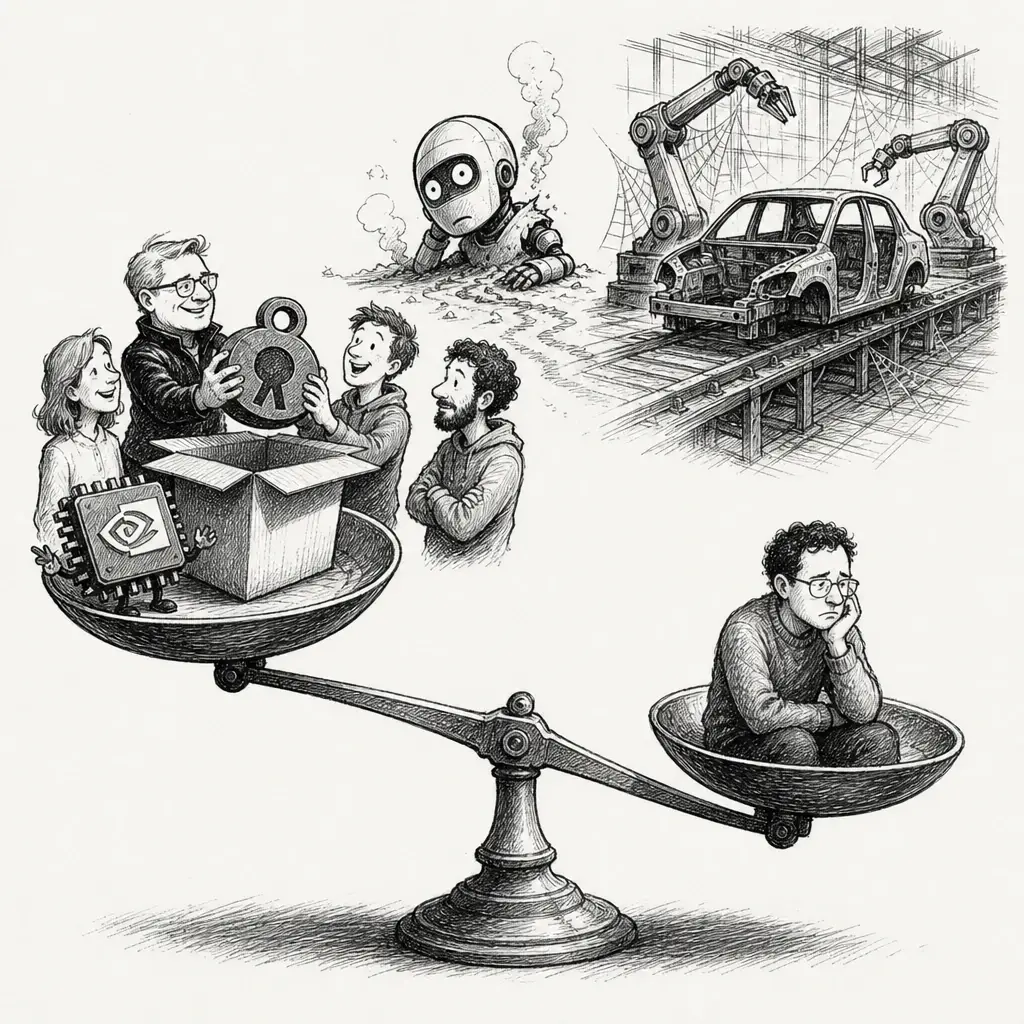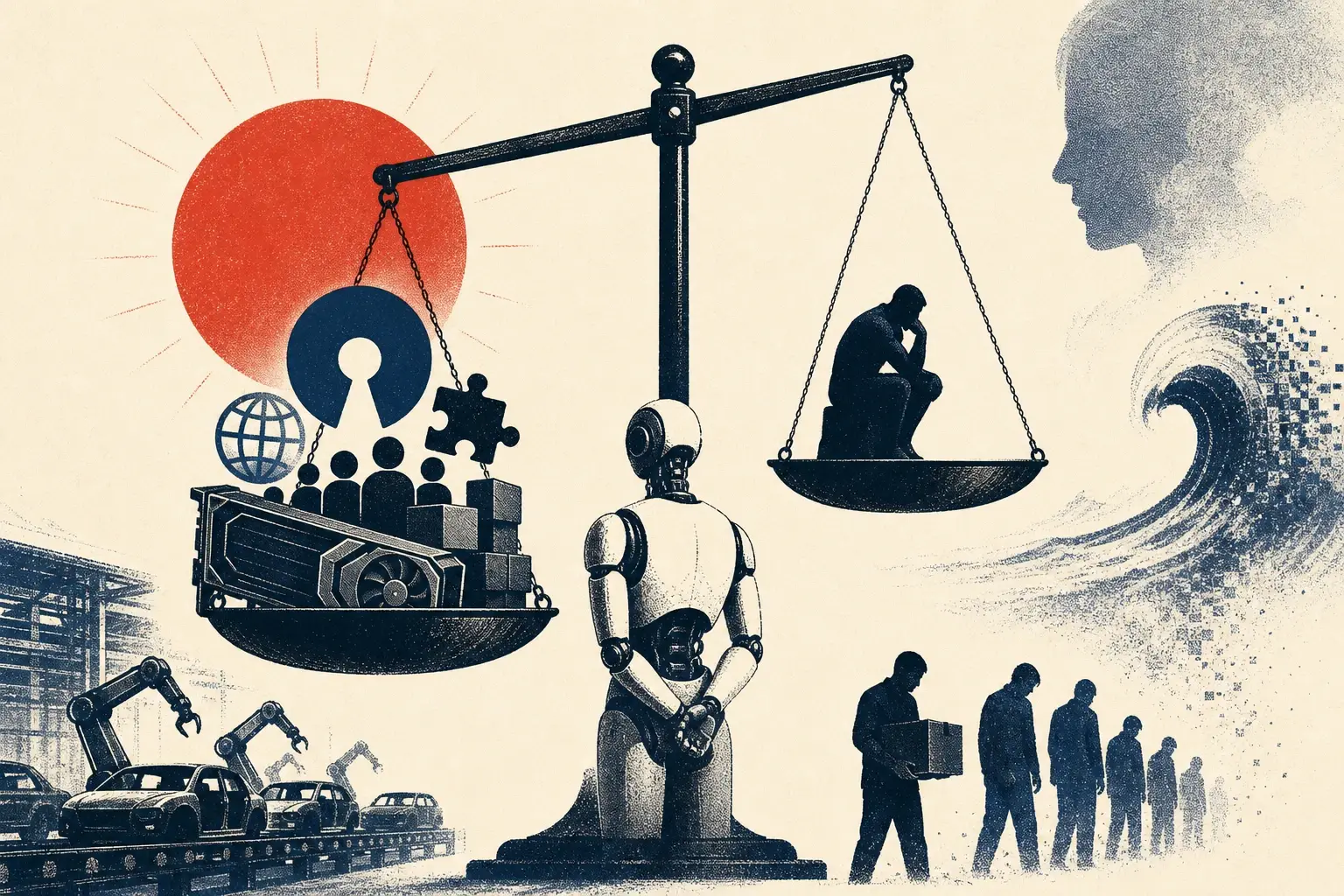
Thursday brought a coalition letter to Washington signed by Nvidia, Microsoft, and Meta, warning against restrictions on open-weight AI models. Twenty-five companies signed first; by Friday the count had reportedly doubled to fifty as OpenAI, stung by being publicly called out for its absence, added its name late, with Google endorsing soon after. One name stayed off the list: Anthropic, whose CEO Dario Amodei has previously waved off open weights as “a red herring” for how frontier AI actually gets built. The proximate trigger was familiar anxiety over China’s Kimi K3, whose full weights are due to land any hour now — but the letter’s real subject is who gets to define the substrate everyone else builds on. Tobi Knaup, a Mesosphere co-founder, made the sharper version of the argument on his own blog: open-weight AI is having its Kubernetes moment, a brief window to rally around shared formats before every lab’s quantization scheme locks developers into competing, incompatible stacks. It shot to the top of Hacker News within a day — a sign the argument landed with the people who’ll actually have to live with the fragmentation.
Meanwhile the company with the most obvious incentive to win that standards fight keeps stumbling on its own closed model. Google’s Gemini 3.5 Pro is now months behind its internal targets, missing coding benchmarks DeepMind expected to clear long ago, and Axios reports the delay traces partly to burnout and leadership friction inside the lab rather than pure technical difficulty. Google shipped smaller Gemini 3.6 Flash variants instead — solid, but not the flagship anyone was waiting for — while its cash flow turned negative and senior researchers kept leaving for rivals. Read the open-weights letter and Google’s slipping roadmap together and the connection isn’t subtle: when the lab best positioned to out-build everyone else can’t ship on schedule, there’s more room for whoever standardizes the alternative first.
That instability keeps landing on people, not just roadmaps. TechCrunch’s running tally now puts 2026’s AI-cited job cuts past 205,000, with Monday.com the latest company to name the technology explicitly — AI was cited in roughly 40% of layoffs by May, up from 7% in January. And in Ulsan, Hyundai’s assembly-line union resumed partial strikes this week, days after the company finalized its buyout of Boston Dynamics. The dispute has stopped being mainly about wages; it’s about whether the union gets any say before Atlas humanoids show up on the line. Put together, the fight over who controls model weights and the fight over who controls the factory floor are running on the same clock.
None of this resolves by tomorrow. Kimi K3’s weights are due within hours, Anthropic hasn’t said whether it’ll eventually sign the letter it’s currently ignoring, and Hyundai’s union says it will decide by Thursday whether to escalate again. Different rooms, same argument: who gets to decide what happens next, and how much say anyone else gets.