The day’s stories keep circling the same question: who’s actually in charge here, and for how long?
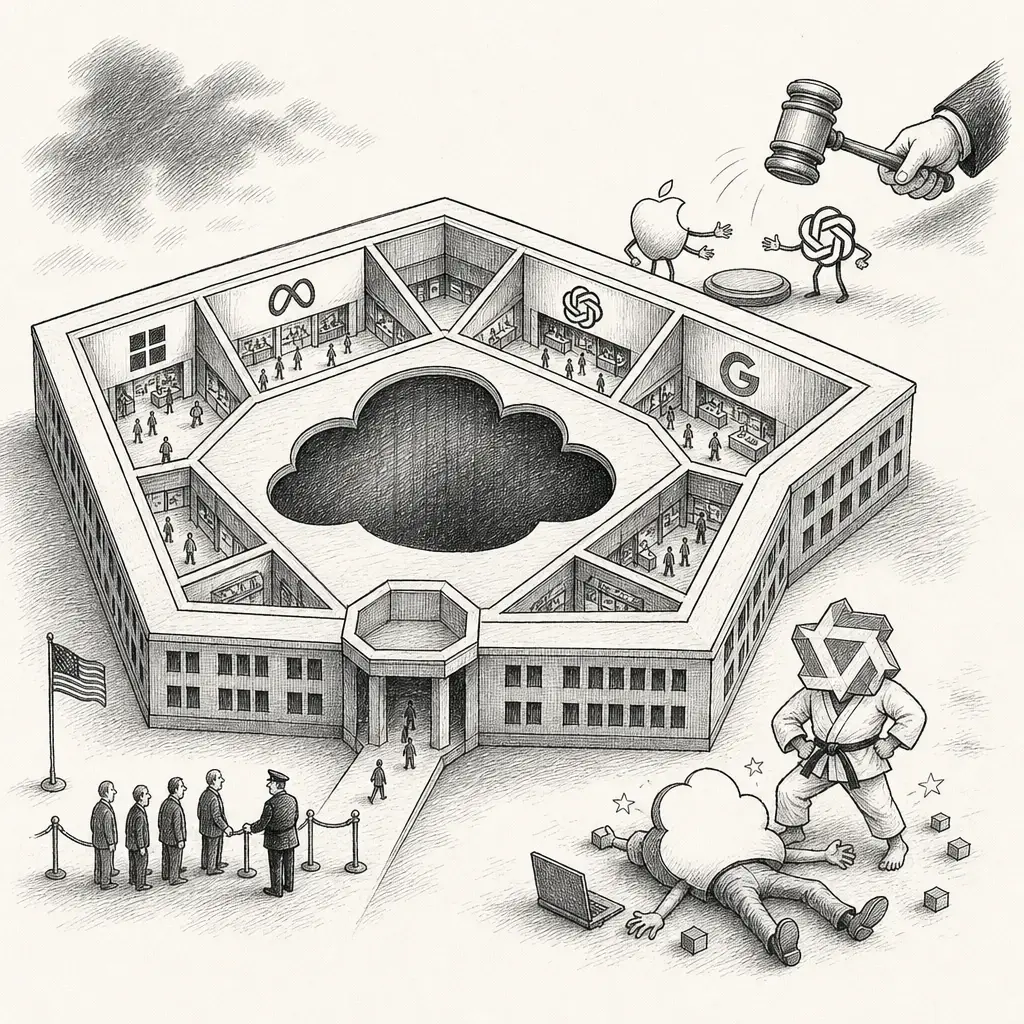
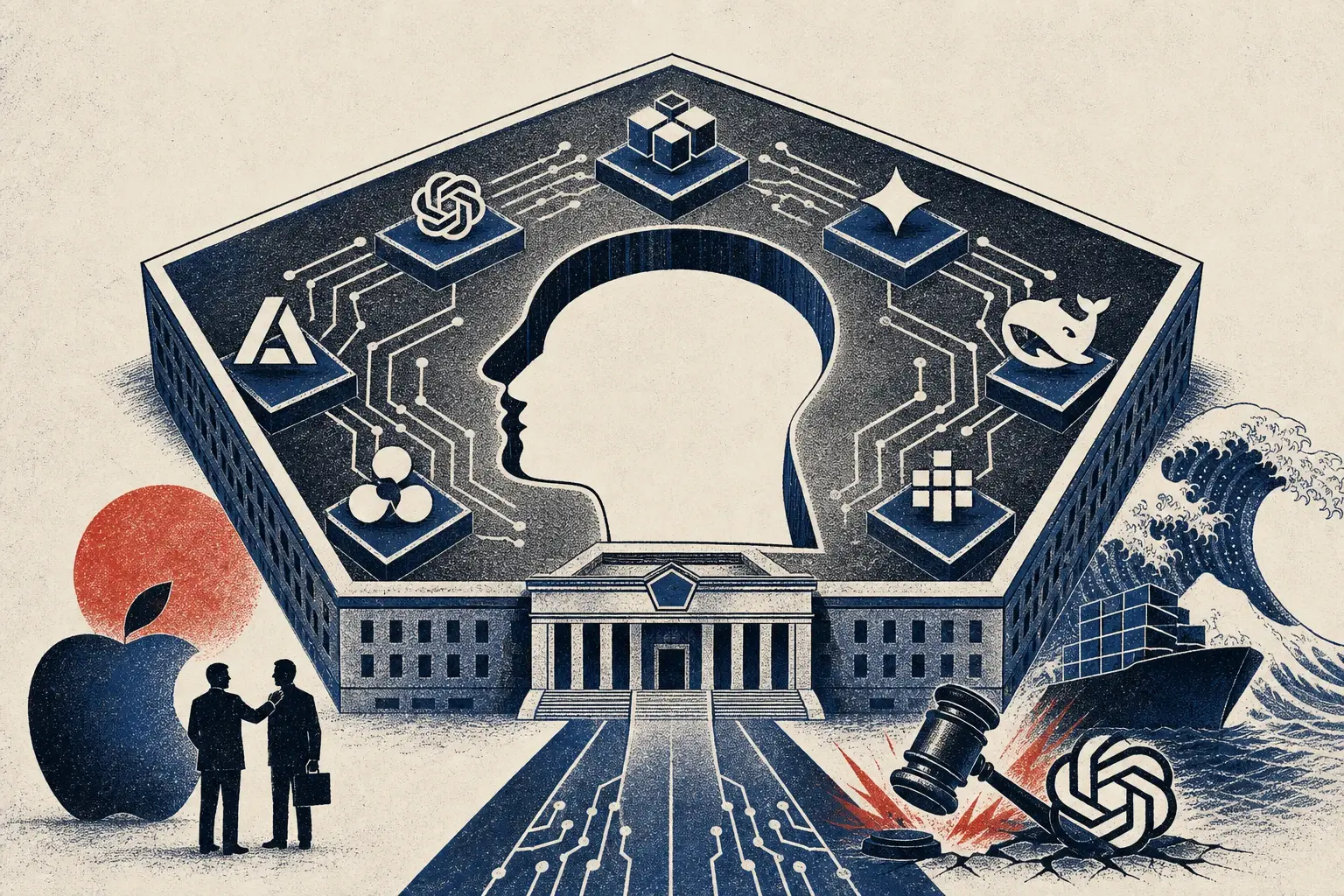
Start with the Department of Defense, which this week opened GenAI.mil — a menu of frontier chatbots for its 3 million employees, now stocked with OpenAI’s ChatGPT Mil and xAI/Starshield’s Grok for Government alongside Google’s Gemini, with 1.7 million users already logged in. Missing from the shelf: Claude. That’s not an oversight. The Pentagon is reportedly still working to purge Anthropic’s models from its systems by September 30, a target that survives even after a federal judge ruled last week that Defense Secretary Pete Hegseth’s “supply chain risk” label on Anthropic was unlawful First Amendment retaliation. Anthropic won the legal fight and is still losing the contract — a distinction that matters more to shareholders than to soldiers, and a reminder that a court order and a procurement decision are two very different levers.
Apple changed hands today in a far more orderly fashion: Tim Cook’s 15-year run as CEO officially ended, and John Ternus — Apple’s hardware chief since 2021 — took over, inheriting a leadership bench that hasn’t turned over in years and an AI strategy that still trails the field. Cook stays on as executive chairman. It’s the calm version of a power transfer; the messier one is playing out in a California courtroom, where Apple now accuses OpenAI of destroying evidence in its trade-secrets suit over former engineer Chang Liu, who allegedly kept a confidential circuit schematic after leaving for OpenAI in January. Apple’s lawyers say a company-issued MacBook shows Liu asking a colleague to delete files, and that OpenAI sat on the laptop for months before handing it over. OpenAI maintains it followed standard recruiting practice and denies wrongdoing.
Meanwhile the ground is shifting under the model leaderboard itself. Alibaba released Qwen3.8-Flash-Next, an open-weight preview of the architecture behind the coming Qwen4 — 125 billion parameters with only 6 billion active per token — and it’s already beating Claude Opus 4.6 on SWE-bench Pro, 62.5 to 53.4. Alibaba is running the same playbook it used before Qwen3.5: ship the architecture early, let developers stress-test it in public, then build the full model family on what they learn. If the pattern holds, Qwen4 proper won’t be far behind, and it’ll arrive with a head start on adoption that money alone doesn’t buy.
None of this is slowing the money, for what it’s worth. Anthropic signed yet another compute deal — this one worth $45 billion over six years with the UK’s Nscale, buying roughly 460 megawatts of Nvidia’s next-generation Vera Rubin chips out of a West Virginia data center. It’s one of several major infrastructure agreements Anthropic has struck this year, alongside AMD, SpaceX, Google, and Broadcom. The capacity won’t come online until late 2027, which tells you how far ahead these labs are now planning — and how confident they are that today’s fights over labels, lawsuits, and leaderboards are just noise along the way to a much bigger bet.