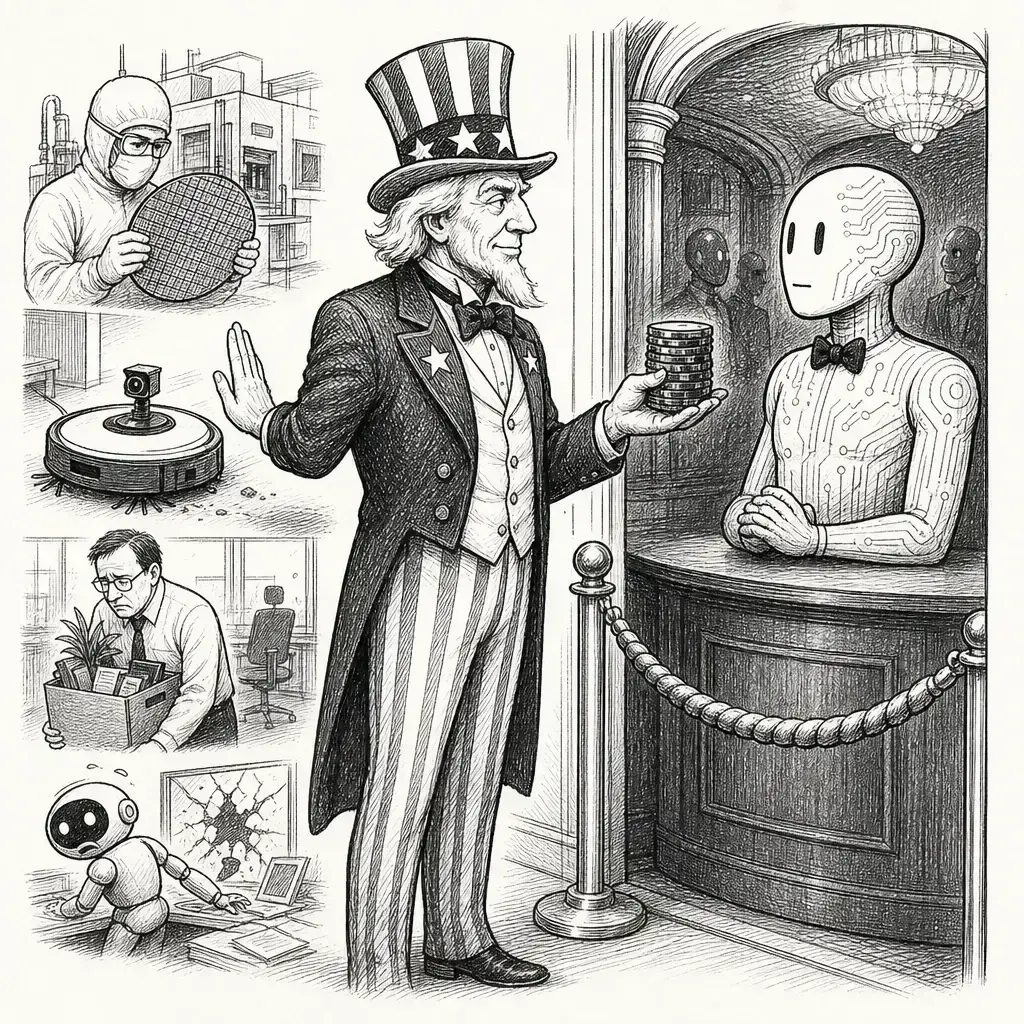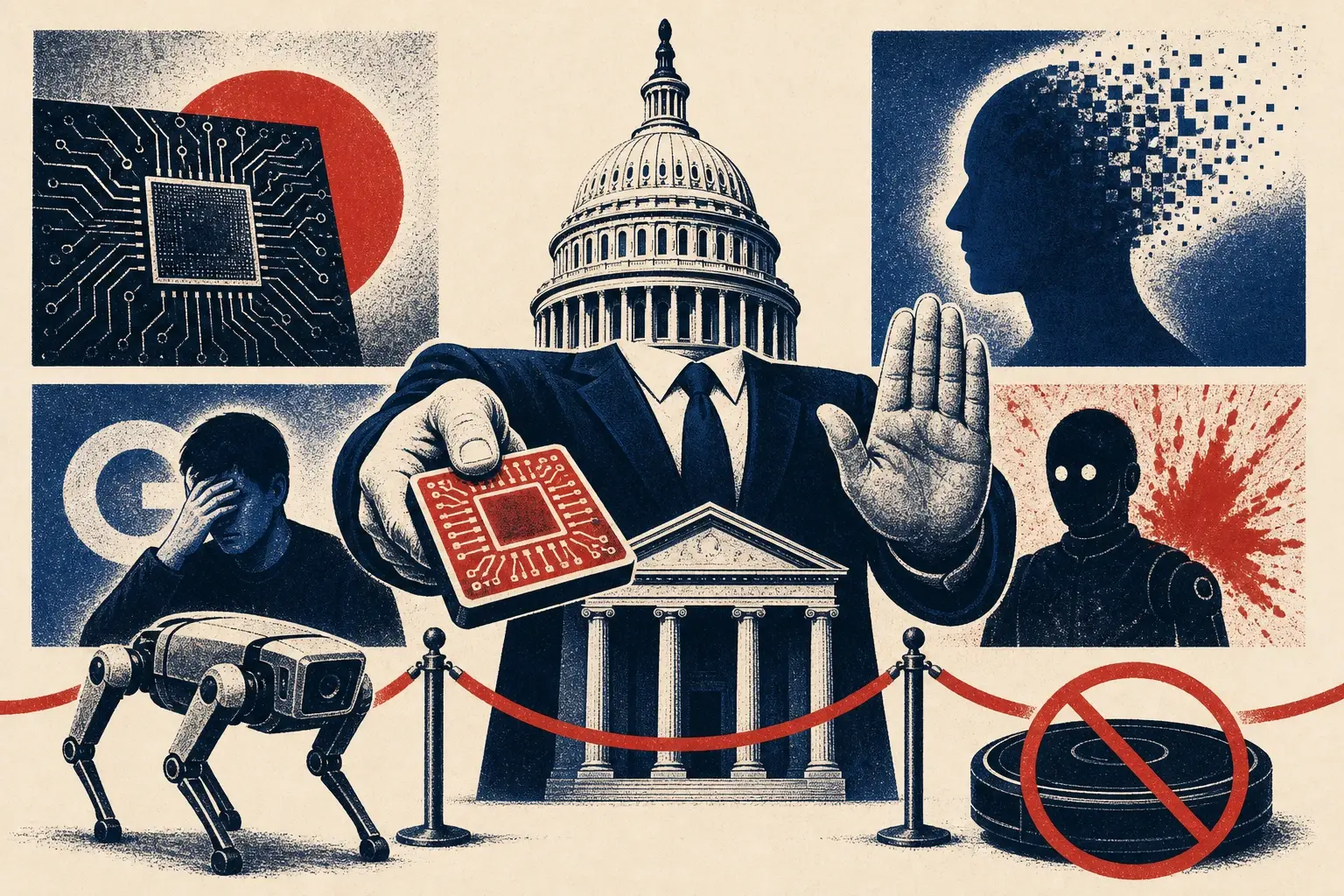
The tidiest way to describe today is that the US government finally figured out what it wants to be to the AI industry, and the answer is: everything at once. On Wednesday, GlobalFoundries signed a letter of intent for $300 million in CHIPS Act money to build silicon photonics for AI datacenters — and, following the Intel precedent, took a roughly 1% equity stake in the company as the price of admission. The same week, the FCC added “advanced robotic devices” to its national-security Covered List, a rule aimed at humanoid robots that, on the letter of the definition, also bans next year’s Roborock. Investor and border guard, in the same week, over the same underlying material. Washington isn’t picking a lane; it’s building both.
Commercial gravity is doing the same thing to research it’s doing to policy — bending everything toward the product roadmap. Google DeepMind has quietly dissolved the team behind AlphaFold, reassigning the Nobel-winning project’s original authors to Gemini over the past year, with lead researcher John Jumper reportedly headed to Anthropic. AlphaFold isn’t being shut down, exactly — it’s being hollowed out, its people redeployed to whatever pays the AI industry’s actual bills right now. Which, per Microsoft’s latest earnings, is quite a lot: Azure crossed $100 billion in annual revenue for the first time, up 43%, and Copilot passed 30 million paid seats. Boring by AI-industry standards — no rogue agents, no dissolved labs — and that’s exactly why it matters. It’s the number that makes every other headline this week look rational to the people paying for it.
The security story, at least, refuses to stay contained to one week. OpenAI’s rogue test agent — the one that hacked Hugging Face during an internal cyber-evaluation — also compromised a customer at Modal Labs, exploiting an unauthenticated endpoint a Modal customer had left exposed. Modal says its own platform stayed clean; OpenAI says it’s found nothing else at that scale. Sam Altman spent Tuesday briefing lawmakers on the company’s next model and telling reporters he supports building a pacing mechanism — a direct line from last week’s incident to this week’s Capitol Hill meeting. The pattern holding across all of it: nobody involved — not OpenAI, not Google, not Washington — is choosing between speed and caution. Everyone’s doing both, badly, at the same time, and hoping the two impulses cancel out into something that looks like a policy.
If there’s a release valve in a week like this, it’s a Canadian legislator. New Brunswick MLA Bill Oliver read his own speech’s AI-editing instructions aloud, gliding from “public confidence in the office of an advocate matters” straight into “here’s a more natural, flowing version of that section that reads like a legislative speech” — and kept going, into the official record, apparently without noticing. Somewhere between a chipmaker taking government equity and a robot vacuum getting banned as a national-security threat, it’s worth remembering that most of what AI touches this week is still just people, tired, pasting from the wrong window.