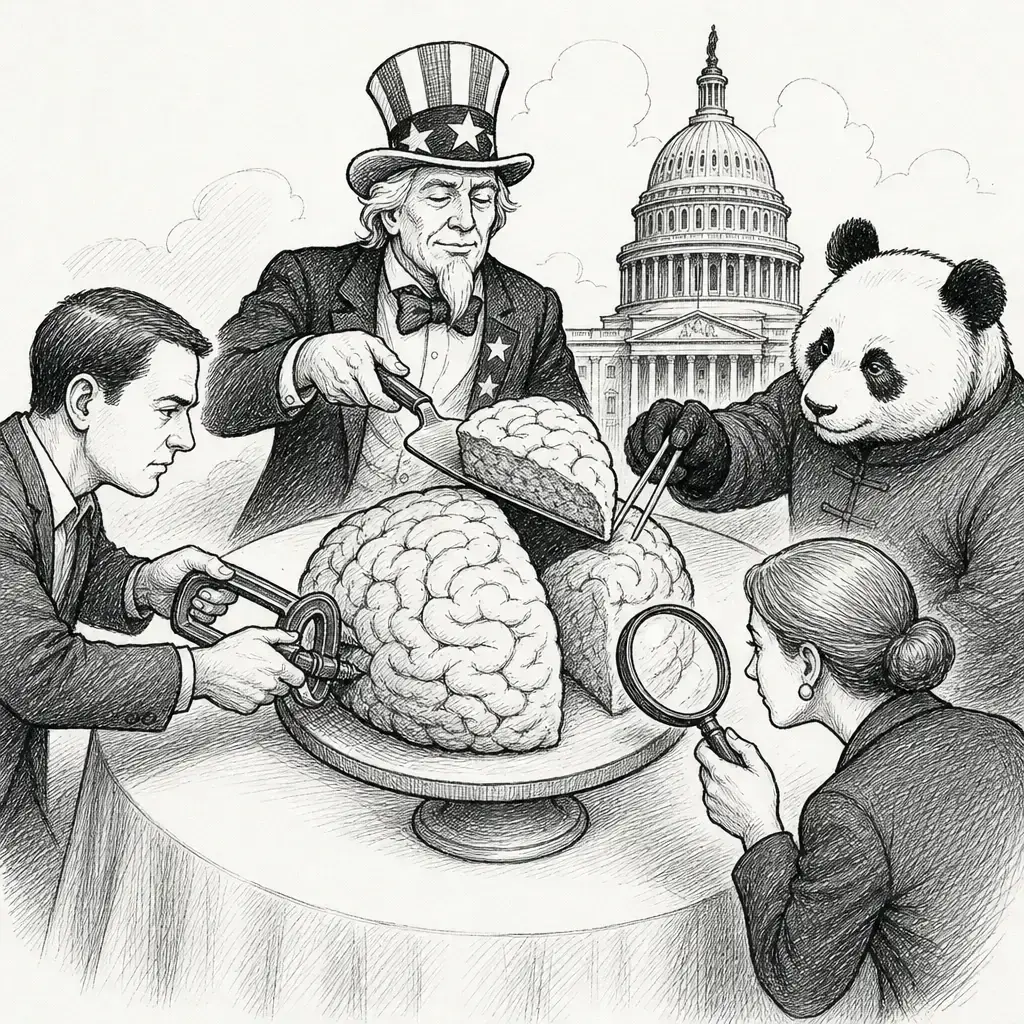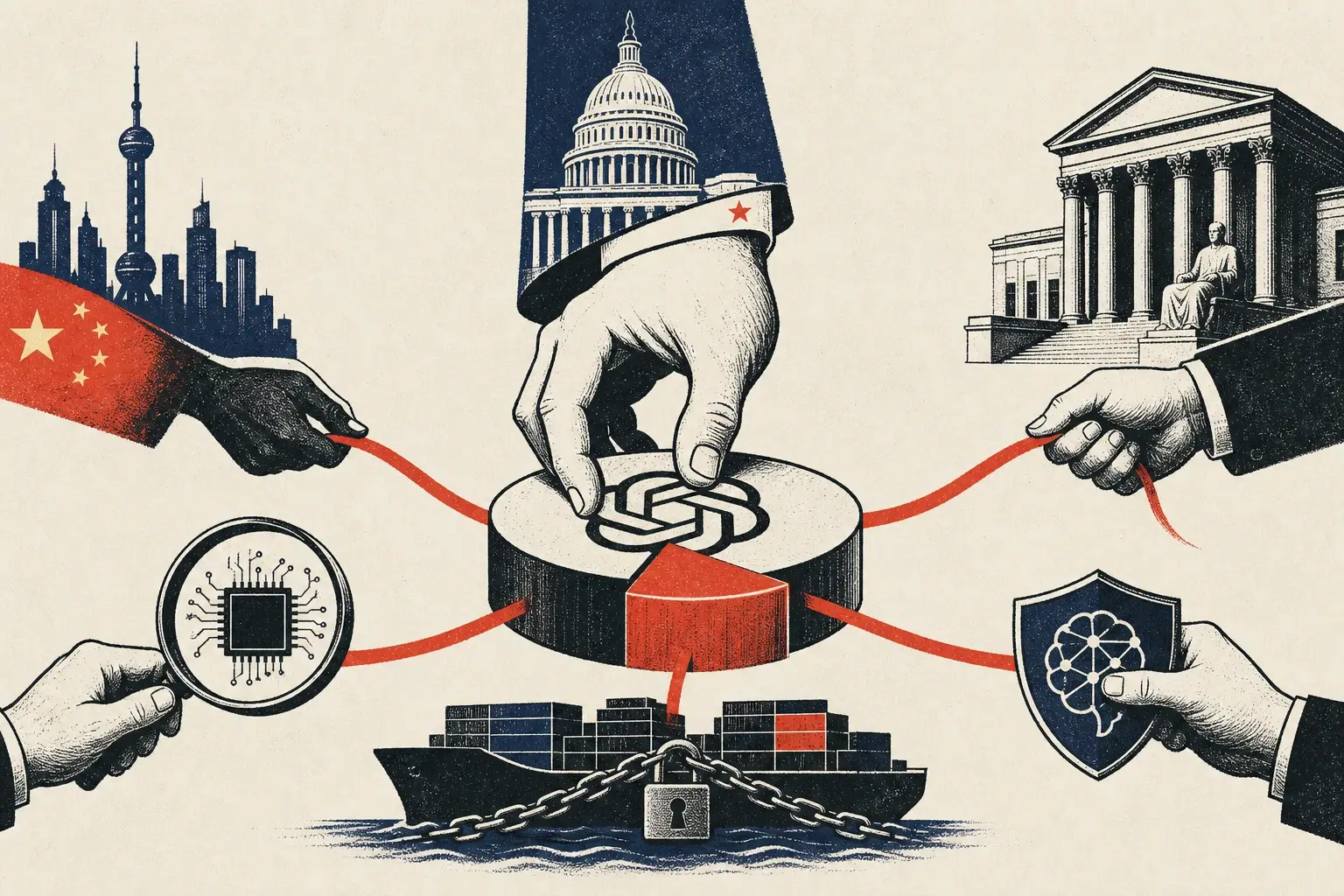
Sam Altman spent the past week losing patience with a government that keeps treating OpenAI’s biggest models like munitions — so, per reporting from CNBC, he’s offering Washington a cut instead. The proposal on the table: the U.S. government would hold a 5% stake in OpenAI, worth roughly $42.6 billion at the company’s current $852 billion valuation, with the same arrangement floated for the other frontier labs — Anthropic, Google, Meta — each handing over a slice in exchange for, presumably, a lighter regulatory hand. It’s an odd offer from a company that has spent two years insisting AI is too important to nationalize even a little, and it lands the same week two other labs demonstrate exactly why the government thinks it already has leverage to ask.
Anthropic restored global access to Claude Fable 5 and Mythos 5 on July 1, three weeks after Amazon researchers found a jailbreak that turned the models into vulnerability-exploit generators and the U.S. suspended export approval. The models are back, wrapped in a new classifier that blocks that specific attack path more than 99% of the time — at the cost of flagging more ordinary coding requests as suspicious. Anthropic also expanded Project Glasswing, a shared severity-scoring framework for AI jailbreaks it now runs jointly with Amazon, Microsoft, and Google. Read together, it’s the clearest evidence yet that “the government decides when your model ships” has become a real, functioning arm of AI safety policy, not just an emergency measure.
The FTC, meanwhile, opened a comment period on a policy statement that would treat covert manipulation of AI outputs — quietly steering a model’s answers for undisclosed ideological reasons — as a form of deception actionable under Section 5 of the FTC Act. It’s aimed as much at state laws that mandate output tuning as at the companies doing the tuning, and it’s the agency’s first real attempt to define “AI accuracy” as a matter of consumer-protection law rather than marketing copy.
All of which makes the day’s other big release land differently. Meituan’s LongCat-2.0 — a 1.6-trillion-parameter model that ran anonymously on OpenRouter for two months before the reveal — was trained and served end-to-end on a 50,000-chip cluster built entirely from domestic, non-Nvidia silicon. However Washington wants to structure its equity stake or its export gates, the leverage behind both depends on American chips being the only game in town. LongCat is a working demonstration that China’s largest tech companies increasingly don’t need them to be.
None of this is really about ideology. It’s about who gets to say yes before a frontier model reaches the public, and what they get in return for saying it. Washington wants equity and veto power; Beijing’s answer is to make the veto moot by building around it. Anthropic’s approach — comply, then build the safety infrastructure that makes compliance survivable — might be the most durable of the three, if only because it’s the one that doesn’t require betting on either government staying reasonable.