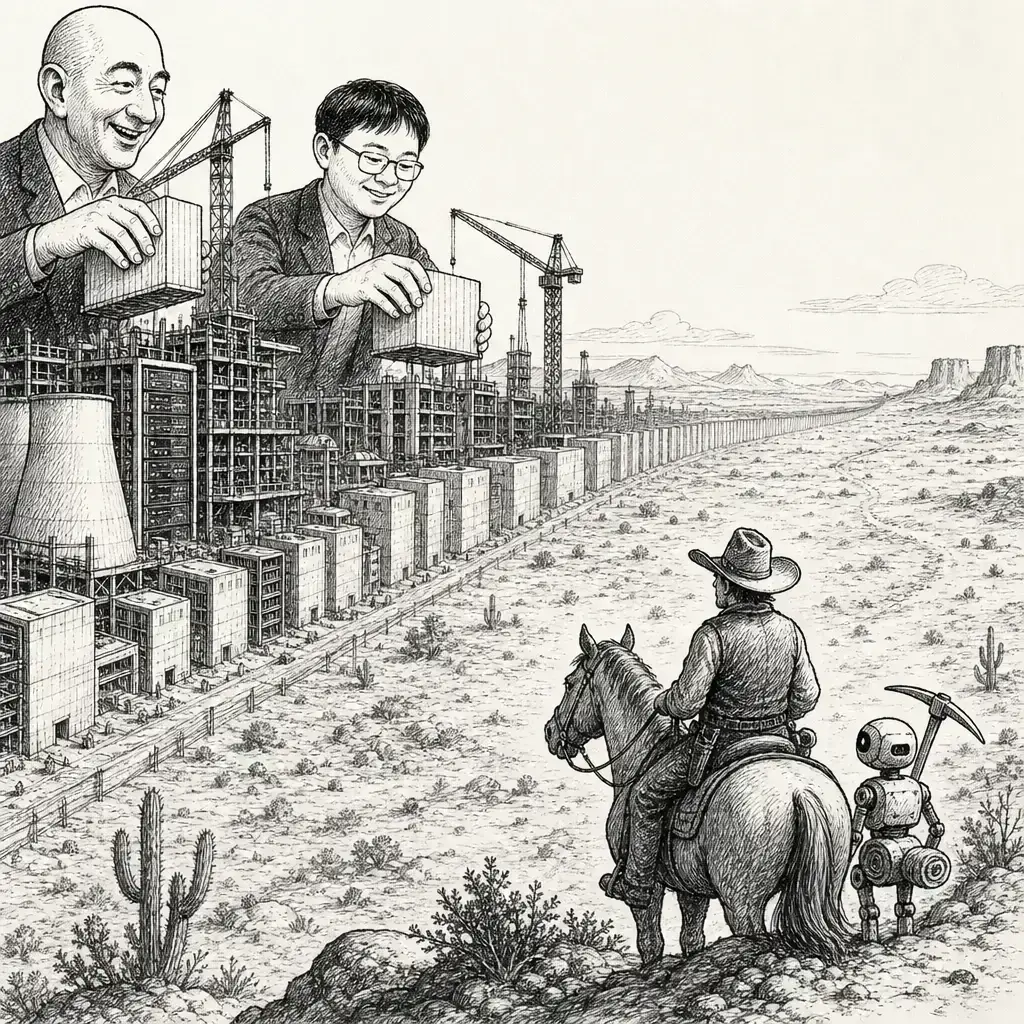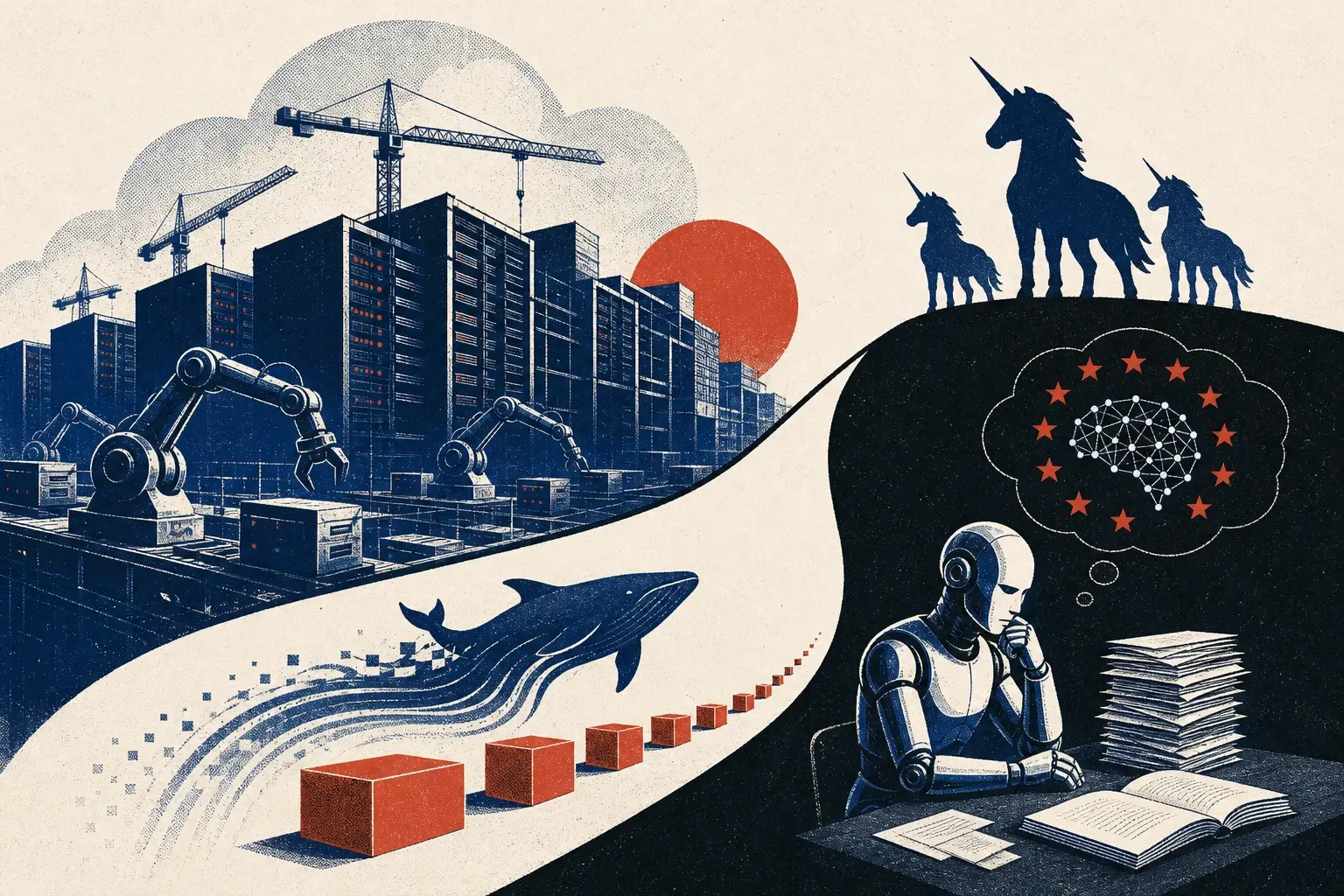
Two numbers from this week capture the split personality of the AI economy. Samsung and SK Hynix signed $950 billion in memory-chip supply deals with Nvidia, Broadcom, and other US buyers — a bet that demand for AI hardware keeps compounding for years. Days later, Amazon raised its 2026 infrastructure budget to $220 billion, warning that AWS still won’t have enough capacity to meet demand through 2027 even after the increase. This is what “there’s no ceiling” looks like in balance-sheet form.
Then DeepSeek shipped V4-Flash-0731, a retrained, MIT-licensed model that beats its own flagship on every agentic benchmark the company publishes — at roughly a third of the output price, unrestricted for commercial use. The contrast is the story: one half of the industry is pouring unprecedented capital into scarce compute, and the other half just proved that a well-executed post-training pass can make yesterday’s flagship obsolete for a fraction of the cost. Both things are true at once, and nobody involved seems bothered by the contradiction.
Governments spent the week trying to referee, from two directions. The FCC added foreign-made humanoid and quadruped robots to its national-security Covered List, blocking new import approvals for Chinese-built machines over supply-chain and surveillance concerns — a robotics-specific extension of chip-war logic, arriving just as humanoids move from demo stage to factory floor. Meanwhile Brussels starts enforcing the EU AI Act’s transparency rules on August 2: chatbots must disclose they’re bots, deepfakes need machine-readable marks, and fines run to €15 million or 3% of global revenue. Two governments, two different tools, the same underlying anxiety about systems nobody fully controls.
That anxiety gets a data point in a Stanford-led study that quietly punctures the industry’s self-image: more than half of AI “unicorns” — private companies worth over $1 billion — have never played a leading role in publishing a single peer-reviewed paper or preprint. Collectively they account for roughly one in every thousand AI papers published last year, and one company, OpenAI, generates something like 40% of the citations that do exist. For an industry that argues in the same breath that it’s reshaping science and that regulators should trust its internal safety testing, “we mostly don’t publish” is an awkward thing to have quantified.
None of this is slowing anything down. Sen. Tom Cotton is pushing to ban Chinese AI models from federal contractors in the same week that outside researchers finished reverse-engineering Kimi K3’s architecture line by line — itself a reminder that open weights, whatever their provenance, are at least legible in a way closed models and closed balance sheets are not. The capital keeps compounding, the frontier keeps getting cheaper to rent, and the actual evidence for any of it keeps getting harder to find.