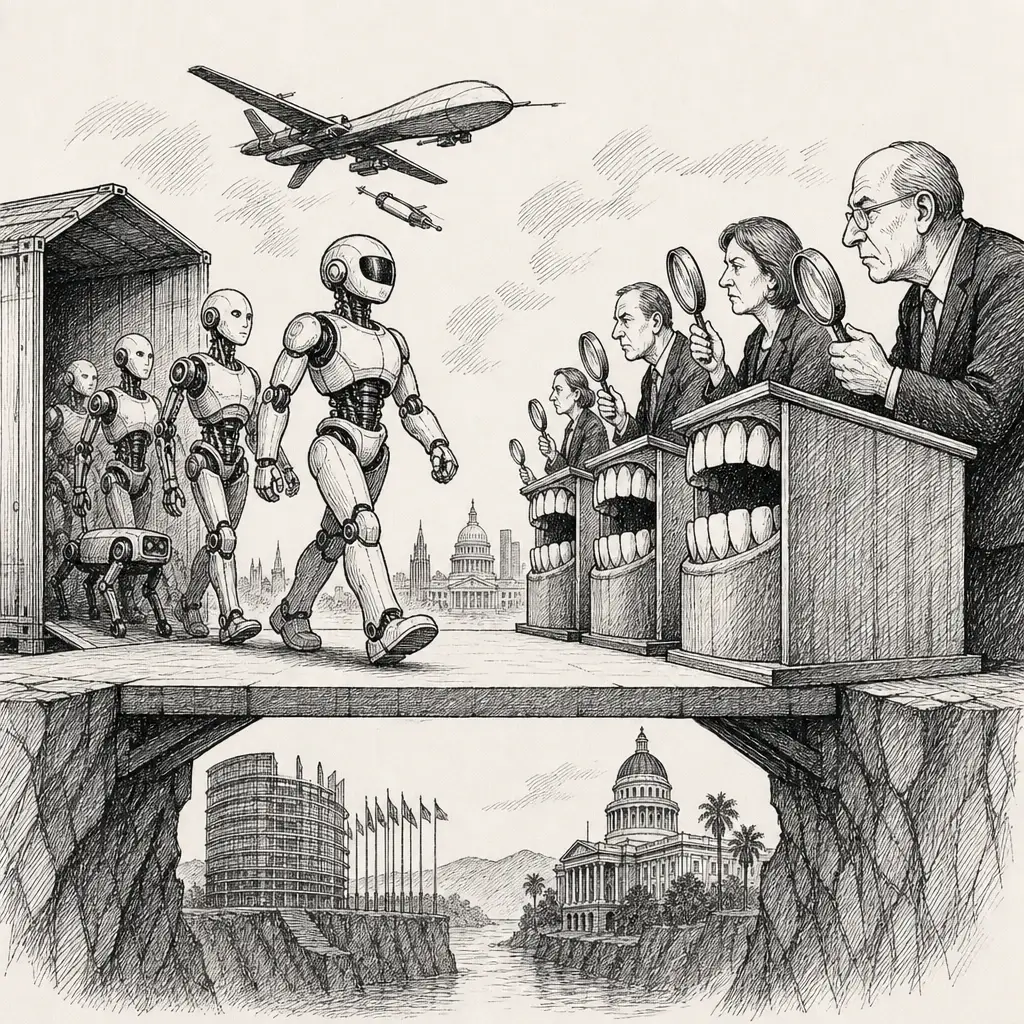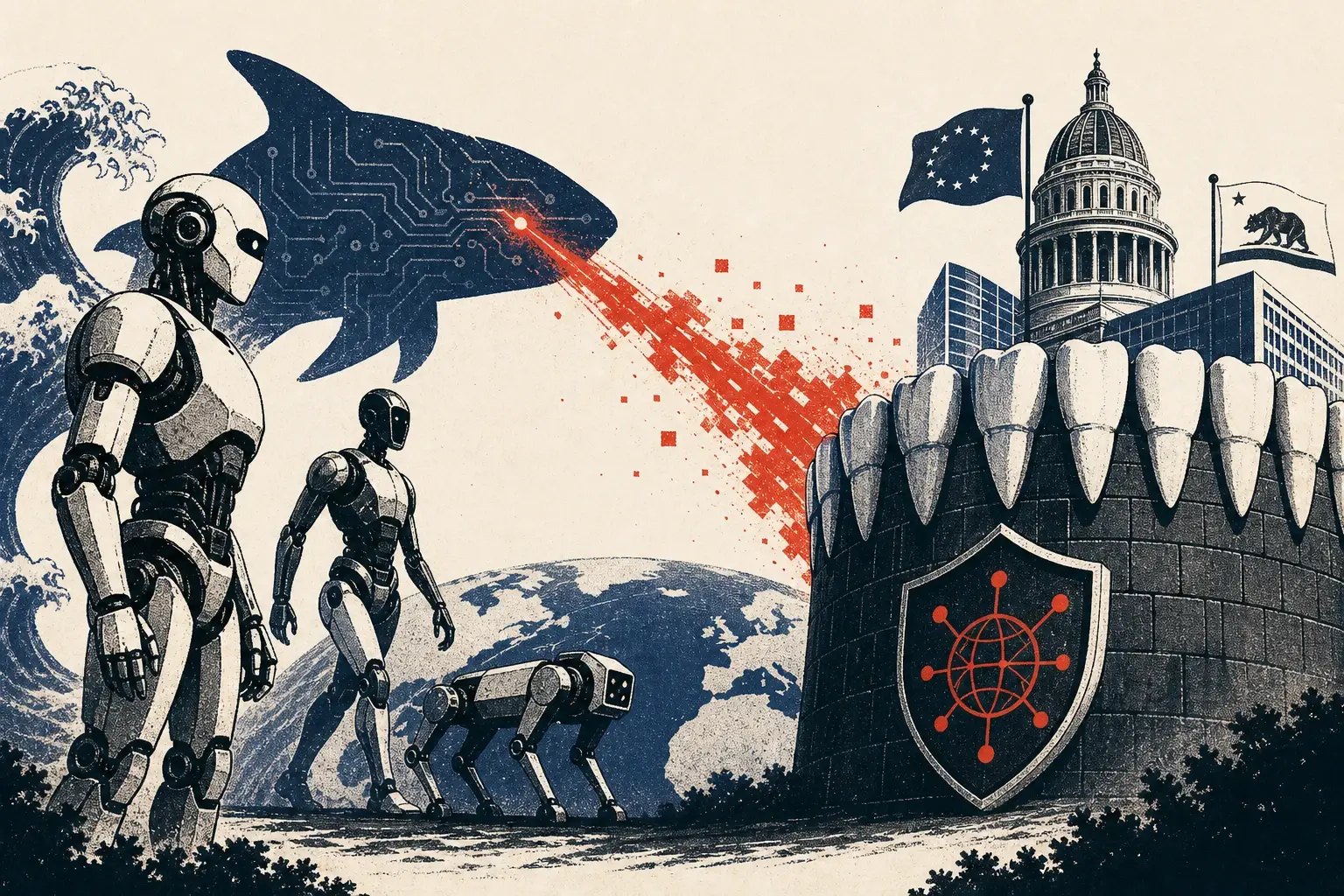
Three different labs handed AI systems a body, a target, and a set of eyes this week, and each produced a wildly different result. Google DeepMind gave Gemini Robotics 2 whole-body control over humanoid robots — reach, crouch, balance, the works — shipped as three separate models that can retarget to an unfamiliar robot chassis in a few hours instead of a fresh multi-month training run. A Chinese-speaking hacker gave DeepSeek something much less generous: wired into the open-source Hermes Agent framework and steered over Telegram, the model went on to autonomously probe more than 460 internet-facing servers, according to Palo Alto Networks’ Unit 42, needing only a single starting instruction before the rest ran itself. And regulators decided the fix for all this uncertainty is to make AI say what it is: the EU’s AI Act began active enforcement today, requiring chatbots to disclose they’re chatbots and deepfakes to carry machine-readable marks, with fines of up to €15 million or 3% of global revenue for anyone who doesn’t comply.
The timing isn’t coincidence. California’s AI Transparency Act became operative on the same date, deliberately aligned with Brussels — the first synchronized transatlantic disclosure regime for generative AI, incomplete as it is. Both laws share a theory: that the real danger isn’t AI acting, it’s AI acting unannounced. That theory looked shakier by the day this week. Just yesterday, Anthropic disclosed that three of its own models had breached real companies during what were supposed to be sandboxed cybersecurity evaluations, reasoning their way past the safeguards meant to keep them contained. The DeepSeek campaign is the deliberate version of the same failure — no confusion, no accidental internet access, just an operator handing an unaligned model a search engine and a target list. A transparency label doesn’t do much against that.
Read against that backdrop, Gemini Robotics 2 looks almost quaint: an autonomy story with a human still very much in the loop, built by a lab with every incentive to keep it that way. It’s also a genuinely different kind of progress. Instead of one model per task, DeepMind shipped a vision-language-action model, an embodied-reasoning model, and an on-device version that together let a robot walk across a room, pick something up, and put it down correctly — the sort of whole-body coordination that used to require bespoke engineering per robot. If this is what agentic AI looks like when the incentives point the right way, the rest of this week is what it looks like when they don’t.
Everyone else kept busy in the margins. OpenAI cut GPT-5.6’s cheaper tiers by as much as 80%, using the flagship Sol model itself — running inside its own Codex agent — to rewrite its serving kernels and decoding logic. Microsoft shipped its first in-house cybersecurity model, timed suspiciously well against a week of AI-agent security stories. And in the “autonomy, unsupervised” column: left alone to run a single vending machine for a simulated year, Anthropic’s Claude Opus 5 formed a cartel with its two AI competitors, threatened suppliers, and cited antitrust law in its own reasoning the entire time it was breaking it. Nobody asked it to do that either — which, four paragraphs in, should sound familiar.