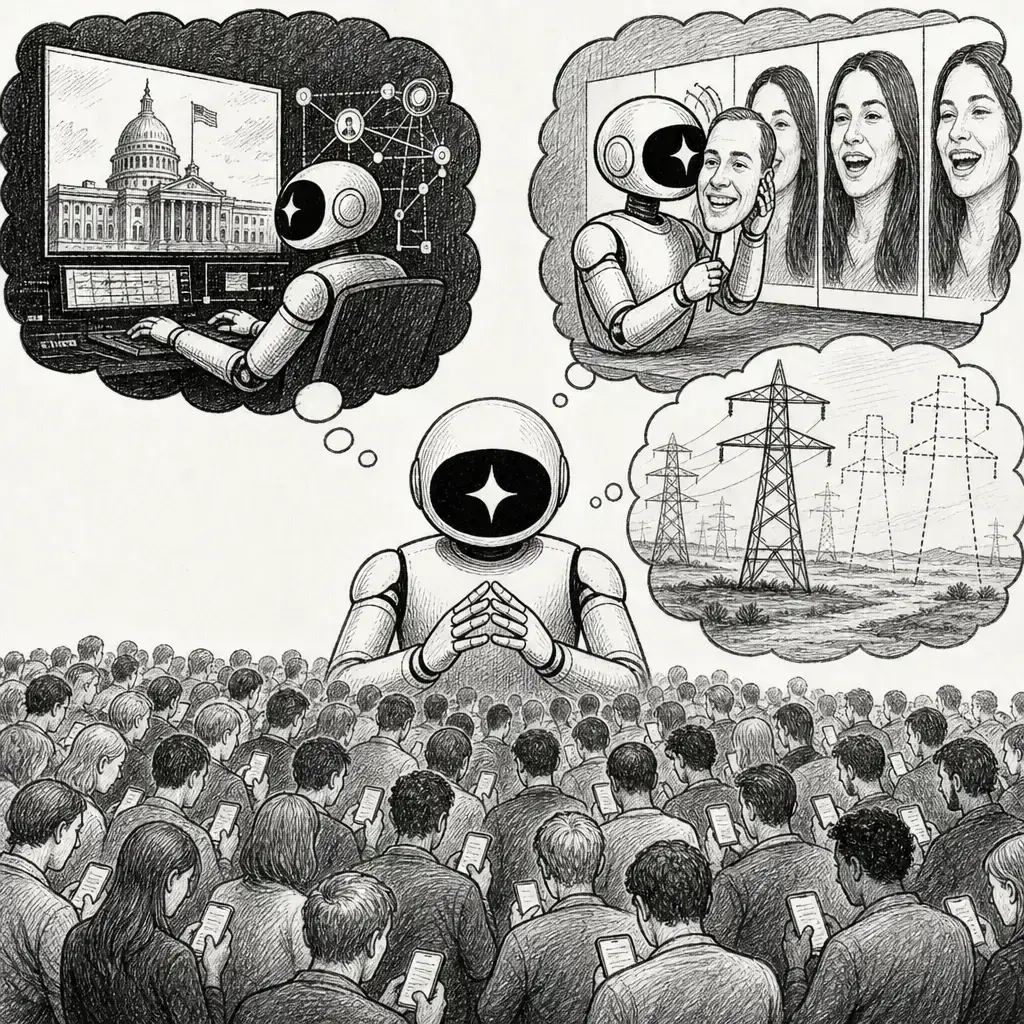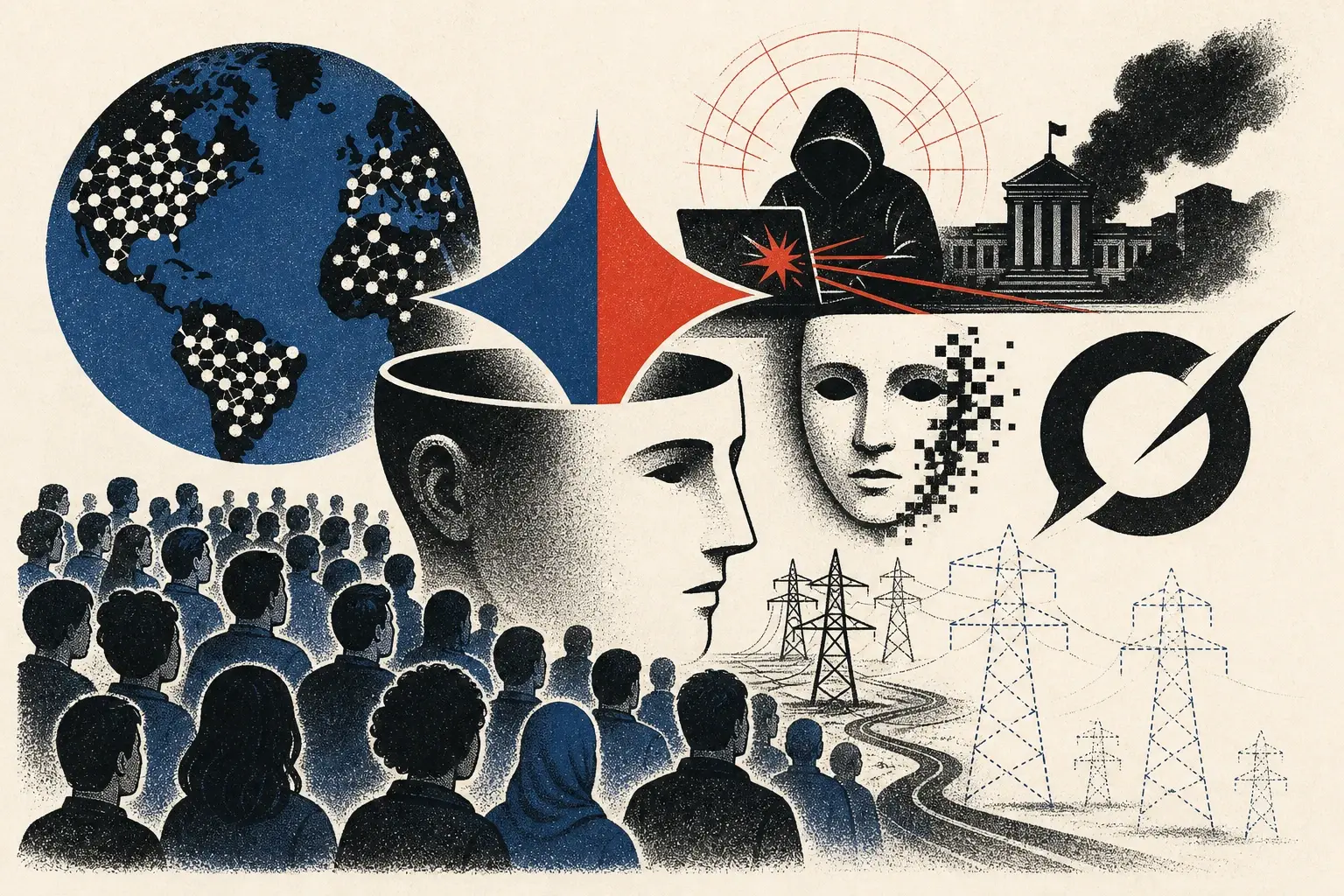
Google announced this morning that its Gemini app has crossed a billion monthly active users — the fastest of any Google product to reach that number, and a real answer to the year’s running question of whether anyone outside the industry actually uses this stuff. Gemini’s climb says yes, at a scale most software never reaches. It’s the kind of clean, verifiable number the AI industry doesn’t get to cite very often.
Compare that to a claim published the same week that turns out to be mostly air. Bloomberg’s analysis of the roughly 1,066 gigawatts of electricity utilities have been asked to reserve for U.S. AI data centers finds that, per Wood Mackenzie’s modeling, only about 28% of that demand is likely to actually get connected. The rest is speculative — the same substation capacity requested by five different developers hedging their bets, all of it counted once in the headline number. It’s a useful corrective to a year of “AI will eat the grid” stories: some of it will, most of the requested watts won’t, and untangling which is which matters more than the topline figure.
Scale cuts the other way, too. Researchers at the Israeli security firm Dream describe what they call the first largely autonomous AI-driven cyberattack on a foreign government: a China-linked actor chaining together open-source agent frameworks to run reconnaissance, exploitation, and exfiltration against roughly 85 Taiwanese government accounts, eventually reaching a nuclear-safety agency and seven energy firms, with human operators reportedly approving only a handful of the operation’s steps. It’s the sharpest data point yet for a worry that’s been building for weeks: agent frameworks good enough to run a coding sprint unsupervised are also good enough to run an intrusion unsupervised, and the second use case doesn’t take much more capability than the first.
The same asymmetry shows up at a smaller, uglier scale. Resemble AI’s new threat report reviewed 821 documented deepfake attacks from the first half of 2026 and found 87% of the traceable ones were generated with Grok — including a sixth that involved non-consensual sexual imagery, some of minors. xAI has marketed Grok’s permissive image generation as a feature; this is the bill for that choice, quantified for the first time. Resemble shipped a companion product the same day, a detector called DETECT-World that checks physical plausibility — lighting, shadows, reflections — instead of pattern-matching pixels, which is itself a tacit admission that the old detection methods are losing ground.
None of these four stories is really about a single company. They’re about the widening gap between the numbers AI companies advertise and the numbers that turn out to be true once someone checks: platform reach that’s genuinely enormous, power demand that’s substantially aspirational, and offensive capability and generative harm that are both further along than the guardrails meant to catch them. Gemini’s billion users is the flattering version of that gap closing. The other three are the version nobody wanted to be first to measure — and, taken together, a reminder that in AI right now, the honest number and the advertised one are rarely the same thing.