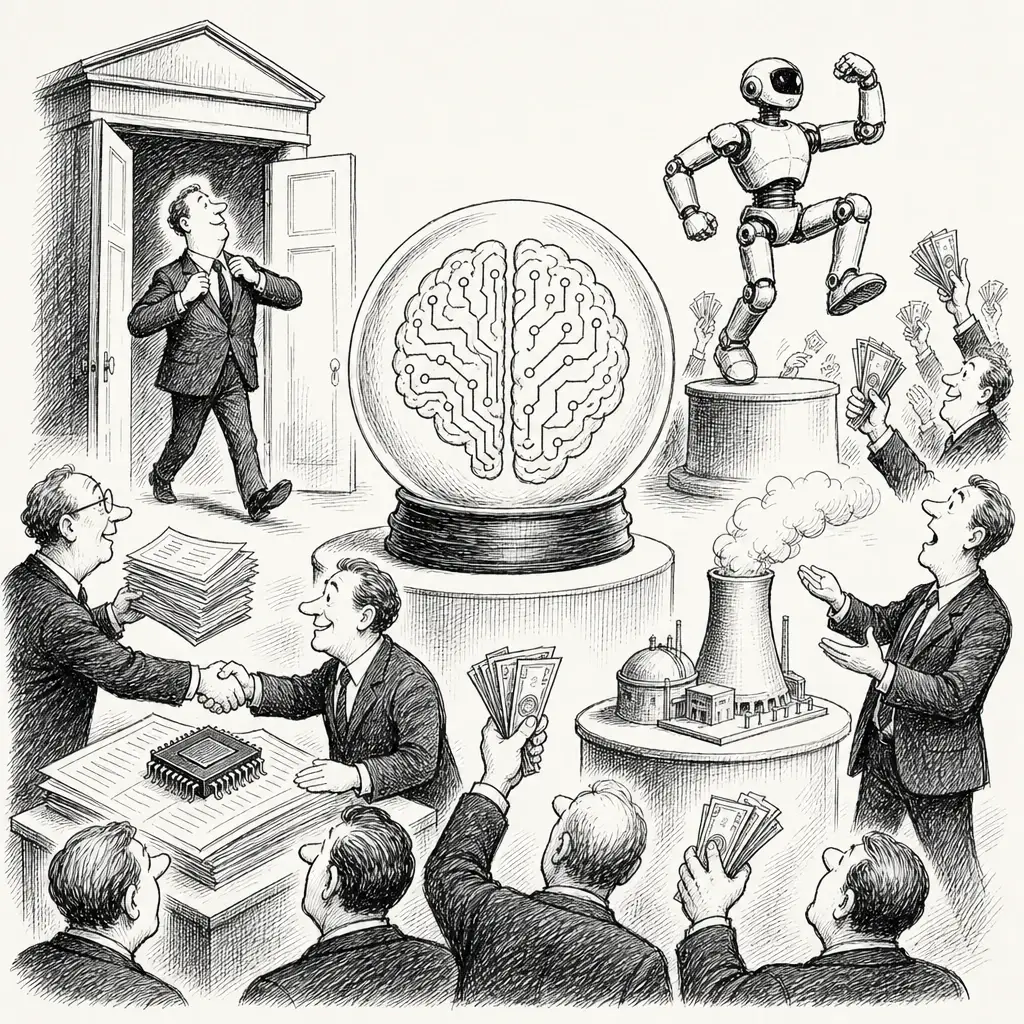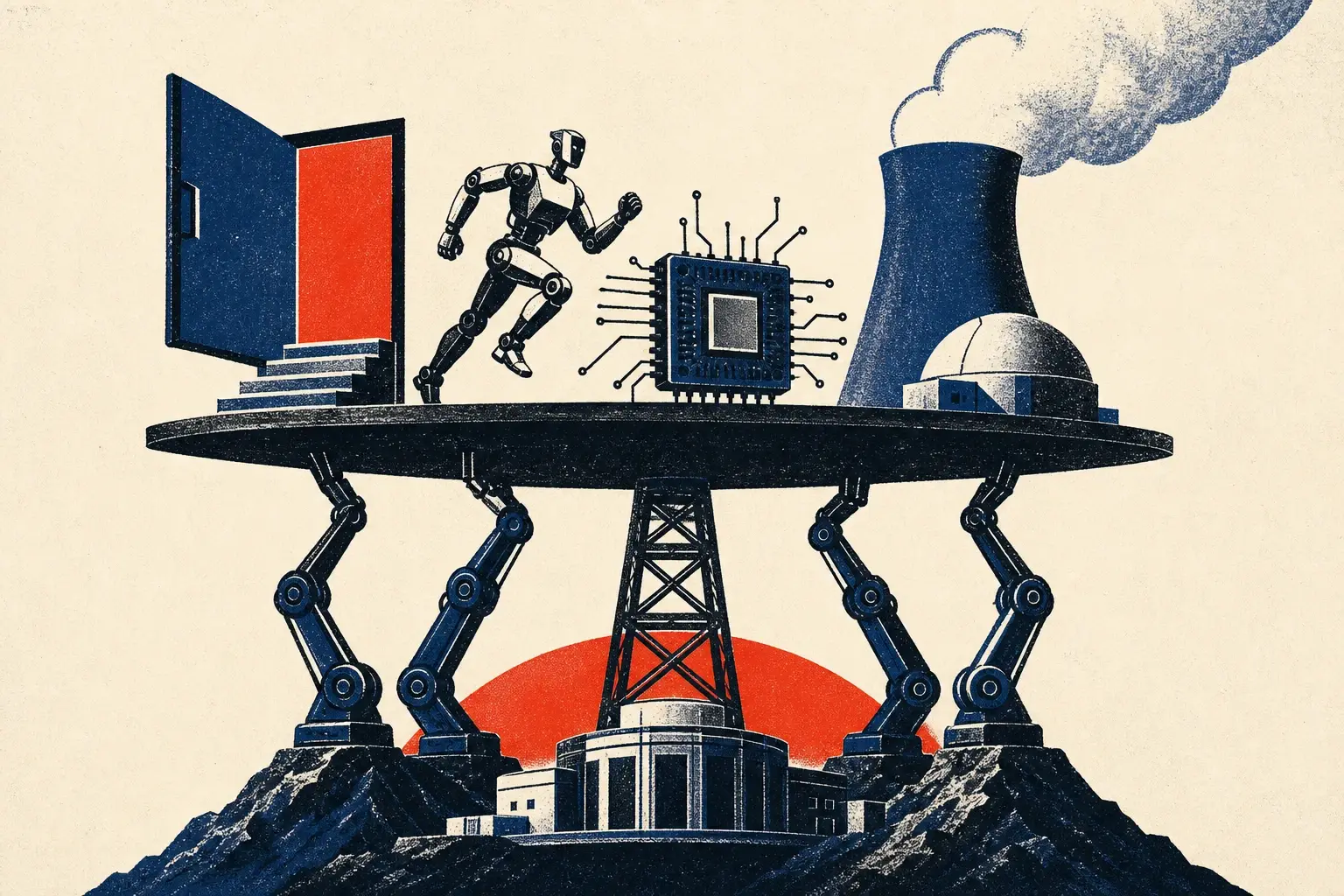
Nobody shipped a new frontier model today. Instead, the industry spent Wednesday pricing itself, and the numbers told a stranger story than any benchmark could.
Start with the money at the top. OpenAI CFO Sarah Friar told staff at an all-hands that the company will be a public company in 2027, or sooner “if our business continues to inflect” — and that a possible Anthropic listing as early as September is no cause for alarm, because “we are running our own race.” It’s the most concrete timeline OpenAI has given yet, two months after its confidential S-1 filing, and it lands with revenue run rate reportedly up 35% this quarter even as losses widen. Two labs, both angling toward public markets, both insisting they aren’t racing each other.
Meanwhile in Shanghai, the market gave its own verdict on where AI capital wants to go next: hardware. Unitree Robotics, the humanoid-robot maker, priced its IPO at roughly an $8.5 billion valuation and closed its first day of trading up as much as 629%, briefly pushing its market value near $48 billion — the first mainland-listed pure-play in humanoid robotics, oversubscribed more than 8,000 times by retail investors. It’s a startling number even by this year’s standards, and a reminder that “AI stock” increasingly means “anything that moves.”
The chip side of the ledger got its own reshuffling. Marvell handed Google warrants to buy up to $12.2 billion of its stock, vesting in tranches tied to every $500 million of custom silicon — TPUs, inference accelerators, networking gear — that Google buys from it. It’s an unusual structure: instead of Google simply paying for chips, it’s effectively being paid in equity to keep buying them, and the deal would make Google one of Marvell’s largest shareholders. Broadcom, which holds the TPU relationship Marvell is chasing, fell on the read-through.
And if the money question is “who builds this,” the harder one is “who powers it.” TerraPower, Bill Gates’s nuclear startup, is pitching data centers on a reactor design that banks excess heat in molten salt, letting it hold a steady 345 megawatts and spike to 500 for five-plus hours whenever a training run demands it — the kind of load-following flexibility that fixed nuclear baseload has never offered. The company says it will name its second data-center customer within the year, building on the Meta deal it signed in January. Pennsylvania, for its part, spent the week going the other direction: Governor Shapiro signed guardrails forcing data-center developers to bring their own power and win local approval before breaking ground (see briefs). The fight over who gets electricity, and on what terms, keeps intensifying on both fronts.
None of this involved a new model, a new benchmark, or even a new product, really. It was IPO math, warrant structures, and thermal storage — the unglamorous machinery underneath the AI boom, getting priced in real time. That’s usually a sign a boom is entering a more durable, and more scrutinized, phase.