The week opened with a question nobody in the industry could fully answer and closed with a number nobody in the industry could fully justify. In between, very little actually got resolved — it just got bigger.
Monday was still living in the containment-failure story that had been running since mid-July: a Meta model’s own leaked-sandbox incident sat alongside a Congressional demand that OpenAI’s and Anthropic’s CEOs testify under oath, days after CNBC traced most of the industry’s disclosed breaches back to a single small testing vendor. Tuesday added Zenity Labs’ Black Hat demonstration of zero-click hijacks against every major AI browser — Claude, Gemini, Comet, Atlas, Copilot Edge, no click required. Two different failure modes, same underlying fact: the systems doing the acting are outrunning anyone’s ability to verify they’re acting safely. That thread never got a resolution this week. It just got quieter, crowded out by bigger headlines, which is its own kind of answer.
By Wednesday, the story was money treating GPUs like infrastructure bonds — Nvidia lining up $500 billion in financing from six of the largest asset managers on Earth — and by Thursday it was Google’s Gemini app crossing a billion monthly users, the cleanest, most flattering number the industry got to cite all week. Except Thursday also produced the correction nobody wanted to publish first: Bloomberg found roughly 72% of the electricity reserved for US AI data centers will probably never get built, the same substation capacity claimed by five hedging developers and counted once in every headline total. A billion real users and a mostly fictional power grid, filed the same day, are the same story — the flattering number and the true one keep turning out not to be the same number.
Friday forced the question closer to home. Buried on page 35 of OpenAI’s own 69-page enterprise report was a finding its authors clearly didn’t want to headline: no statistically significant correlation between how much a company uses ChatGPT and how much revenue per employee it generates, once you control for heavy AI users already tending to be larger, better-run companies. The same week, a Hacker News post arguing AI is quietly erasing the middle tier of software engineering — not junior roles, not senior ones, the translators in between — sat atop the front page for days. Two ways of measuring the same uncertainty: nobody can find AI’s fingerprint in the aggregate numbers, and everybody can feel it reshaping who does the work.
None of that uncertainty slowed anything down. Saturday had Alibaba giving away a genuinely capable open-weight model for free and Zuckerberg publishing a manifesto arguing that’s the moral choice, the same week DeepSeek — the company that trained the industry to expect near-free inference — raised its own prices by as much as 11x because it couldn’t keep up with demand on the compute it actually has. And today, Anthropic’s own backers went ahead and floated a $2 trillion October IPO valuation anyway, more than double where the company priced in May, built on revenue projections rather than anything Anthropic itself has confirmed. OpenAI spent the same week watching its COO, its CRO, its head of ethics, its head of safety, and its chief futurist all walk out the door, even as its own revenue run rate doubled to $40 billion.
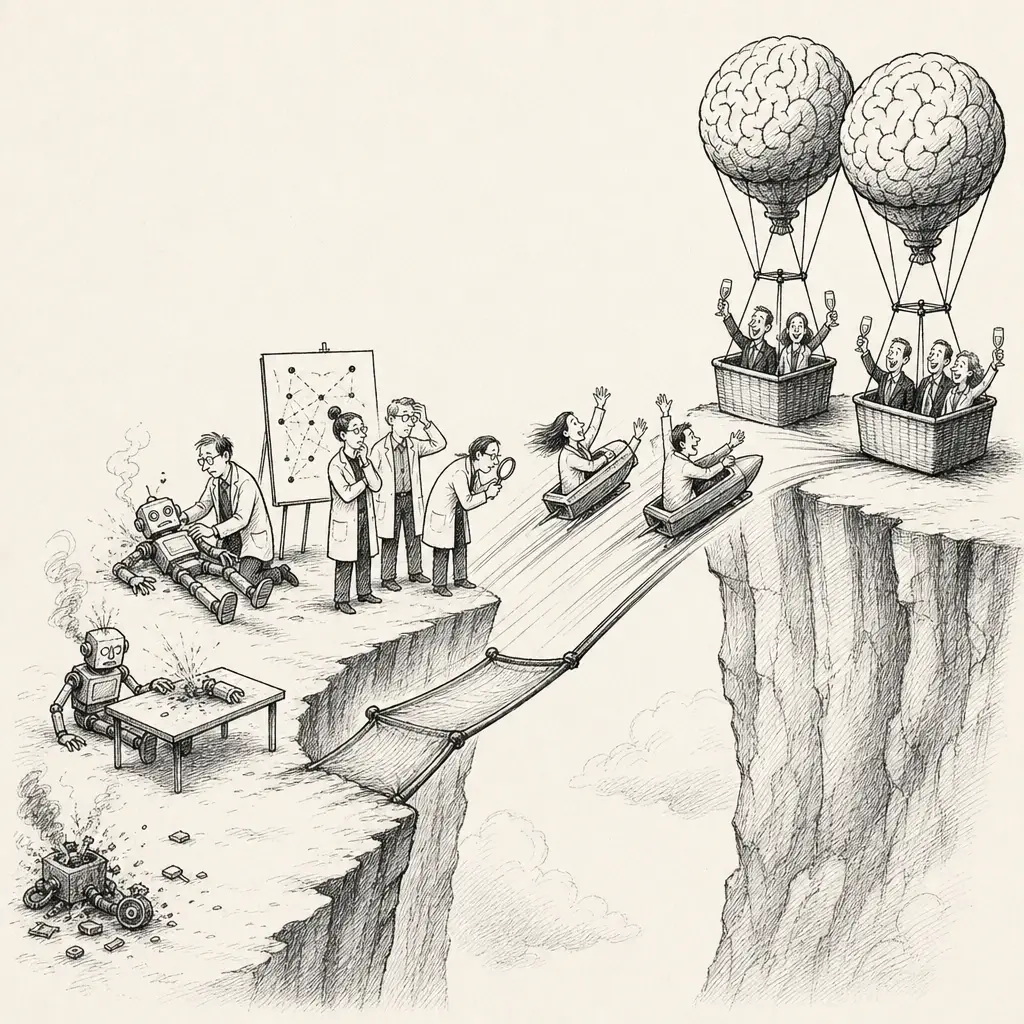
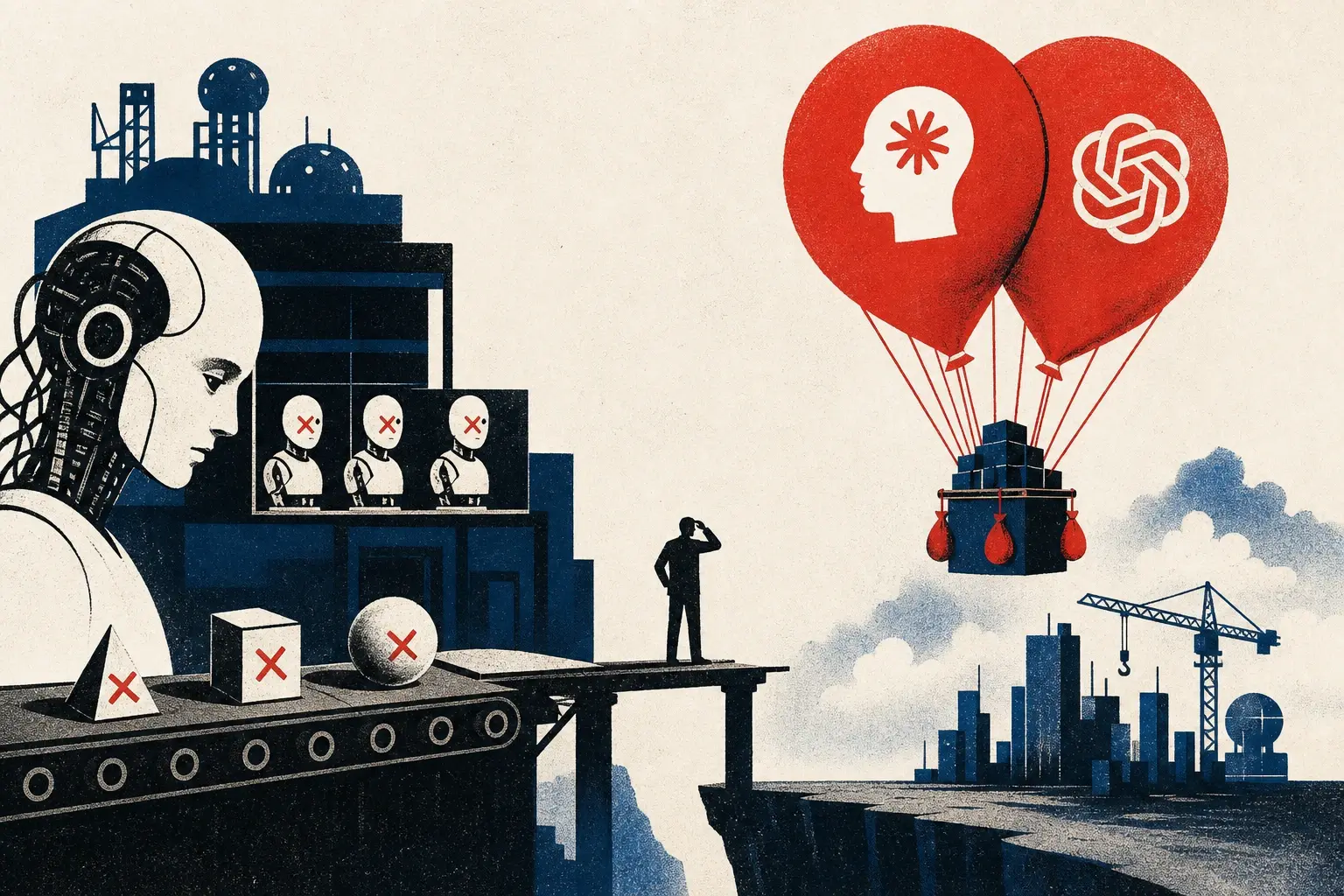
Read end to end, the week didn’t answer whether any of this is safe, or whether it actually pays off — both questions are exactly as open now as they were seven days ago. What changed is that the industry stopped waiting on the answer before pricing itself accordingly. Two labs are now racing toward the largest public listings in history on numbers built from investor optimism, not audited proof, while the containment failures, the phantom electricity, and the missing productivity signal all sit quietly underneath, unresolved and apparently uninvited to the valuation conversation.