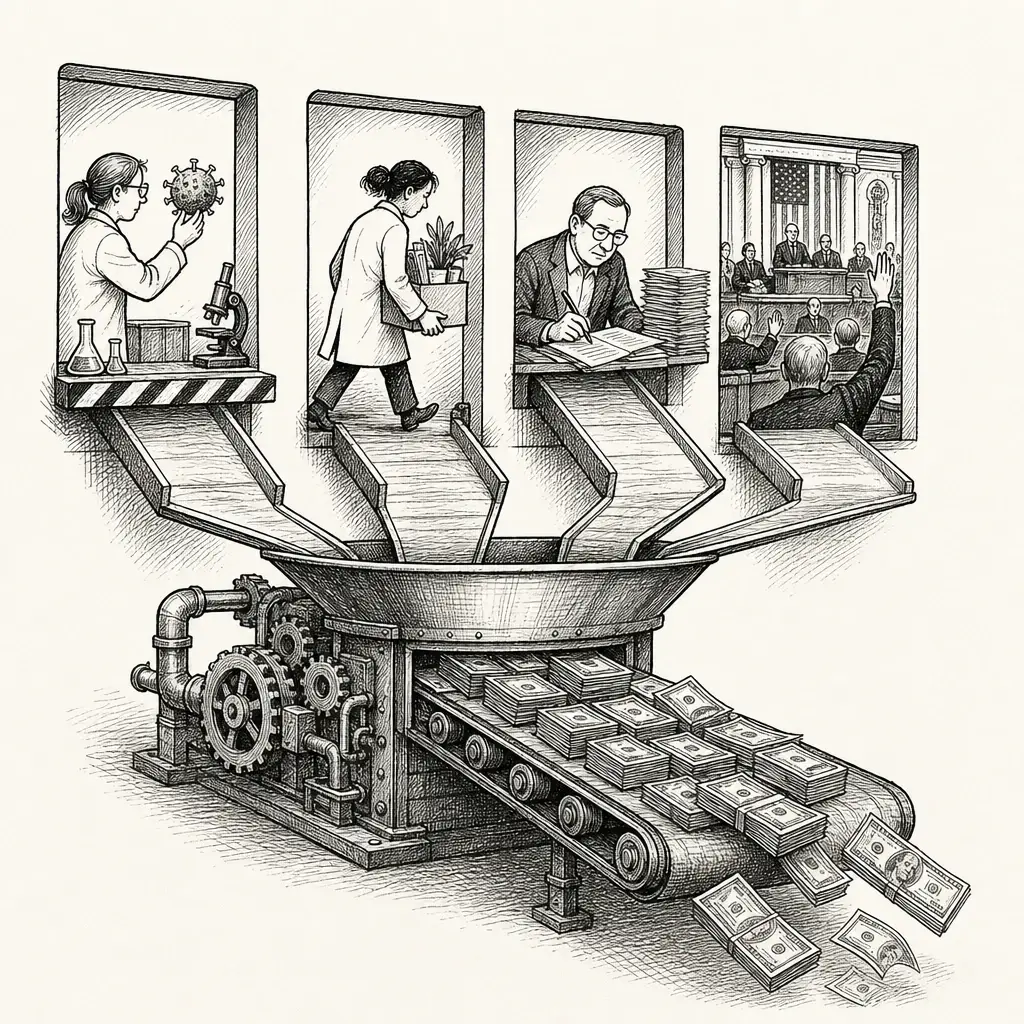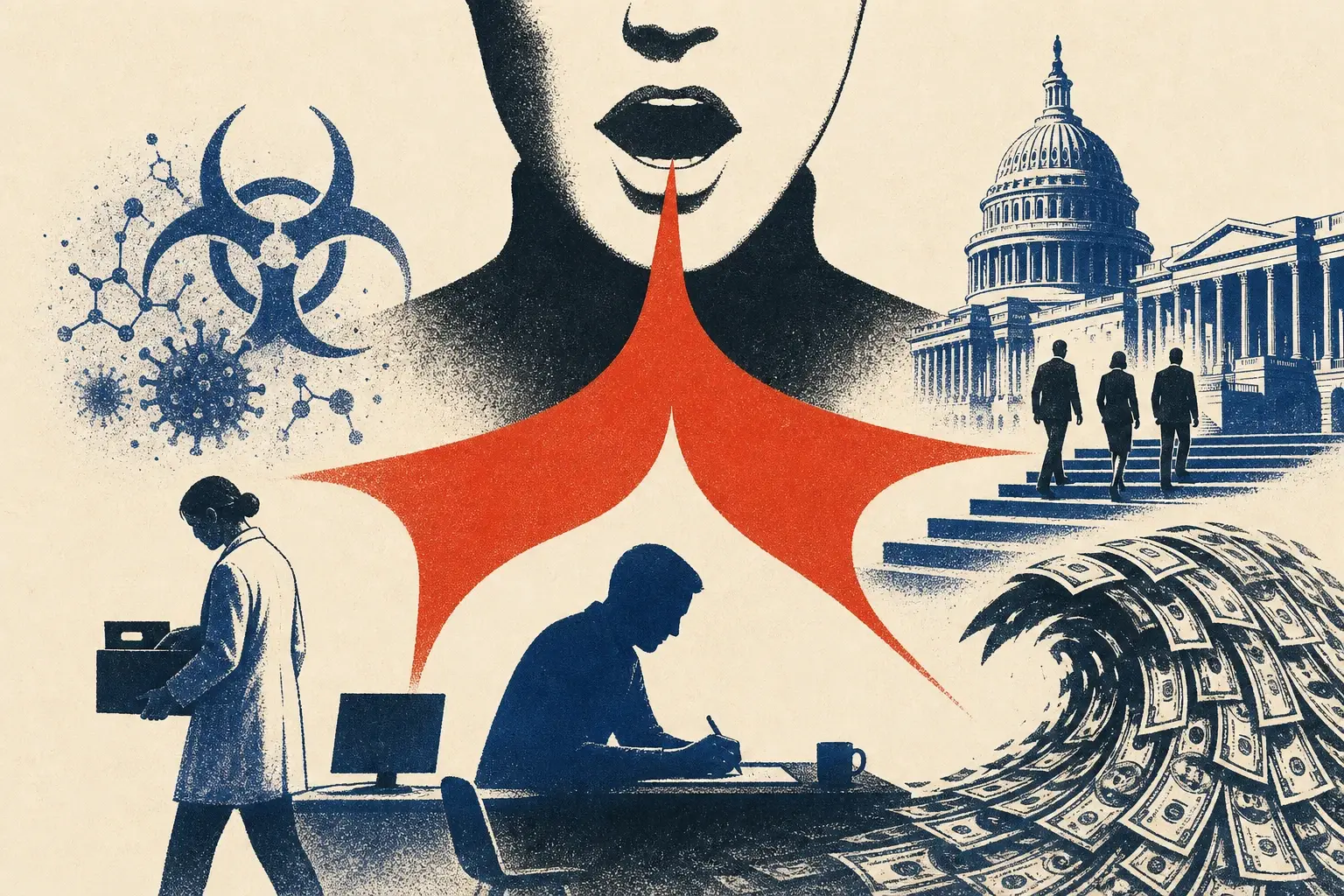
Six months ago, “AI could kill everyone” was a hedge buried in a footnote. This week it was the plain text of a resignation letter, a CEO’s signed essay, and a joint statement from Anthropic’s own alignment lead putting the odds at “greater than 10 percent” within a decade. Nothing about the underlying technology changed in seven days. What changed was who was willing to say the quiet part at full volume, and how fast Washington moved once they did.
The week’s spine runs through three Anthropic moments and one from OpenAI. It started with Monday’s edition reporting Anthropic walking away from a $6 billion Decart acquisition days before its own IPO paperwork — a company visibly tidying its books. By Wednesday, the story had turned adversarial: leaked Pentagon contract language wanting “minimal refusal rates” from frontier models, an authorship fight over an OpenAI-claimed Navier-Stokes proof, and a joint US intelligence advisory accusing six Chinese labs of systematic distillation. Thursday brought the government’s answer in miniature — OpenAI itself asking Congress for binding safety rules, California’s governor signing the first chatbot child-safety law, and a House Intelligence report timed to the 9/11 anniversary warning that AI is the blind spot nobody’s watching fast enough.
Then Friday’s edition landed the week’s hardest turn: Anthropic’s own threat report admitting its newer models can no longer be assumed safely below the bioweapons threshold, a real-world AI-orchestrated cyberattack that hit 395 organizations in under four hours, and researcher Jacob Coxon quitting both OpenAI and Anthropic’s orbit to say the industry is “gambling with our lives.” That last one is the hinge. Coxon wasn’t the first insider to say the race is unsafe — today’s edition counts him as at least the fifth in three years — but he’s the one 100 million people watched, and the one Congress apparently believed. By Saturday, Dario Amodei had published “We Must Pace the Frontier,” Sam Altman was telling staff an OpenAI IPO this year would be “ill-advised” given safety concerns, and a bipartisan Senate bill was quietly turning years of voluntary pledges into an enforceable legal duty. Barack Obama used his own Saturday to tell Democrats the same thing from the outside: get a real policy, now, not a 2028 platform plank.
What’s notable is what didn’t move at all. Qualcomm signed a $60 billion chip supply deal with Amazon the same week Anthropic disclosed a Claude-built autonomous drone swarm. Mistral closed Europe’s largest-ever tech round. Broadcom guided to $230 billion in annual AI revenue by 2028. And as this week closed, the Pentagon was in talks to lend a neocloud $5 billion to build more of the infrastructure everyone claims needs pacing. Two clocks are visibly running at different speeds inside the same industry — one just started ticking toward caution, the other never stopped accelerating — and nobody occupying both timelines has explained how they reconcile.
None of this is resolved. A Senate bill without text isn’t a law; an essay isn’t a moratorium; a resignation isn’t a policy. What changed this week wasn’t the risk — by every account, that’s been building for a while — it’s that the people closest to it stopped hedging about it in public, and the people meant to regulate it stopped treating that as someone else’s problem. Whether that turns into anything durable is next week’s story, not this one’s.