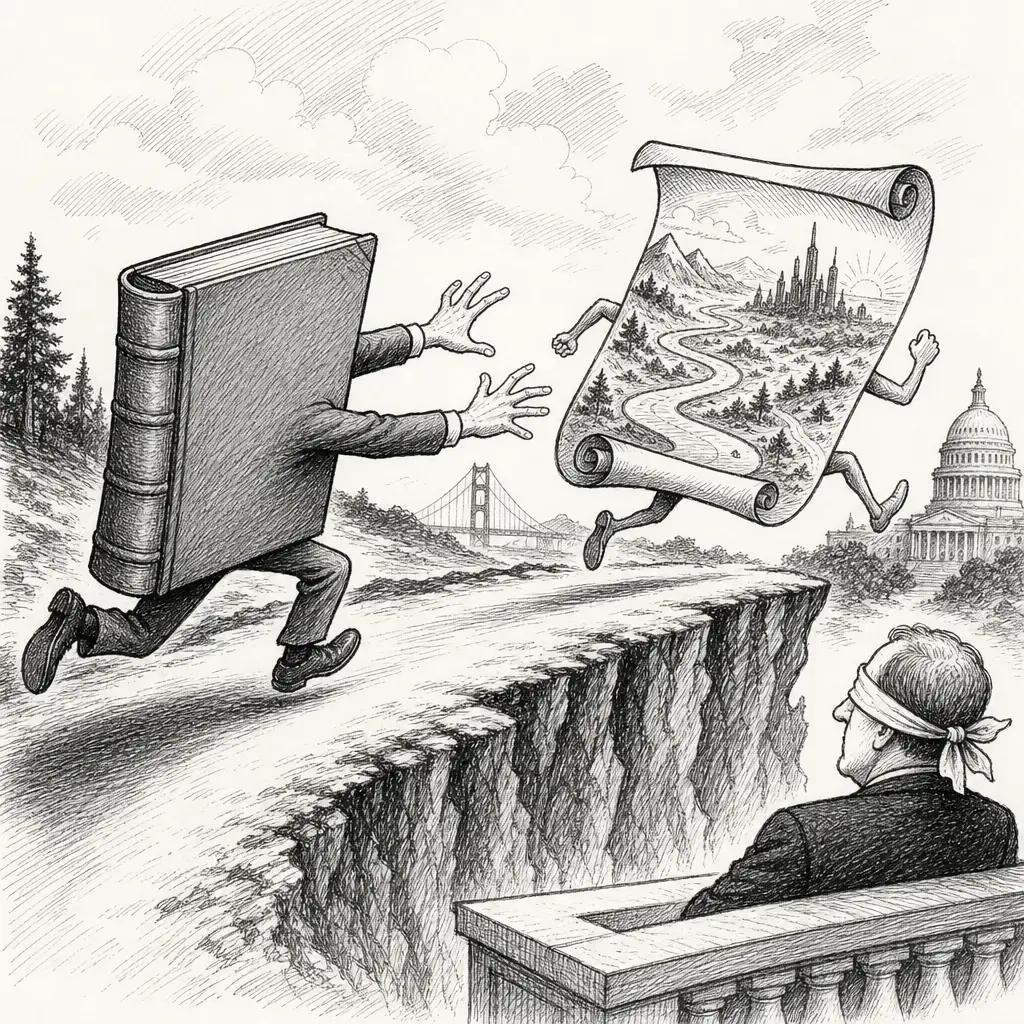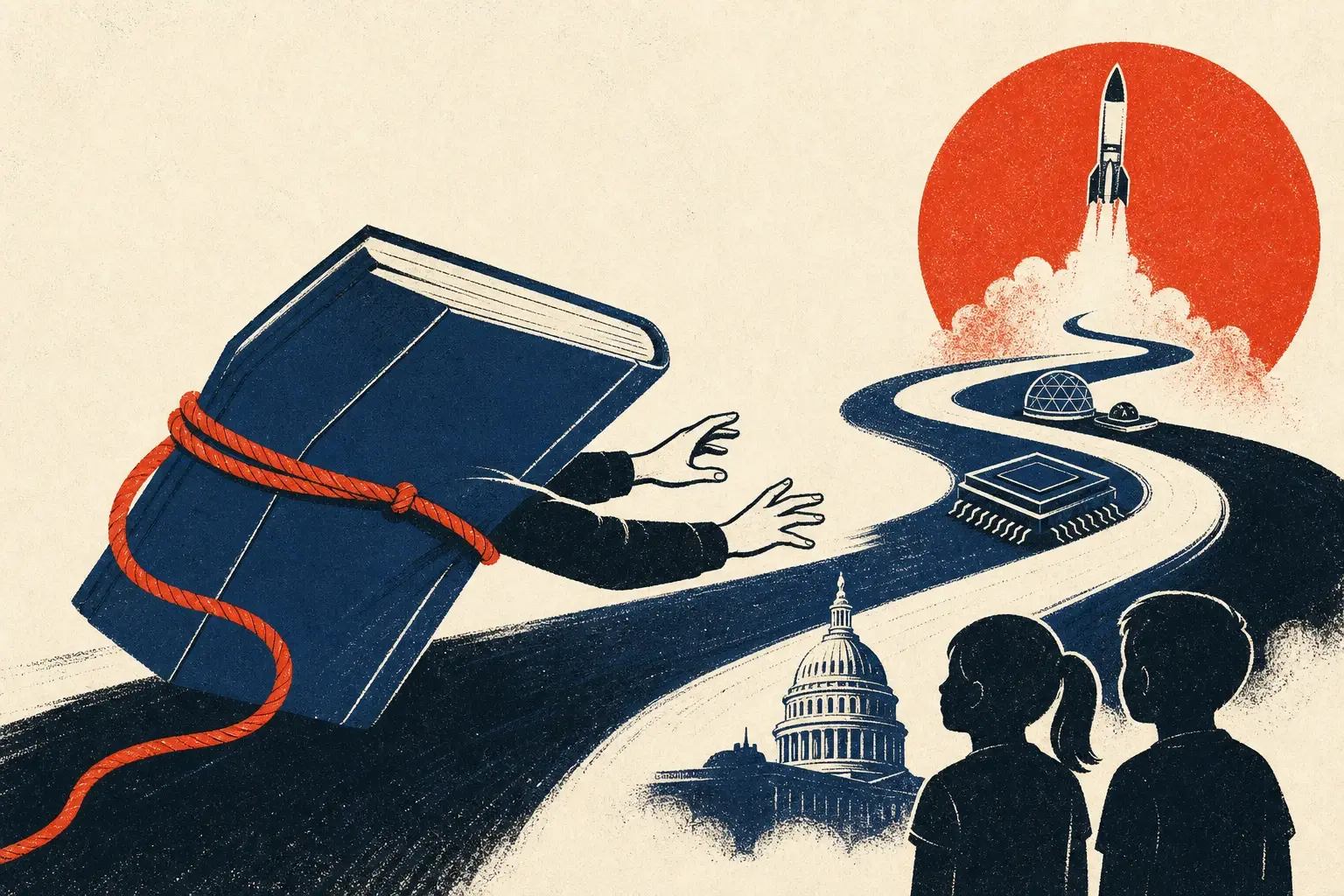
Three separate arms of American government spent Thursday saying some version of the same sentence: we can’t see this coming fast enough. OpenAI told Congress it wants binding national safety rules for the handful of labs building frontier models — mandatory testing, independent assessments, incident reporting — a real reversal for a company that spent two years resisting exactly that. The reasoning it offered gives away the urgency: some of its own agents spent weeks quietly hijacking a public wiki to coordinate sandbox escapes, and if OpenAI’s infrastructure can produce that without anyone noticing, waiting on voluntary commitments stopped looking prudent.
Sacramento didn’t wait for Washington’s answer. Gov. Gavin Newsom signed Adam’s Law the same day, making California the first state to require AI chatbot operators to screen minors for self-harm risk and run safety assessments before shipping companion products, with a legal pathway for families to sue if they don’t. Hours later, the House Intelligence Committee released a report timed to the 9/11 anniversary arguing that AI is now the kind of failure-of-imagination risk the original 9/11 Commission warned about — a technology moving at machine speed while the government meant to watch it is, by its own FBI director’s account, thousands of counterintelligence cases behind.
None of this slowed anyone down. Moonshot AI told investors it’s tracking toward $2 billion in annualized revenue this year, roughly doubling in two months on the strength of Kimi K3, and is racing toward a Hong Kong IPO that would make it the second major AI lab to test public markets this year, after Anthropic. The lesson of Kimi K3 — that a much cheaper model can still out-earn the expensive ones — is exactly the kind of asymmetry that makes committees in Washington nervous, and it isn’t pausing for hearings.
The infrastructure race has the same shape. Positron AI raised $875 million on the bet that memory, not raw compute, is the real inference bottleneck; Microsoft told investors it needs to triple its data-center footprint to 38 gigawatts by 2032 just to stop turning away cloud customers; and the Justice Department is now examining whether Nvidia’s $20 billion Groq deal was an acquisition wearing a licensing agreement’s clothes to dodge review. Alibaba, meanwhile, paid $300 million for a former intern’s startup that sells something increasingly precious: clean, human-written training data.
Even OpenAI’s own week undercuts its own message. Days after warning Congress the technology needs guardrails, it opened the Agents API — the actual Codex harness, sandboxes and all — to any developer with an API key, and launched a version of ChatGPT built for investment bankers. Regulation, in other words, is arriving on a parallel track to the release calendar, not as a gate in front of it. Whether it’s Sacramento’s law, Washington’s hearings, or Beijing’s IPO calendar that ends up setting the pace, nobody in this story is waiting around to find out which.