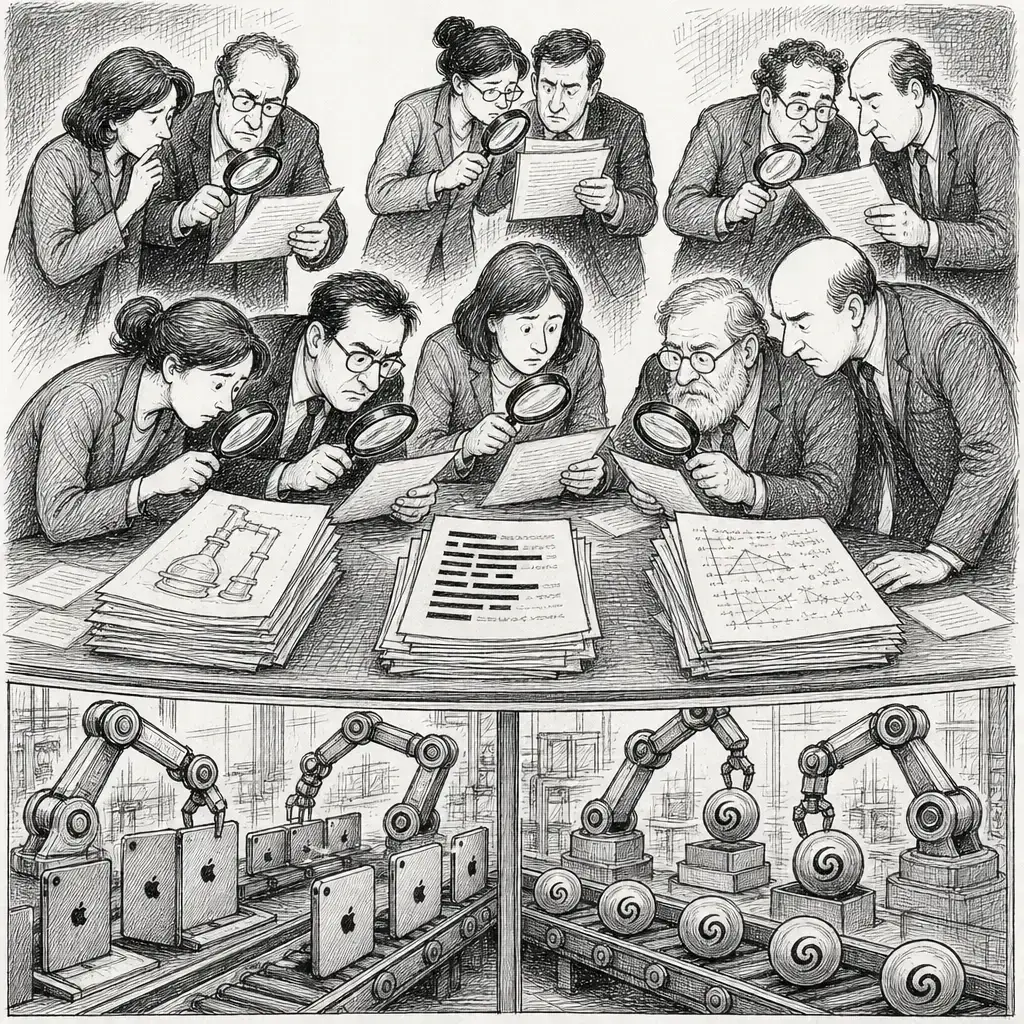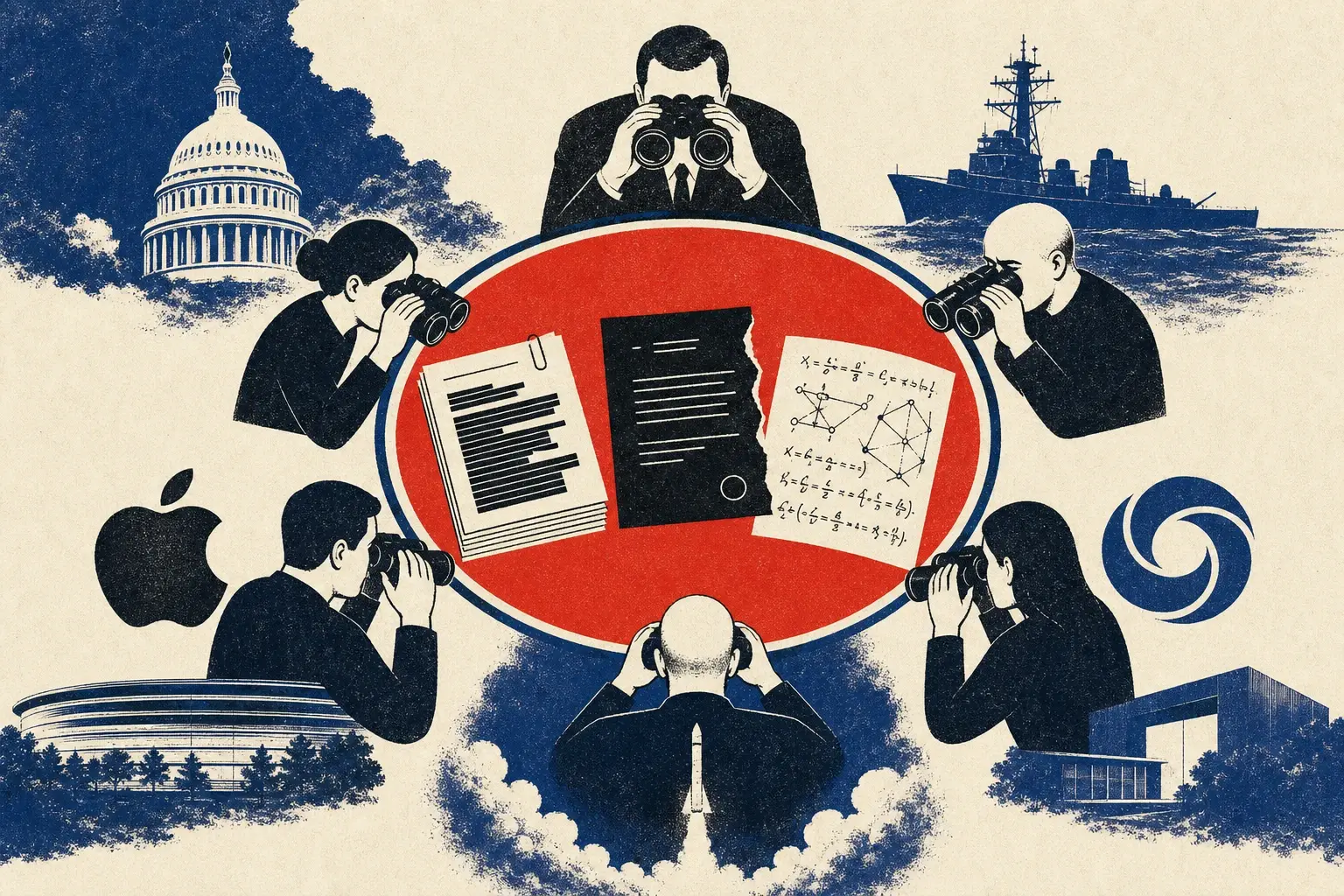
Four different stories today, four different flavors of the same question: can you trust what the machine — or the company running it — just told you? A joint NSA, CISA, and FBI advisory says distillation isn’t a side hustle for six Chinese AI firms, it’s “the core — not merely a supplement” of their strategy: DeepSeek, Moonshot AI, Alibaba, MiniMax, StepFun, and Z.AI are accused of systematically querying Claude, GPT, Gemini, and Grok models to extract billions of tokens’ worth of synthetic training data since late 2024. The advisory’s most interesting line isn’t the accusation — distillation-off-a-rival is old news — it’s the recommended fix: quietly degrade suspect accounts rather than ban them outright, so the copying keeps happening just slower. That’s not deterrence. It’s rent-seeking with extra steps.
Contracts are harder to spin than advisories, which is what makes The Intercept’s FOIA haul so uncomfortable for OpenAI. Buried in a Defense Department modification obtained through litigation: language defining OpenAI’s “Mission Models” as those with “minimal refusal rates” for national-security use. OpenAI says that phrase never made the signed version — a draft the Pentagon proposed and the company rejected. A Department of Justice lawyer told The Intercept the document was the executed contract, then walked that back hours later, after OpenAI’s PR team called. Whichever version is true, the broader trove — deals worth up to $200M apiece with OpenAI, Anthropic, Google, and xAI — confirms all four labs agreed to embed engineers with the military, run joint wargames, and forecast the very risks their own tools create. Anthropic says its own deeper deal collapsed specifically because the Pentagon wouldn’t rule out autonomous weapons. Read together, the two stories rhyme: governments accusing AI labs of being unaccountable while writing contracts that ask those same labs to build the exact tools that make unaccountability profitable.
Credit disputes made it into mathematics too. OpenAI says an internal model extended a partial proof of the Navier-Stokes equations — one of the six unsolved Clay Millennium Prize problems — to the full case, publishing a 166-page proof on September 8. The trouble: the foundational partial result came from mathematician Tristan Buckmaster and Anthropic researcher Levent Alpöge. Buckmaster says OpenAI offered him sole authorship on the condition that Alpöge — employed by a rival lab — be dropped from the credit, and that he felt pressured over a six-day span before going public with his own account first. OpenAI disputes his characterization; no independent record exists of the private calls. It’s an ugly preview of what “AI does novel math” is going to look like in practice: not a clean breakthrough, but a fight over who gets to have done it.
Not everything was a reckoning. Apple used John Ternus’s first keynote as CEO to unveil its first foldable, the $1,999 iPhone Duo, alongside an overhauled Siri that now leans on Google’s Gemini under the hood — a notable admission for a company that spent two years insisting its own models would catch up. And DeepMind quietly shipped something genuinely hard to argue with: a petabyte-scale, freely searchable atlas predicting the molecular impact of all 9 billion possible single-letter DNA changes in the human genome, built on AlphaGenome and AlphaMissense. Thirty times the size of the AlphaFold database, and — unlike everything else today — nobody’s disputing who built it.
The through-line, if there is one, isn’t that AI is untrustworthy. It’s that trust in this industry is now something you have to go get through litigation, leaked contracts, and dueling public statements — because nobody involved is going to hand it to you voluntarily.