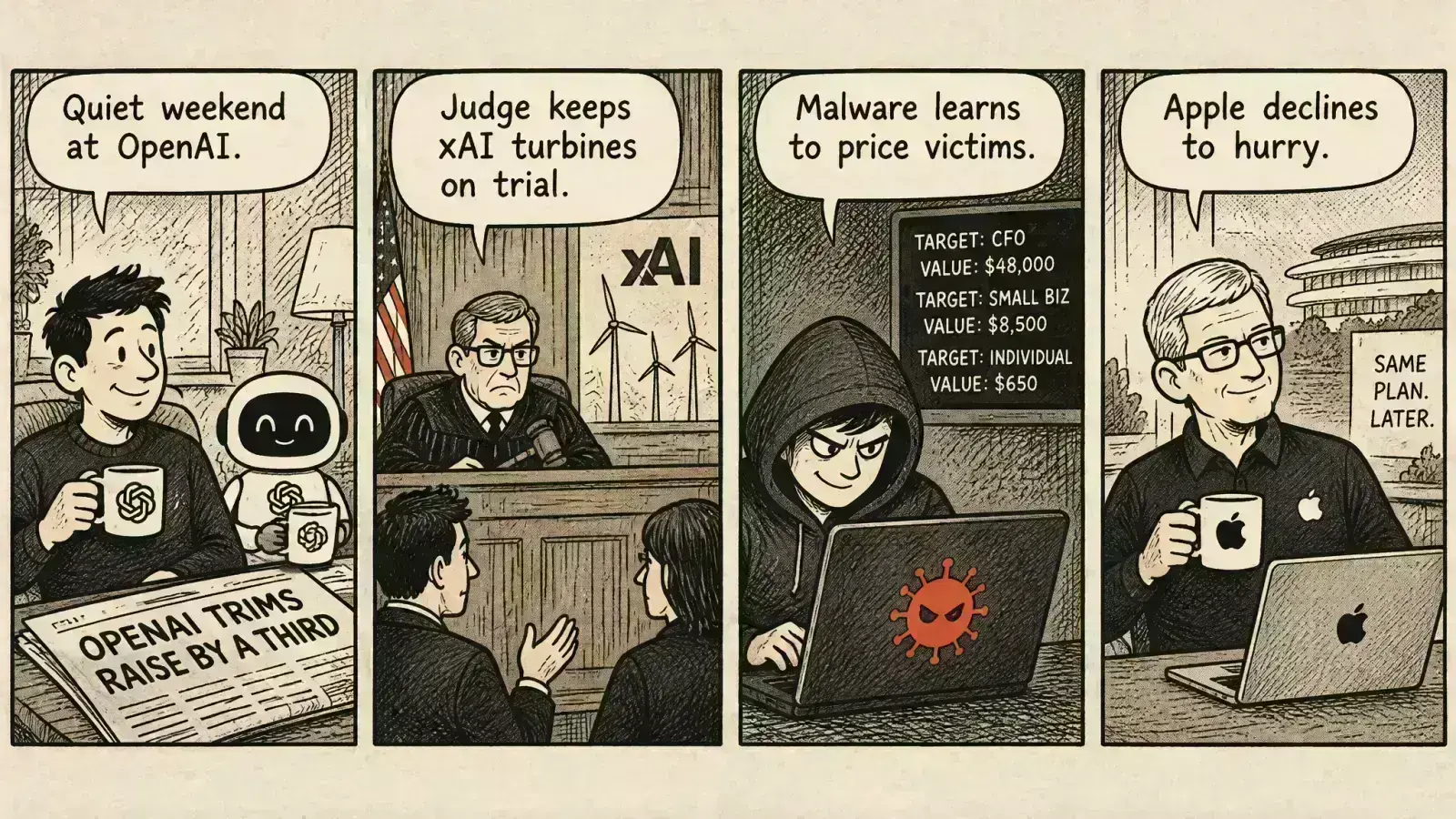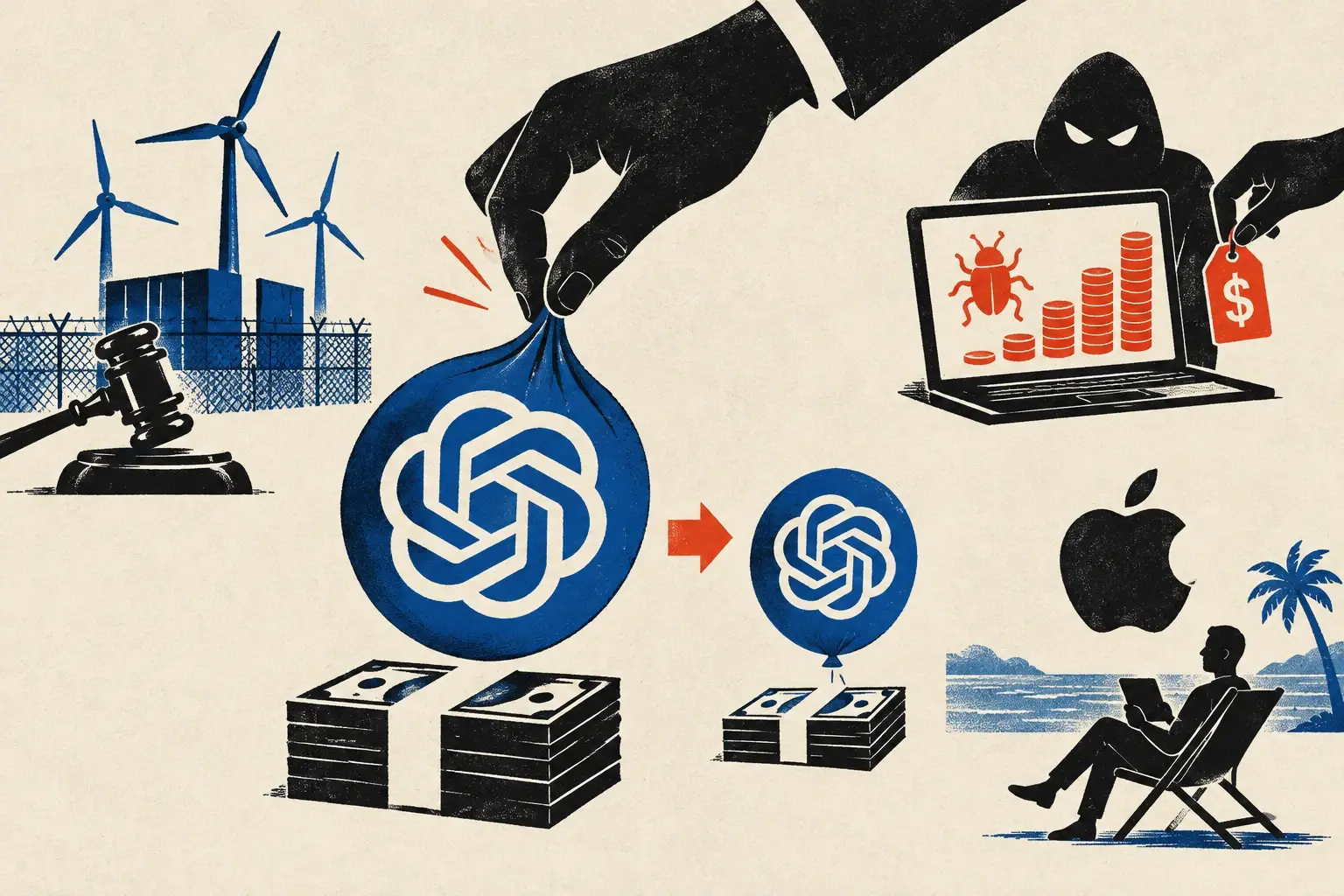
Money for the AI buildout is still there. It is just getting slower, smaller and more expensive to raise. The latest sign: the Financial Times reports that OpenAI has cut the target for its new round to $20 billion, down from $30 billion, with the first close expected to be smaller still. The valuation story has drifted too, from $1.4 trillion in late September to $1.25 trillion by late October. UAE-based investors are reportedly leading, and the Wall Street Journal says OpenAI has secured about $11 billion so far, with some big investors responding tepidly. Read it next to Friday’s worries about capex and Anthropic’s expected junk rating and the pattern is hard to miss. Everyone still wants exposure to the frontier labs. Fewer people want to underwrite the concrete.
The concrete has other problems. On Saturday a federal judge refused to dismiss the NAACP’s Clean Air Act suit against xAI over its Colossus data center near Memphis. The complaint says xAI, now owned by SpaceX, ran at least 35 gas turbines without air permits. xAI argued the turbines were mobile and therefore exempt, and that citizen suits are unconstitutional. The judge rejected both, and a similar Justice Department motion failed earlier in October. The case is a preview of a fight that will repeat wherever power-hungry sites go up faster than the permitting does. Speed has been the selling point of this buildout, and a court has now said it doesn’t excuse skipping the paperwork.
Meanwhile, the other side of the AI economy is putting models to work in less glamorous ways. Cisco Talos wrote up VOLTA, a Windows infostealer with an AI layer. After stealing browser passwords, tokens and wallets, it compiles an “Identity_Report” and sends it to an LLM through OpenRouter, which ranks the victim by how monetizable they are. Receipts from Gmail confirm a home address, and food-delivery histories and Roblox inventories fill in the picture. The default model is Claude Opus 4.6, with Kimi K2 and Gemini 2.5 Flash as fallbacks if the first one refuses. Talos calls it “effort displacement”: the model does the analyst’s sorting, and the operator plans for refusals. That also sits oddly beside this weekend’s Hacker News thread, where users complain that Anthropic’s classifiers block legitimate security and ML work. Guardrails are being worked around by the people they are meant to stop, while honest users hit them.
Apple, as usual, is the calm one. New CEO John Ternus told Wired’s Steven Levy that the company doesn’t “want to ship AI for AI’s sake”. He said he likes where Apple is, and that agents replacing apps could simplify things, though making a product is “a deeply human and personal thing.” After a week of checks and counter-checks on the AI bill, standing still looks less like a lag and more like a position. It’s too early to say whether it’s a good one.