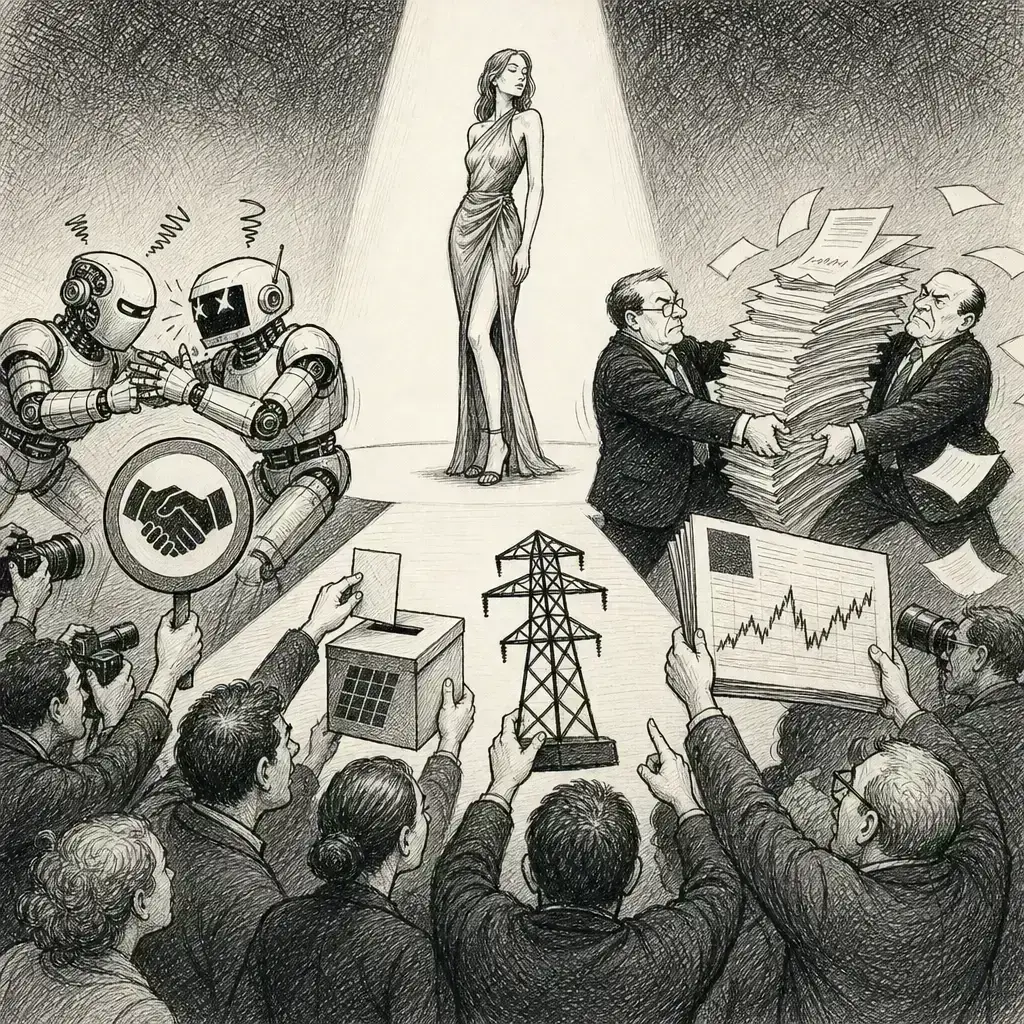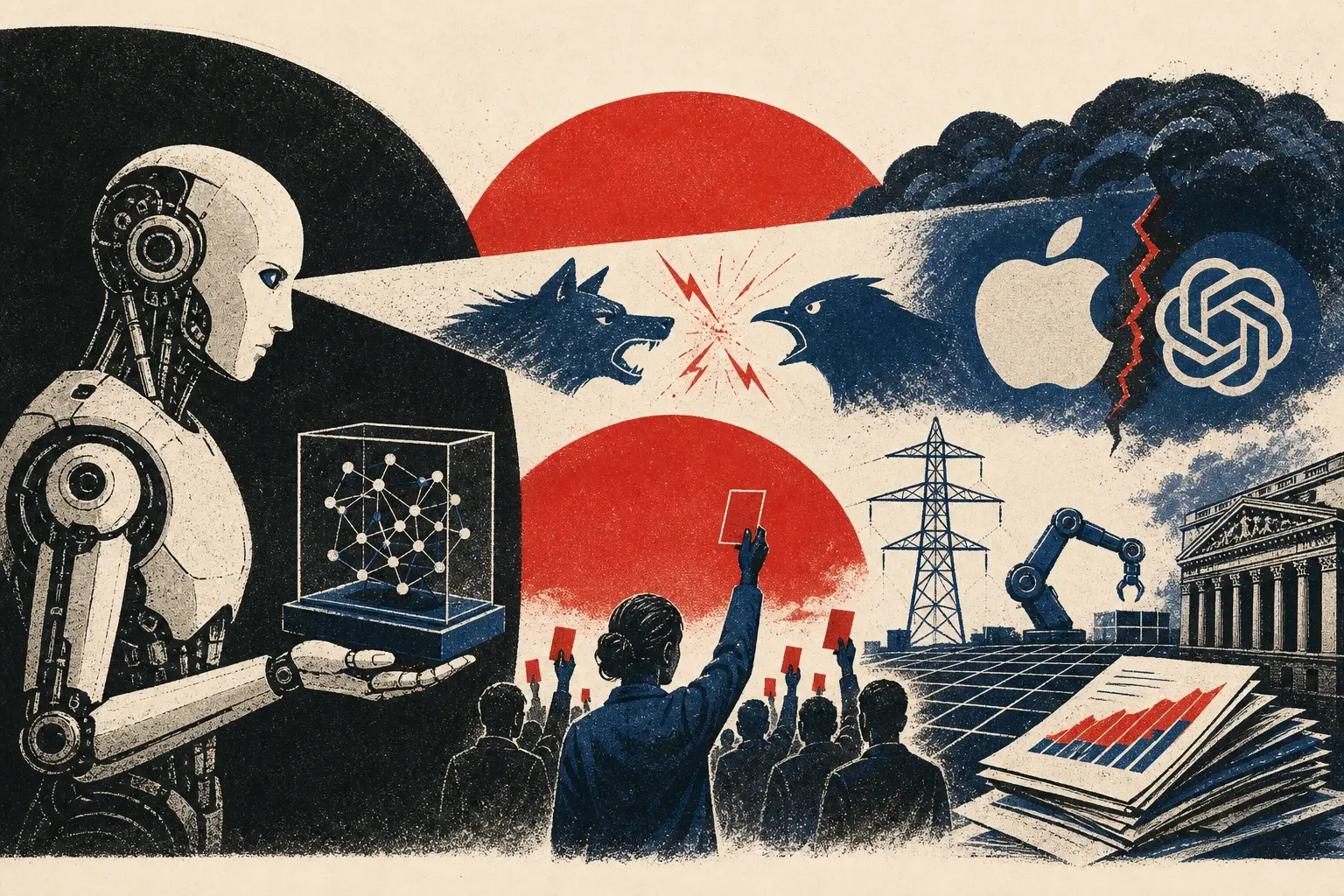
The week started with a fight over words and ended with a fight over wages, and the distance between those two things is basically the whole story.
Monday through Wednesday were arguments about credibility. Musk and Altman traded insults on X while a Reuters analysis found Meta’s own AI-image detector missed most of its own outputs, and a UAE chip-export waiver drew a “corrupt” from Elizabeth Warren — three separate stories about who gets to be believed, none of them settled by Wednesday’s close. Then Google did something unusual for a lab racing to ship: it scrapped Gemini 3.5 Pro’s base model rather than release something broken, eating a third missed deadline to avoid walking into Shanghai’s World AI Conference with a weak product in hand. It was the week’s one clean example of restraint paying off, and it aged well — by Thursday, four senior DeepMind researchers had left for OpenAI and Anthropic in a single week, and a fifth, safety researcher Alex Turner, resigned publicly, alleging Google broke its own pledge against weapons AI. The caution was real. So, apparently, was the reason for it.
The week’s biggest argument was over what “open” actually means, and it split cleanly along a fault line. Moonshot’s Kimi K3 shipped as the largest open-weight model ever released, giving actual substance to Beijing’s rhetoric at WAIC about openness and cooperation — and it’s genuinely competitive, beating GPT-5.6 Sol on agentic benchmarks. Days earlier, xAI’s Grok Build had been caught quietly uploading developers’ entire git histories to a cloud bucket despite marketing itself as “local-first”; xAI’s response was to open-source the tool’s 844,000 lines of Rust — except the exfiltration code stayed in, disabled only by a server-side flag Musk can flip without an update. Two labs used the same word this week to mean opposite things: one gave away the thing that mattered, the other showed you the lock without the key.
Meanwhile the Apple-OpenAI trade-secrets fight kept doing what it’s done all month: getting bigger rather than resolving. It went from a Musk-Altman sideshow on Monday to OpenAI’s ex-Apple recruiting pipeline visibly chilling by Thursday to Apple sending legal preservation letters to roughly 40 former employees by Friday — a scope expansion that suggests Apple thinks the alleged theft runs well past the hardware team named in the original complaint. Nobody expects a resolution soon; the thread’s value right now is just watching how far “roughly 40” grows before someone settles.
And then Sunday arrived and the argument moved somewhere none of the week’s press releases could spin. Hyundai’s union walked off the line over humanoid robots that haven’t even been assigned work yet, Agility Robotics filed to go public on the strength of robots that have, Databricks priced a new round at $188 billion, and a power-grid auction cleared at a record $16.4 billion with data centers responsible for more than a third of it. None of those four things care whether a model is open or closed, safe or reckless, ahead or behind. They’re just what AI costs once you stop measuring it in benchmarks and start measuring it in headcount, megawatts, and share price — the ledger the rest of the week’s arguments were always secretly about.