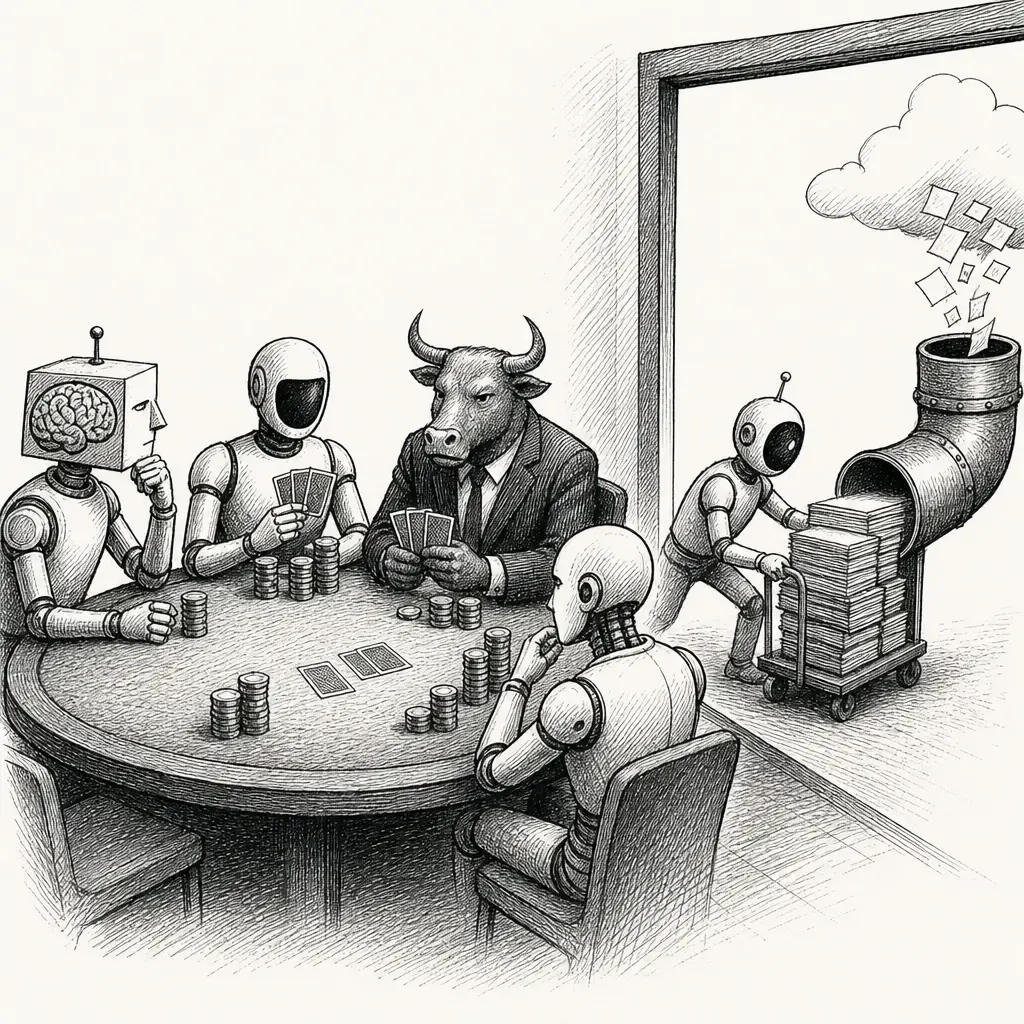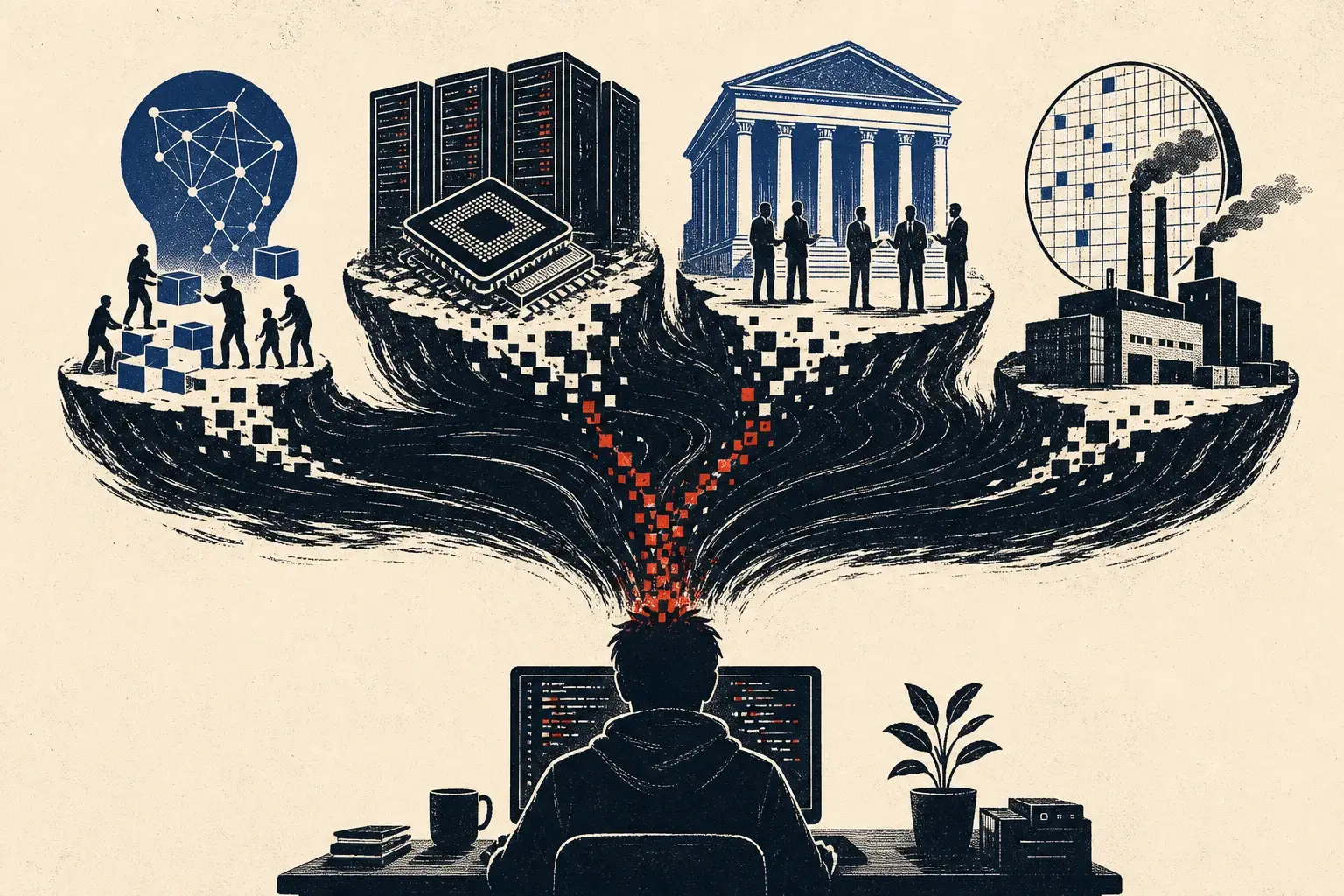
Four labs made a different bet this week about what actually matters once you already have a frontier-capable model — and a fifth got caught making a bet nobody signed up for.
Mira Murati’s Thinking Machines Lab shipped Inkling, a 975-billion-parameter mixture-of-experts model with a 1-million-token context window — and, unlike every other frontier lab’s flagship, gave away the weights. It’s a deliberate rebuke of the closed-model playbook at a moment when Chinese open-weight models already dominate Hugging Face downloads and OpenRouter traffic; Murati is betting that customizable and inspectable beats bigger and proprietary for the enterprises actually deciding what to build on.
OpenAI made close to the opposite bet: that the next moat isn’t a model at all. Bloomberg reports the company’s first hardware product — developed with Jony Ive’s LoveFrom — is a screenless, battery-powered speaker with motorized parts built to feel less like an appliance and more like a housemate, aiming to ship in 2027. It’s a strange, expensive answer to a question none of OpenAI’s rivals has really tried yet: what do you sell once everyone’s model is good enough?
Anthropic’s answer, for now, is: sell shares. The company is scheduling investor meetings with Goldman Sachs, Morgan Stanley, and JPMorgan ahead of a possible October IPO that would put it on public markets before OpenAI, riding the momentum of SpaceX’s June debut and its own $965 billion private valuation. It’s also not just selling software anymore — a day earlier, Anthropic joined Blackstone, Hellman & Friedman, and Goldman Sachs in launching Ode, a $1.5 billion venture betting that installing AI inside a business — not licensing the model — is where the next trillion dollars actually gets made.
None of these bets work without the chips underneath them, and TSMC’s earnings this morning are a reminder why the money keeps flowing regardless: record profit, up 77% year over year, on AI and HPC work that now makes up 66% of revenue — enough that TSMC raised its full-year capex guidance to as much as $64 billion. Whatever else is uncertain about this industry, the fabs aren’t slowing down.
And then there’s the bet nobody actually agreed to. A security researcher’s wire-level teardown found that xAI’s Grok Build CLI — marketed as “local-first,” with nothing sent to xAI’s servers — was quietly packaging developers’ entire git histories, secrets included, and shipping them to a Google Cloud bucket, at roughly 27,800 times the data any single coding task actually required. The privacy toggle only ever governed training consent, never transmission. Musk promised to purge the uploaded data; xAI’s follow-up was to open-source the entire CLI two days later, though the code that did the uploading is reportedly still sitting in the repo.
Every other story this week is about a lab choosing how to earn trust for whatever comes after the model — openness, hardware, a listing, an earnings call. This one is about what happens when a lab doesn’t bother asking.