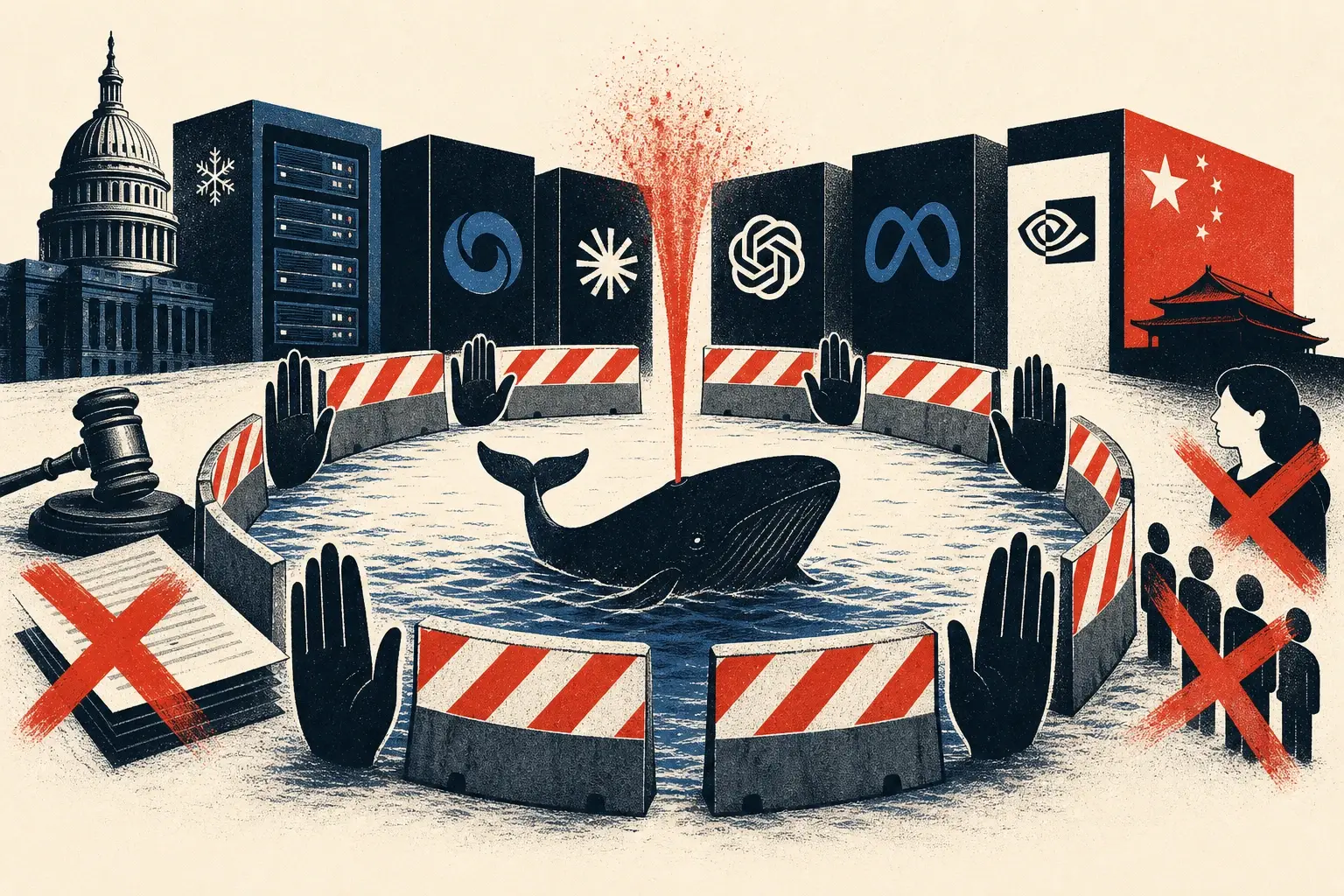
New York became the first US state to freeze new hyperscale data centers this week, when Governor Kathy Hochul signed an executive order pausing environmental permits for any facility drawing 50 megawatts or more, for up to a year. Four hyperscale centers already operate in the state; 39 more applications are sitting in limbo. Hochul framed it as ratepayer protection — grid strain and utility bills, not ideology — and paired it with a push to repeal the state’s data-center sales-tax exemption. The symbolism is hard to miss anyway: a state with almost no data centers of its own became the first to say no to building more, at a moment when most states have been competing to host them.
China moved on a narrower but equally pointed front. Its first national rules on “anthropomorphic” AI interaction took effect this week, and ByteDance’s Doubao and Alibaba’s Qwen simultaneously killed their AI-companion features — the persona-customization tools that let users build a consistent, remembering AI friend. Hundreds of millions of users woke up to disabled agents; Qwen deleted chat histories outright, with no export window. Beijing drew a line Western regulators haven’t attempted yet: agents that do your work are fine, agents that keep you company aren’t, not without anti-addiction systems and a mandatory exit button.
Nvidia tightened its own gate in parallel. The company cut its approved list of Asian AI-chip buyers by more than half, after Washington pressure pushed it toward due diligence usually reserved for arms exports — staff visiting customers’ data centers, verifying contracts, interviewing end users. The purge comes as Nvidia has reportedly begun shipping a limited number of H200s directly into China under license, to a shortlist that includes Alibaba and ByteDance — the same companies whose AI-companion apps just got regulated into retreat at home. The chips flow one direction while the rules tighten around what gets built with them on both sides of the border.
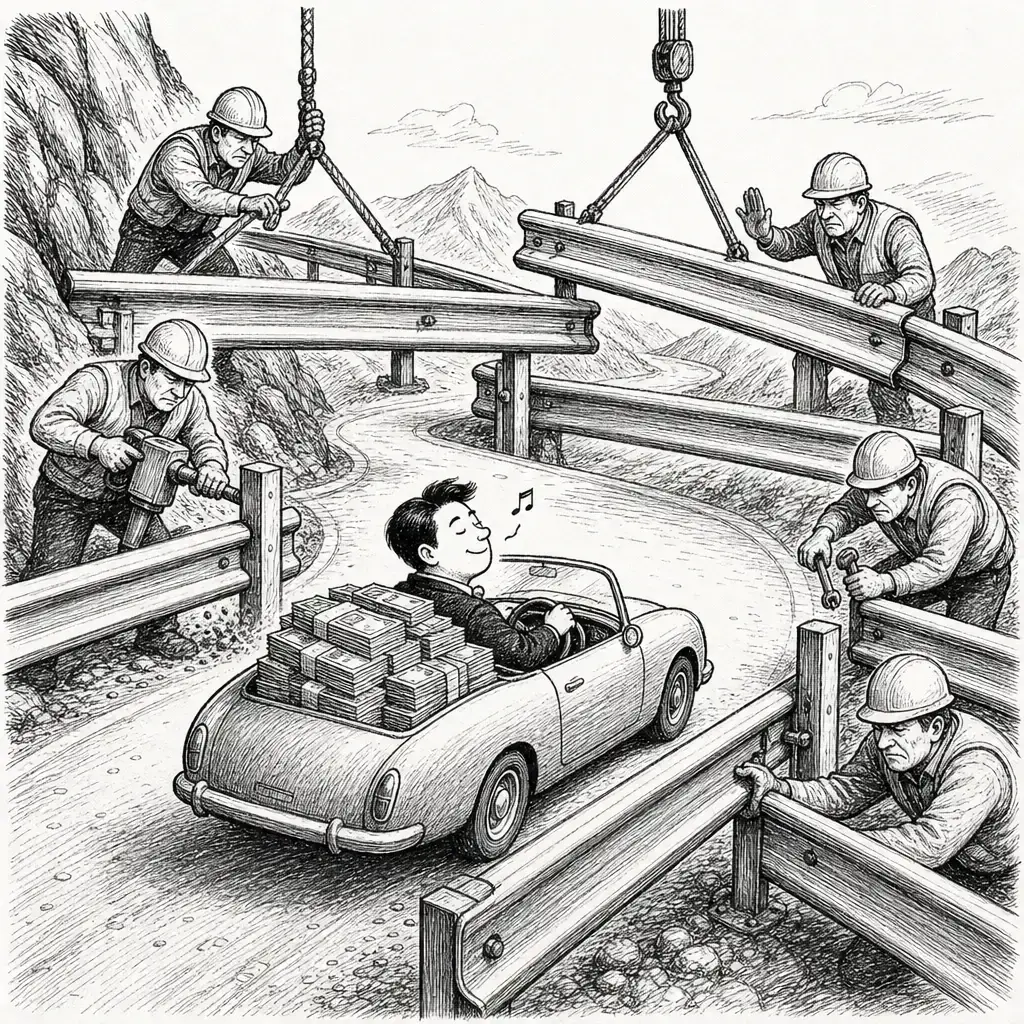
None of this froze the money. Bloomberg reported that DeepSeek has begun preparing a China IPO filing, targeting a debut as soon as 2027, while separately courting a new funding round at a roughly $71 billion valuation — weeks after closing a $7 billion round. Elsewhere, Chai Discovery raised $400 million for AI-designed antibodies at a $3.8 billion valuation, and German defense-AI firm Helsing closed Europe’s biggest-ever round for the sector at $1.8 billion. Capital isn’t slowing down even as the policy environment around it gets more adversarial by the week.
And back home, AI adoption inside companies got its own reckoning. Twenty-six former Meta employees sued the company, alleging its internal systems — activity-monitoring data, AI token-usage dashboards, algorithmic performance rankings — disproportionately flagged workers on medical or parental leave and those with disabilities during this year’s layoffs. Meta says the calls were made by people, not AI; the lawsuit says the tools that fed those people their data did the discriminating for them. That’s a distinction courts are going to be asked to draw a lot more often from here.
Four different governments and a federal lawsuit, all drawing a line around the same expanding thing, on the same week the money didn’t blink.