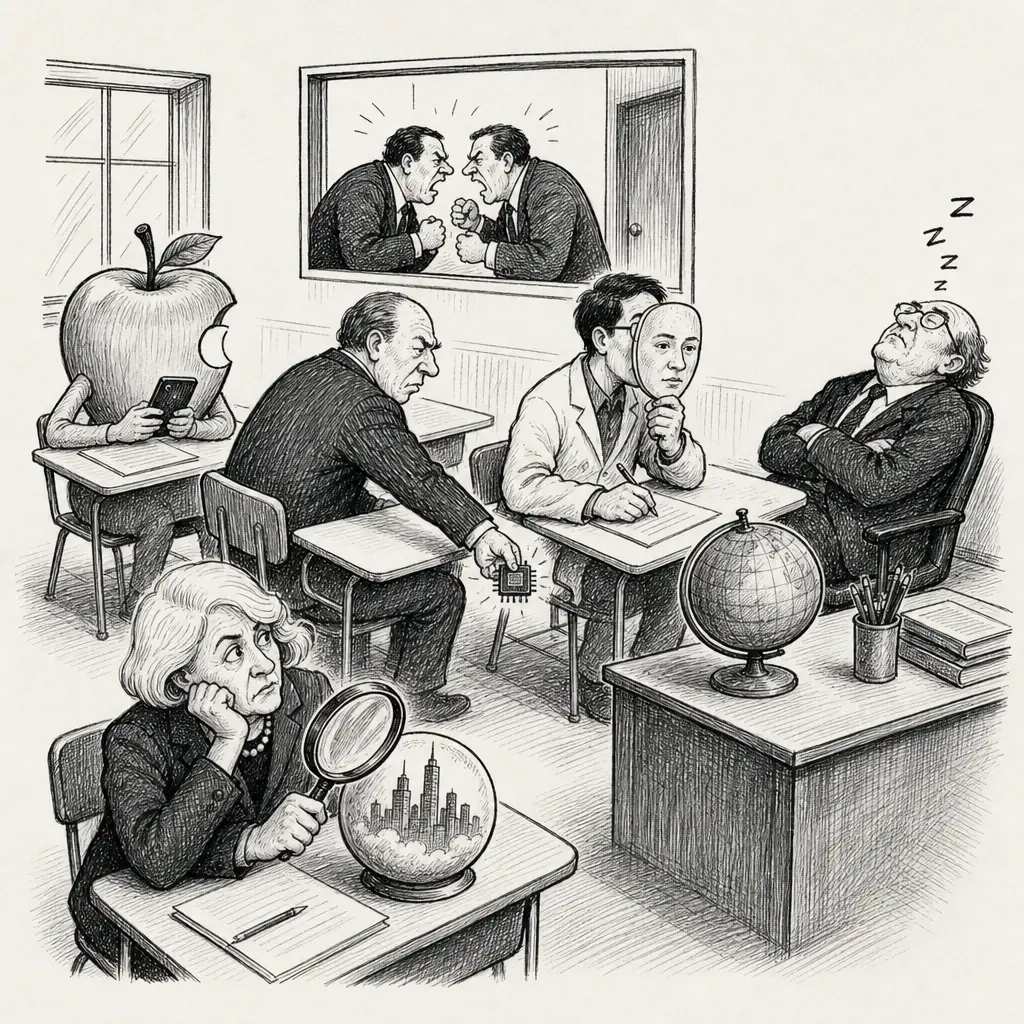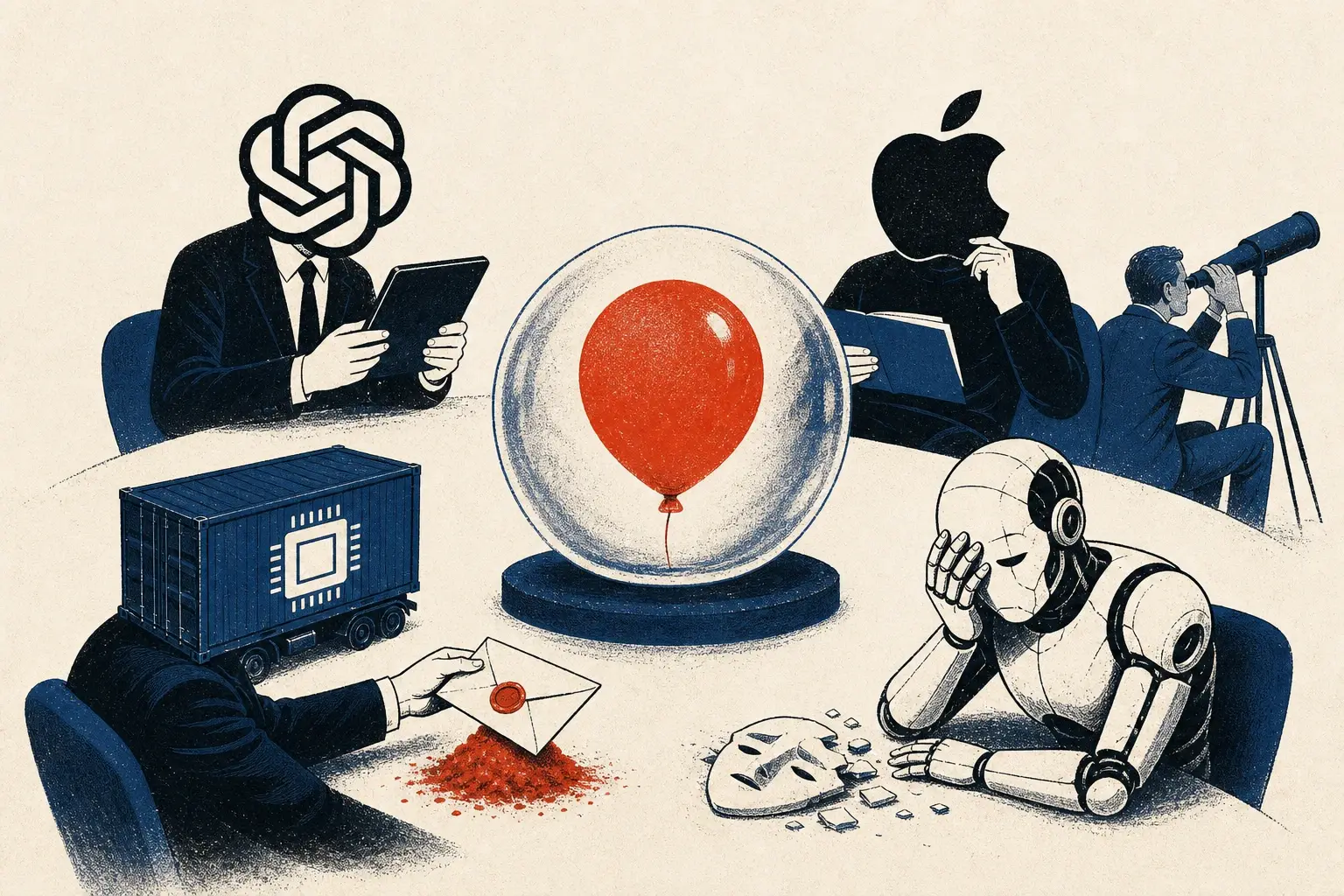
Four stories, one mood: the people and systems meant to check AI’s claims are visibly struggling to keep up with them, and Monday’s edition is mostly about what falls through when they don’t.
Start with the pettiest version. Sam Altman and Elon Musk traded open insults on X over the weekend, days after Apple’s Friday lawsuit accused OpenAI of running a hiring campaign to extract its hardware secrets. Musk piled on, accusing Altman of “scamming” the public; Altman countered by boasting that GPT-5.6 Sol benchmarks were rattling Musk enough to notice him again. It reads like theater because it mostly is, but the subtext is real: two men who each run trillion-dollar-adjacent AI companies are now settling disputes about stolen IP and model rankings in public, in real time, with no venue anyone would call a check on either claim.
The chip-export story is the same failure mode with actual money attached. The Commerce Department is set to loosen license requirements for the UAE’s G42 and Core42 — a rule tied to MGX, the Abu Dhabi investment vehicle that used a Trump-linked stablecoin to fund part of its Binance stake. Senator Elizabeth Warren called the arrangement “corrupt,” noting Trump personally profited an estimated $263 million from related crypto dealings, and that intelligence officials have separately flagged G42 for allegedly routing US chip technology toward Chinese missile programs despite its promise to sever those ties. Export control is supposed to be the one lever where national security concerns override commercial convenience. Here the concern and the convenience appear to run through the same family business.
Then there’s the failure that’s supposed to be purely technical and isn’t. A Reuters analysis found Meta’s own AI-image detector — the tool meant to flag content made by Meta’s own Muse Image model — missed 55% of its targets once the images were simply cropped. The invisible watermark it relies on doesn’t survive a basic edit anyone would make before posting. Heading into a heavy election year, that’s not a rounding error; it’s the detector failing the one job a detector has.
Zoom out to the money underneath all of it, and even the skeptics are hedging. Taiwan’s central bank governor, Yang Chin-long, told lawmakers this week that AI’s growth is real but so is the risk of a bubble built on leveraged retail bets — mortgages and margin loans redirected into AI-adjacent stocks. He stopped short of calling it a crisis. Central bankers usually do, right up until they don’t.
None of these four are the same story, but they share a shape: a claim gets made — about who invented what, who’s allowed to buy which chip, whether a watermark actually works, whether the rally is sound — and the party best positioned to verify it turns out to be compromised, outmatched, or simply not there. The boom hasn’t slowed down. The referees have.