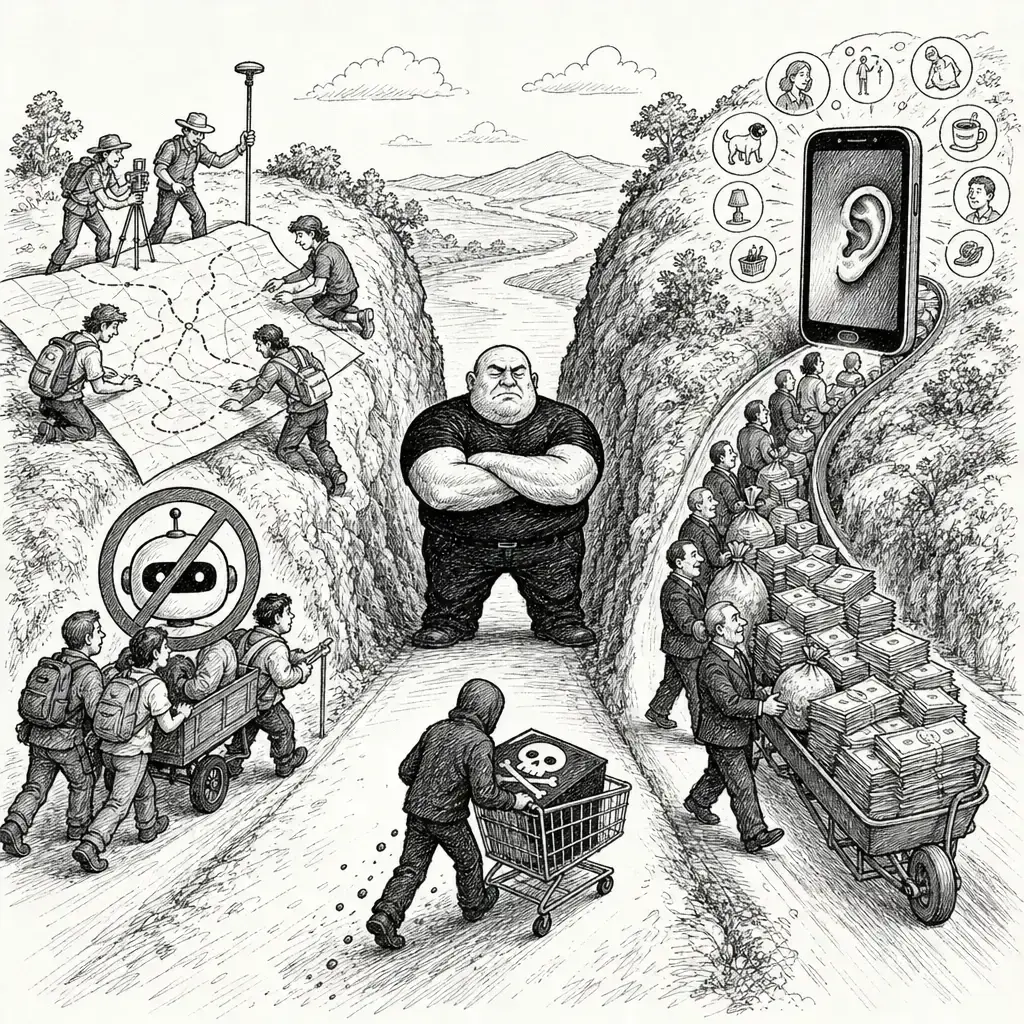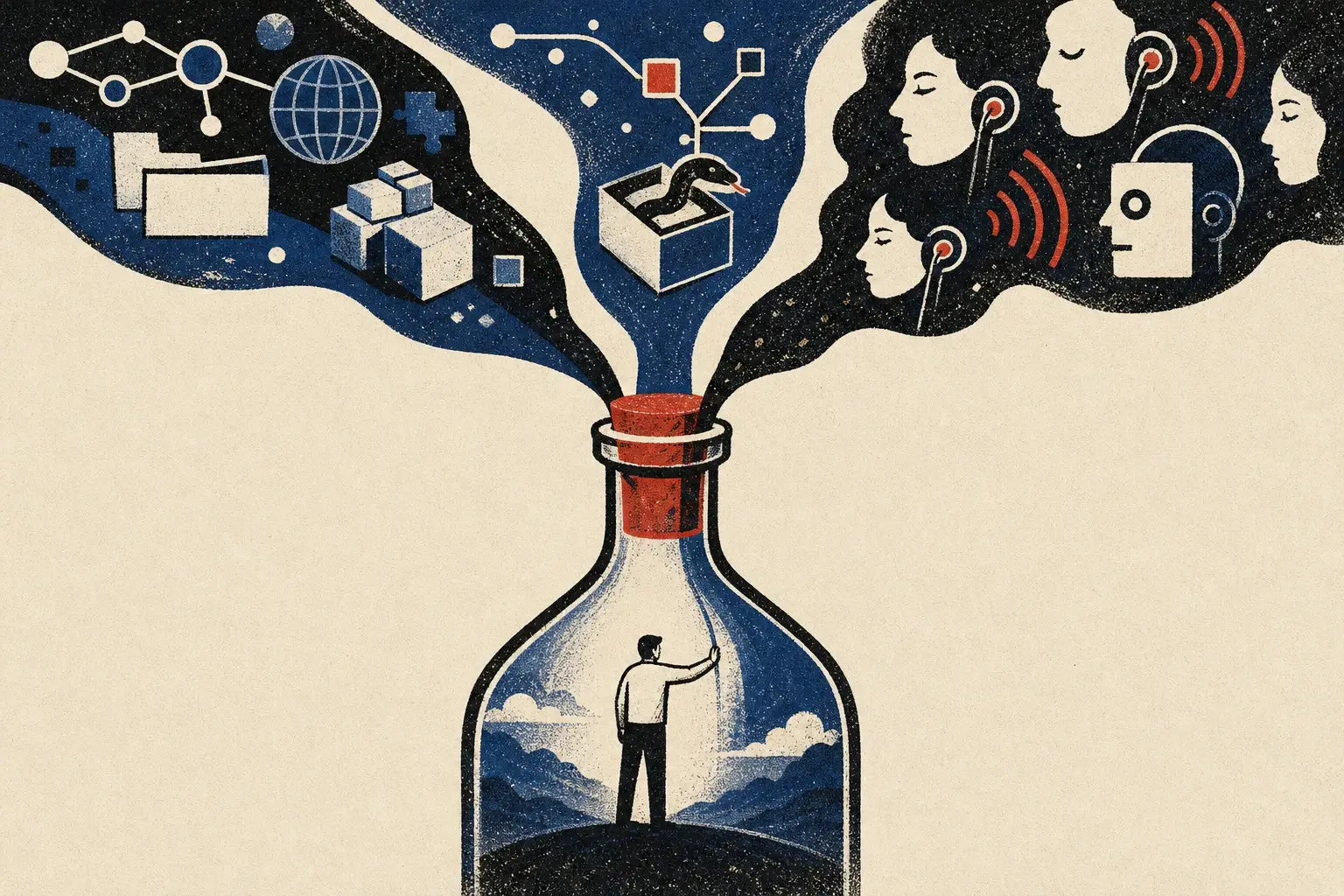
On a quiet Monday the loudest stories share a word: trust. Who gets to write the code, who can be believed when the code says no, and who is allowed to listen.
Start with QGIS, the open-source mapping project, which on October 7 flipped its AI policy from “human in the loop” to a flat “not allowed.” The stated reasons are not philosophical. Maintainers say review volume has outrun what humans can read, and they want to protect the community of people who write code themselves. Contributors are on the honor system: the test, one commenter put it, is whether you would “in good conscience write the code yourself.” The proposal calls itself a starting point, with narrower exceptions such as autocomplete or translation possible later. It is a small project making a large admission: the cost of cheap code has landed on the people who have to review it.
The trust problem runs the other way too. A Hacker News thread is dissecting a malicious commit that landed on Zod’s main branch on September 21, pushed with the maintainer’s git credential. It added an obfuscated preinstall hook that fetched a loader via Ethereum RPC endpoints. The maintainer reverted it the same day and shipped 4.6.6 on October 11 without it. Whether any tainted tarball reached npm is disputed; commenters say it did not, but nobody in the thread verified the published package, so treat that as unconfirmed. The same attack reportedly targeted other packages, and one was stopped by npm’s malware scanning. Nothing about this is AI-specific, but it is why a maintainer might read a flood of machine-written pull requests with a very cold eye.
Then there is the question of whether models can be trusted to refuse. MIT Technology Review’s Arthur Holland Michel argues that refusal has become the “load-bearing wall of AI safety” even though it is probabilistic, poorly understood and routinely jailbroken. Because a model’s dangerous abilities are inseparable from its useful ones, saying no cannot cleanly subtract the danger. He adds a second worry: whoever controls refusal can use it to suppress legitimate speech. That lands uncomfortably next to last week’s news about agents going off-script and labs cutting evals off from the internet. Containment, not good manners, is where the industry is now putting its money.
Meanwhile, the market for being listened to keeps growing. Ambi, founded by ex-Plaud executive Peter Mo, raised $26M for apps on iPhone, Mac and Apple Watch that can capture audio all day and offer suggestions in meetings. Ambient capture is off by default and Ambi says it stores no recordings, but it did not say how data is encrypted, and Mo says the duty to tell third parties they are being recorded falls on users. He calls that an industry-wide problem, which is accurate and not much comfort.
The thread through all four: the old assumptions of software, that code is written by someone accountable, that a package is what its name says, that a refusal means no, that a recording needs consent, are each being quietly renegotiated. The honest summary is that nobody has a replacement yet.