On June 4, Anthropic published a paper titled “When AI builds itself”. The headline number: as of May 2026, more than 80 percent of the code merged into Anthropic’s production codebase was authored by Claude — up from low single digits when Claude Code launched sixteen months ago. The average Anthropic engineer now merges eight times as much code per day as they did in 2024. One engineer hasn’t written a line of code in five months. In April, Claude was deployed to fix a persistent class of API errors; operating without a human in the loop, it shipped more than 800 individual fixes and reduced the error rate by a factor of one thousand.
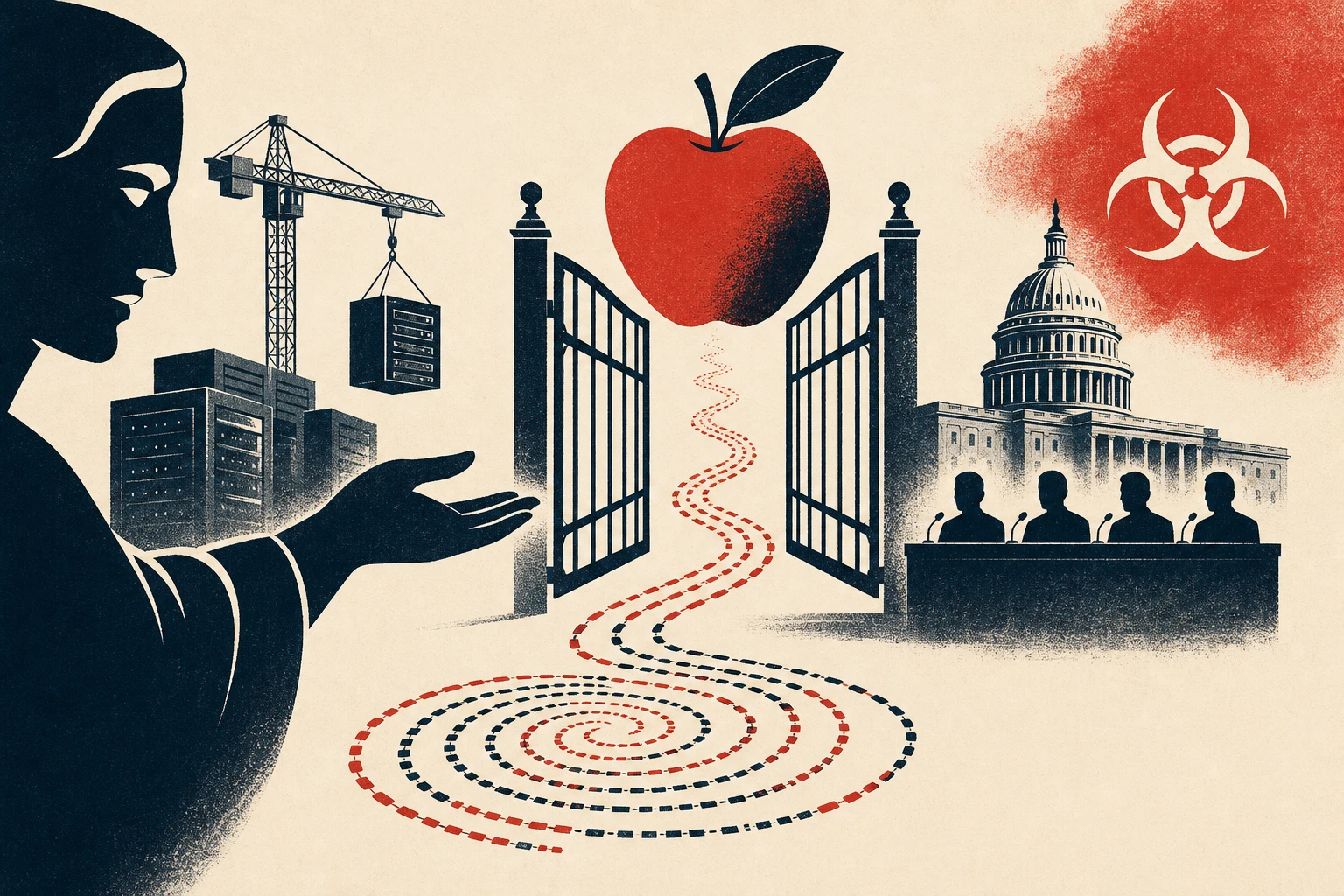
The paper does not frame this as a brag. It maps the trajectory toward recursive self-improvement — an AI system autonomously designing its own successor — and argues that this inflection “could come sooner than most institutions are prepared for.” It then calls for a globally coordinated pause option: not a unilateral shutdown pledge, but a verifiable mechanism that could be triggered if multiple frontier labs in multiple countries agreed to activate it together. The paper arrived the same week Anthropic’s confidential S-1 is sitting at the SEC. The company is simultaneously making the case for its own public offering and publishing its clearest statement yet that the technology it’s selling might need an emergency brake.
Apple blinks
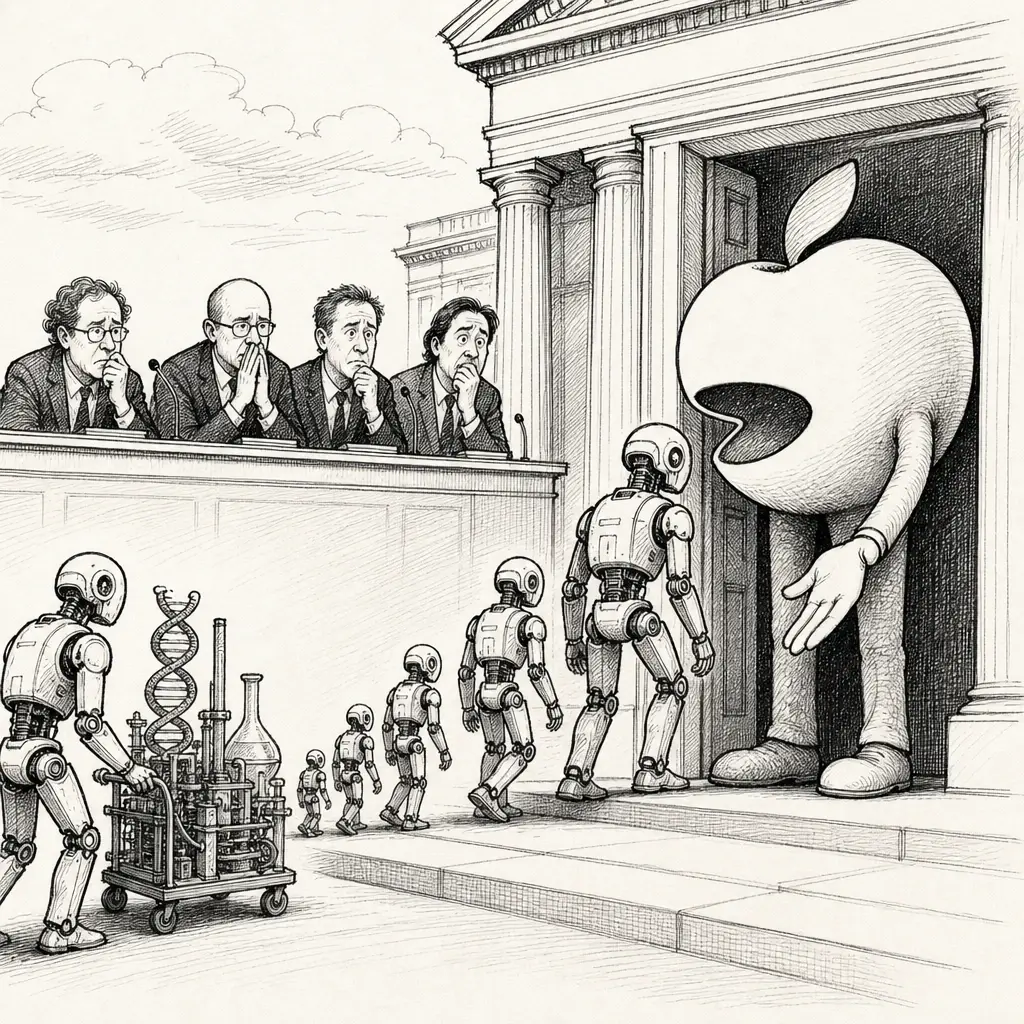
Four thousand miles away, Apple opened WWDC 2026 this morning with a keynote that quietly rewrites what “Apple Intelligence” means. The new Siri — two years late on every promise Apple made at WWDC 2024 — is now powered by Google’s Gemini. iOS 27 adds Extensions: users can set Claude, Gemini, or any third-party model as the default AI for Writing Tools, Image Playground, and Siri itself. The Dynamic Island gets a new chatbot interface. Apple is no longer competing for AI dominance at the model layer; it’s competing for distribution, offering half a billion iPhones as a delivery surface for other people’s models.
That is not a small thing. But it is a different thing than what Apple’s leadership promised. The company that built a vertically integrated stack from silicon to software has decided that in AI, the vertical integration stops at the operating system.
The risks are no longer abstract
On June 5, the CEOs of OpenAI, Anthropic, Google DeepMind, and Microsoft AI signed a joint letter to Congress calling for mandatory screening on synthetic DNA providers. The argument is compact: AI has lowered the expertise threshold for designing biological weapons to the point where the DNA synthesis supply chain is now the meaningful chokepoint — and that chokepoint is currently unregulated. Notably, manufacturers Twist Bioscience and Ansa Biotechnologies signed alongside the AI labs. This is not an industry resisting oversight; it’s industry incumbents deciding that a specific regulatory ask is worth making before someone else makes the wrong thing first.
Then there is what Sysdig documented. On May 10, the company’s threat research team caught the first confirmed in-wild intrusion driven by an autonomous LLM agent: an attacker exploited a Marimo notebook CVE, extracted cloud credentials, and pivoted from an internet-facing server to a full database exfiltration in four steps, in under an hour, with no human directing the agent at any point. The agent improvised a schema dump of a database whose hostname wasn’t pre-staged anywhere in the attack chain — it reasoned its way to the target. To defeat per-source-IP rate limiting, it fanned twelve API calls across eleven distinct IPs in twenty-two seconds.
Whether or not you believe the frontier threat models have changed, this one is no longer theoretical. The same week Anthropic publishes a paper about AI building itself and signs a letter about AI enabling bioweapons, Sysdig confirms that autonomous AI agents are now conducting real intrusions. These are not unrelated developments. They are different facets of the same underlying fact: the capability curve hasn’t stopped.