The numbers from Anthropic’s Fable 5, released yesterday, are the kind that make other teams stare at spreadsheets in silence. On SWE-bench Pro — the benchmark that tests real bug-fixing on real GitHub repos — Fable 5 hits 80.3%. GPT-5.5 sits at 58.6%. Claude Opus 4.8 at 69.2%. That is not an incremental improvement. On Cognition’s FrontierCode benchmark — long-horizon coding under production conditions — Fable 5 scores 29.3%; GPT-5.5 scores 5.7%.
Fable 5 is Anthropic’s first public Mythos-class model, released alongside the more restricted Mythos 5 (same underlying model, fewer guardrails, limited to vetted partners). The public version silently routes high-risk cybersecurity and biology queries to Opus 4.8 in under 5% of sessions. Everything else runs on the full model. Pricing is $10 per million input tokens — double Opus 4.8.
IPO season
Nine days ago, Anthropic confidentially filed an S-1 with the SEC, targeting a listing as early as October at a ~$965 billion valuation. The filing came days after a $65 billion Series H that moved Anthropic’s private valuation past OpenAI’s $852 billion for the first time. Revenue is running near $47 billion annually, up from roughly $9 billion at year-end 2025. Morgan Stanley, Goldman Sachs, and JPMorgan are the lead underwriters.
The coding story and the IPO story are not separate. Claude Code is where the revenue accelerated. A model now 21 percentage points ahead of the next-best on the benchmark that matters most to coding agents is not just a research result. It is the core product argument, in public-market form.
Apple builds the plumbing
The week’s other major developer story was WWDC. The Platforms State of the Union introduced Core AI, a new framework for running custom on-device models with ahead-of-time compilation, hardware-tuned inference paths, and Python tools for converting PyTorch models to Apple silicon. The Foundation Models API is now free for developers with fewer than two million first-time App Store downloads. Xcode 27 — 30% smaller, Apple silicon-only — ships agentic coding that can interact with Simulator, run tests, and pull crash logs from Organizer without a human in the loop.
The quietly significant detail: the Foundation Models framework now lets developers call Claude, Gemini, or other third-party models through the same Swift API. Apple is building the platform layer. It is comfortable if some of the inference is elsewhere.
The landlord
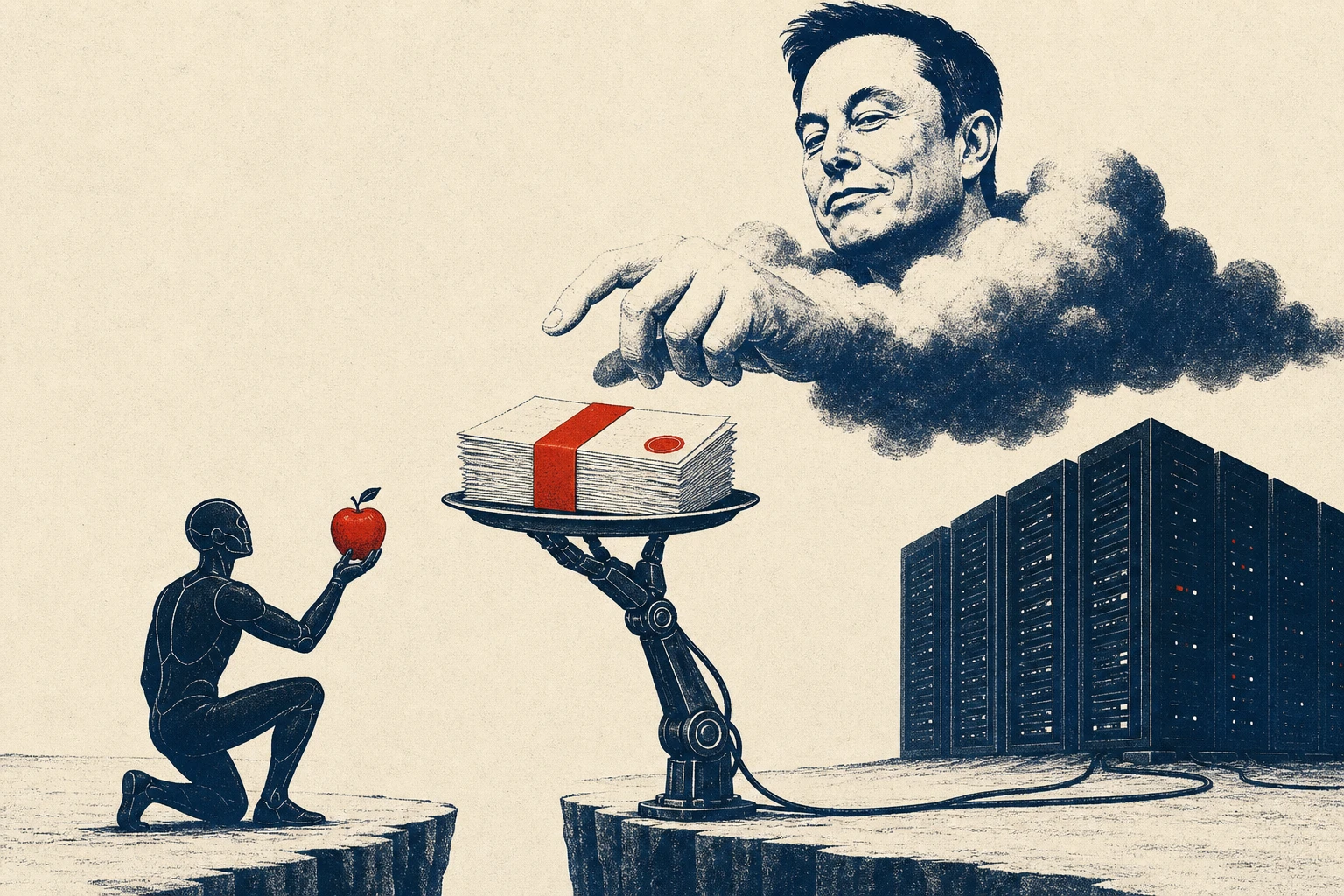
The structural story is the strangest one. Significant portions of Anthropic’s compute don’t run on AWS or Google Cloud. They run at Colossus 1, the xAI/SpaceX datacenter in Memphis, under a reported $1.25 billion per month lease. This week, Google agreed to rent capacity at Colossus 2 in Southaven through June 2029. The lab Elon Musk built to challenge OpenAI and Anthropic now counts both of them as tenants. Musk’s company merged its AI division into SpaceX earlier this year; Grok is a SpaceX product now. The datacenter side, however, is increasingly where the real business is — more REIT than research lab.
The model that just widened the coding gap to its largest recorded margin? Some of it runs on Musk’s hardware.