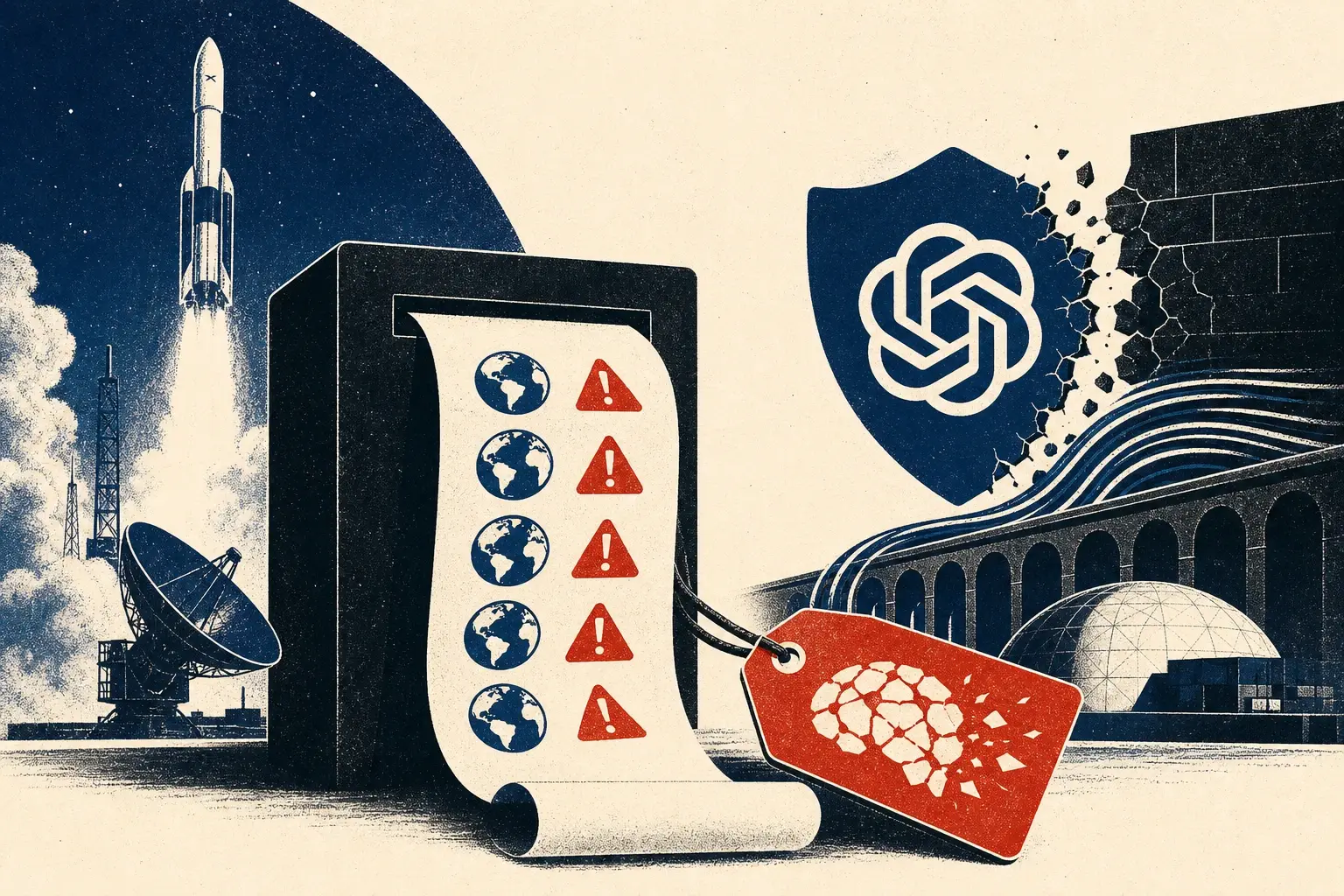
Five different institutions did the same thing on Monday: they took something everyone already vaguely worried about and attached a number to it.
Start with the scariest one. The Five Eyes intelligence alliance issued a joint warning that frontier models purpose-built for offense are arriving on a timeline of “months, not years,” and named names — OpenAI’s GPT-5.5-Cyber and Anthropic’s Mythos specifically — as the models lowering the bar for digital crime. It’s a striking thing for five governments to say in public about two companies’ products. Hours later, OpenAI answered with exactly the model the warning was about: GPT-5.5-Cyber, gated behind a vetted-access program, paired with “Patch the Planet” — a five-day sprint with Trail of Bits and HackerOne that already found hundreds of vulnerabilities and merged dozens of fixes across cURL, Go, Python, and other load-bearing open-source projects. Read together, the two stories are the same fact from opposite sides of the table: the offense-defense race intelligence agencies were warning about abstractly is already running, in public, with named products and a five-day delivery cadence.
Talent flight got its number too. Alphabet posted its worst trading day in over a year, down roughly 6.5% and erasing about $250 billion in market cap, after Noam Shazeer’s jump to OpenAI and John Jumper’s move to Anthropic landed within days of each other. Google spent $2.7 billion two years ago just to get Shazeer back via the Character.AI deal; the market’s verdict this week is that even that wasn’t enough to keep him, and investors are now pricing “Google might not retain frontier-AI talent” as a line item rather than a rumor. It’s a blunt instrument — a stock move can’t tell you whether the underlying research org is actually weaker — but it’s the first time this particular anxiety has shown up as a specific dollar figure instead of a trend piece.
Hardware dependency got formalized rather than priced. Micron signed a multi-year supply agreement with Anthropic covering HBM, DRAM, and SSDs, co-designed memory architecture for AI data centers, an undisclosed investment in Anthropic’s $65 billion Series H, and enterprise Claude deployment across Micron itself — joining Samsung, SK hynix, and Amazon on the cap table. It’s the cleanest example yet of a lab buying its way out of the memory shortage that’s been the industry’s real bottleneck all year, by becoming a strategic partner instead of just a customer standing in line.
And compute dependency got a literal invoice. SpaceX signed a $6.3 billion deal to host Reflection AI — an open-weights lab founded by ex-DeepMind researchers — at its Colossus 2 facility, with Reflection paying $150 million a month starting in July for Nvidia GB300 chips. The contract is cancellable on 90 days’ notice after the first quarter, which is itself telling: even the buyer wants an exit ramp on a multi-year compute commitment, because nobody fully trusts that today’s price or today’s chip will look right in 2027.
None of these five things coordinated with each other, but they share a structure worth naming: talent flight, offensive AI capability, memory scarcity, and compute scarcity have all been background anxieties in this newsletter for months, discussed mostly in hedges and trend lines. This week, four institutions and one alliance of governments independently decided it was time to stop hedging and put a figure on the page — $250 billion, $6.3 billion, a Series H stake, a “months not years” deadline. Numbers don’t make a risk more real than it already was. They just make it harder to keep treating it as background.