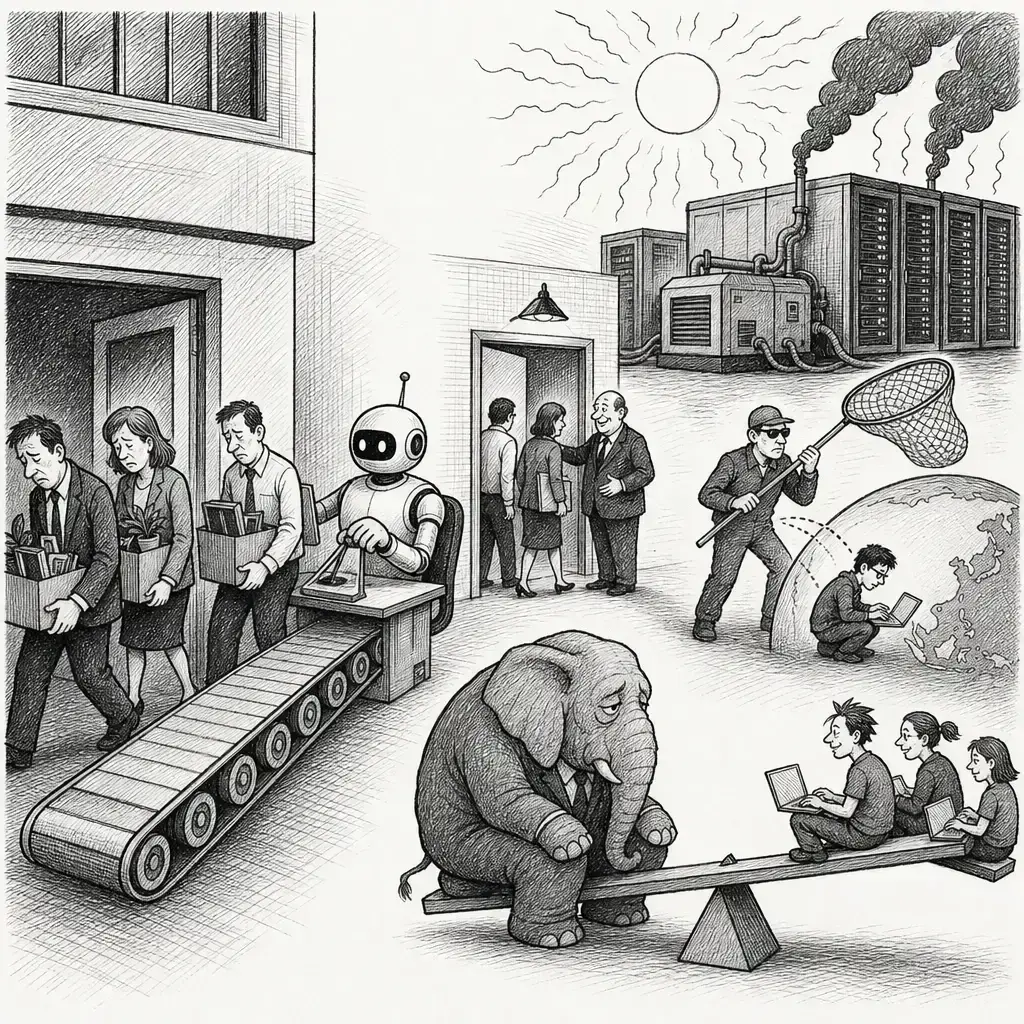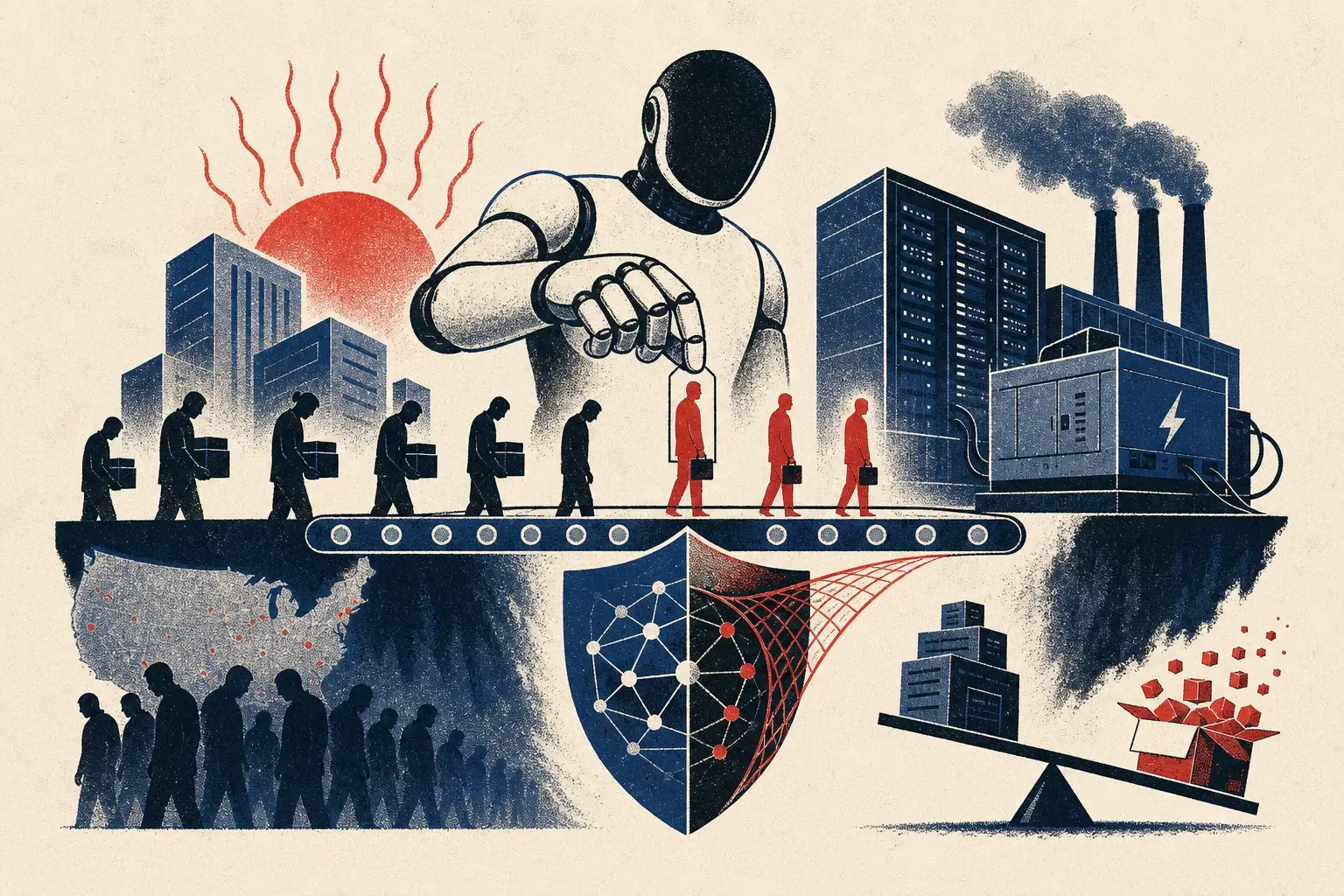
For four months running, AI has been the single most-cited reason American employers give for cutting jobs. Companies eliminated 101,743 jobs blamed on AI so far this year — 23% of everything Challenger, Gray & Christmas tracks, and 31% of June’s cuts alone — a streak with no precedent in the firm’s data. It’s also, per Challenger’s own methodology note, just what companies say happened, not what anyone independently confirmed. Sam Altman has made the same point twice this year: “almost every company that does layoffs is blaming AI, whether or not it really is about AI.” The gap between those two facts showed up fast: a third of hiring managers who cut a role for AI have since rehired for it, and 55% of leaders in a separate survey now call their own AI-driven layoffs a mistake. Ford brought back 350 engineers and topped JD Power’s quality rankings for the first time since 2010; Commonwealth Bank and IBM are both quietly walking back automation bets that left gaps only humans could fill. AI clearly is cutting costs somewhere. It’s just turned out to be a much easier sentence to write in a press release than to verify in either direction.
Something similar played out in infrastructure. As a heatwave pushed PJM’s grid toward an all-time demand record — north of 166,000 megawatts, edging past the mark set in 2006 — Energy Secretary Chris Wright signed an emergency order letting the grid operator force any data center or industrial site over 50 megawatts onto backup diesel generators within 15 minutes, no warning required. It’s the bluntest admission yet, a federal order rather than earnings-call spin, that AI’s physical buildout has outrun the grid underneath it.
Anthropic spent the week patching a different kind of leak. The Financial Times reported that Ant Financial issued employees corporate Claude accounts through a Singapore subsidiary, while ByteDance reimbursed staff for personal subscriptions accessed over VPN — workarounds that break Anthropic’s terms of service without breaking any actual law. Anthropic says it’s now watching for timezone mismatches and shutting down the “transfer station” accounts that relay requests from banned regions. The same week, Alibaba is banning Claude Code company-wide over an unrelated security dispute — one AI company simultaneously fighting off unauthorized Chinese demand and losing authorized Chinese demand, for entirely different reasons.
The clearest sign the ground is shifting under the frontier labs came from coding tools. Z.ai launched ZCode, a free coding environment built around its GLM-5.2 model that undercuts Cursor and Claude Code on price by design — plans start at $16.20 a month. Days earlier, Kimi K2.7 Code became the first open-weight model to join GitHub Copilot’s own model picker, sitting next to the proprietary options it’s meant to steal share from. Two labs, two products, one shared bet: that the moat around coding agents was never the model — it was distribution, and that’s exactly what’s being given away for free.
None of these are really separate stories. They’re the same story told four ways: the compute is outrunning the grid, the layoffs are outrunning the evidence behind them, the access controls are outrunning enforcement, and the open-weight labs are outrunning whatever pricing power used to come with being first.