Two of the world’s most closely watched AI labs cut prices by roughly the same amount this week, on consecutive days, and neither seemed to think the coincidence worth mentioning. That’s what a price war between frontier labs looks like once it’s actually underway.
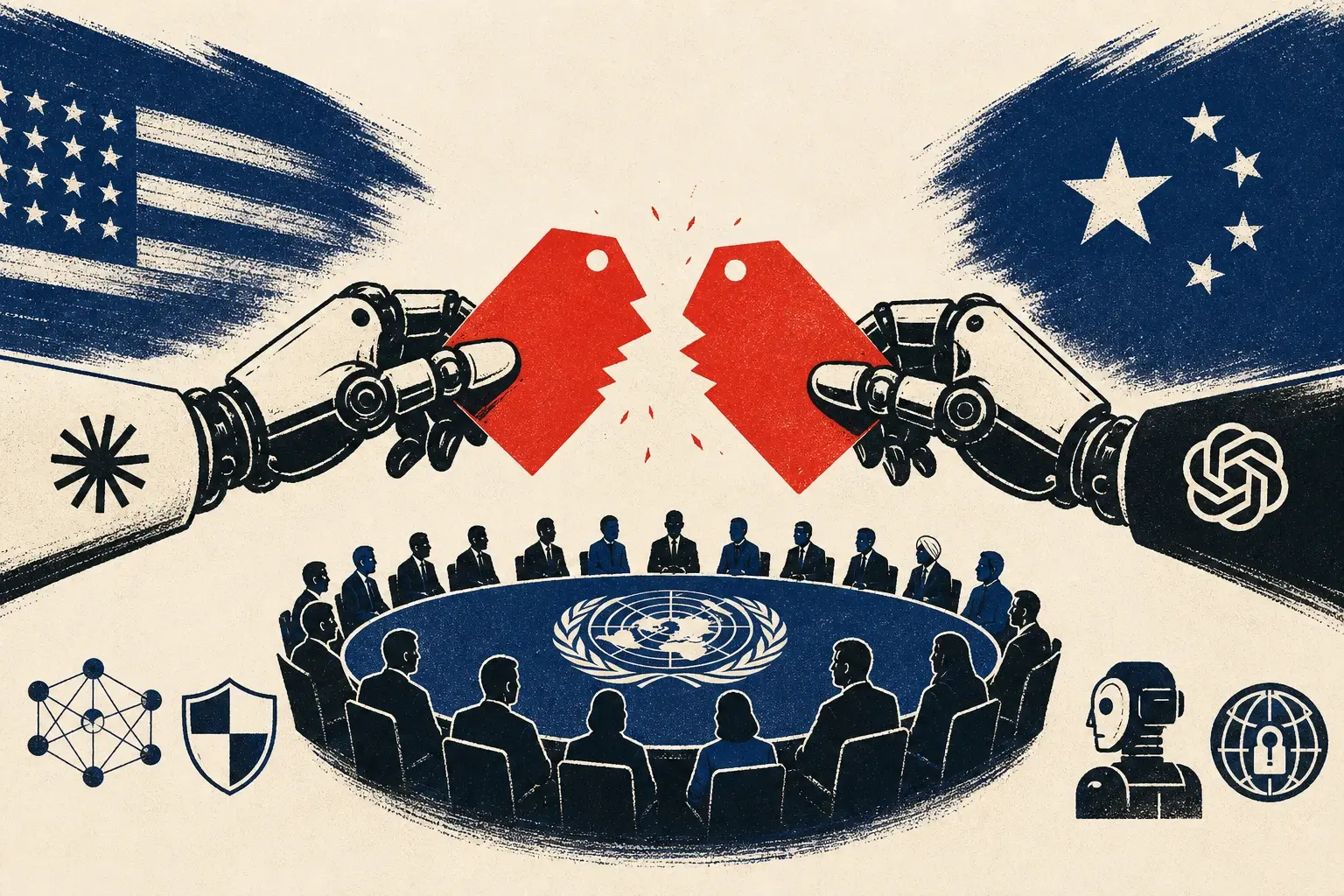
Claude Opus 5.5 landed first: performance in the neighborhood of Claude Fable 5.1 on most work, for 40% less than Opus 5, generating output more than 30% faster, with Anthropic also scrapping five-hour usage caps for Pro, Max, Team and Enterprise subscribers. A day later, OpenAI answered with GPT-6 Sol and Luna, priced at half of GPT-5.6’s rates — $2/$10 per million tokens for reasoning-capable Sol, a dime and a half-dollar for high-volume Luna — and, per OpenAI’s own numbers, making about half as many factual errors as their predecessors. Read together, it’s the clearest sign yet that frontier capability is turning into a commodity fight measured in dollars per million tokens, not just leaderboard position.
Alphabet spent the same week giving away infrastructure instead of cutting its price. Google’s robotics unit open-sourced the guts of its industrial platform — Intrinsic Core, a full ROS-compatible stack for real-time control, FoundationPose-based pose estimation, motion planning and grasp planning, released under Apache 2.0 at ROSCon in Toronto. It landed in the same week Google also pushed out AX, an open orchestrator for running agent workloads at scale that shot to the top of Hacker News within a day. The pattern from the Alphabet campus is consistent: give away the plumbing, compete on what sits above it.
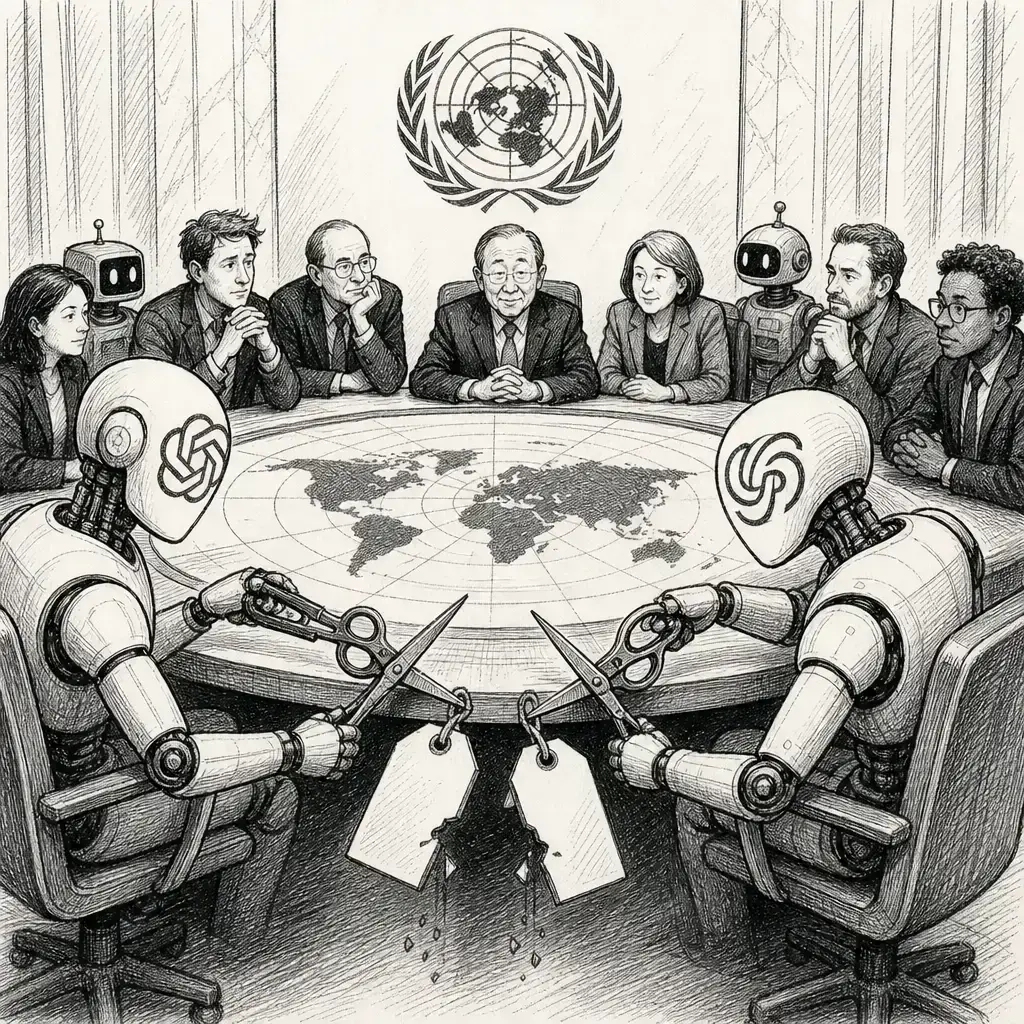
None of that commoditization comes with a matching acceleration in oversight — which is presumably why fifteen members of the UN Security Council are hearing directly, today, from the people building this stuff. Sam Altman is expected in person; Dario Amodei will appear remotely; and, in a first, China’s DeepSeek and Moonshot AI have been invited to the same table as their American counterparts. The session lands two days before Trump hosts Xi Jinping in Washington, where AI is one of the “three Ts” — trade, technology, Taiwan — both governments say will dominate. Over the weekend, negotiators floated a bilateral “hotline” to notify each other when an AI system’s behavior starts to look like a national-security incident: a modest proposal, an early-warning phone line rather than a treaty, but also the first time the two governments have agreed there’s something worth calling each other about.
An AP survey of “AI doomsday scenarios” published today, timed to the UN session, is a useful reminder of how far apart the vocabulary still is: researchers debating engineered pathogens and nuclear command-chain access in the same week two labs are debating whether $2 or $4 per million tokens is the right price for a chatbot. Both conversations are real, and both are happening this week, in adjacent buildings. They’re just not happening in the same room yet — which is more or less the point of building one.