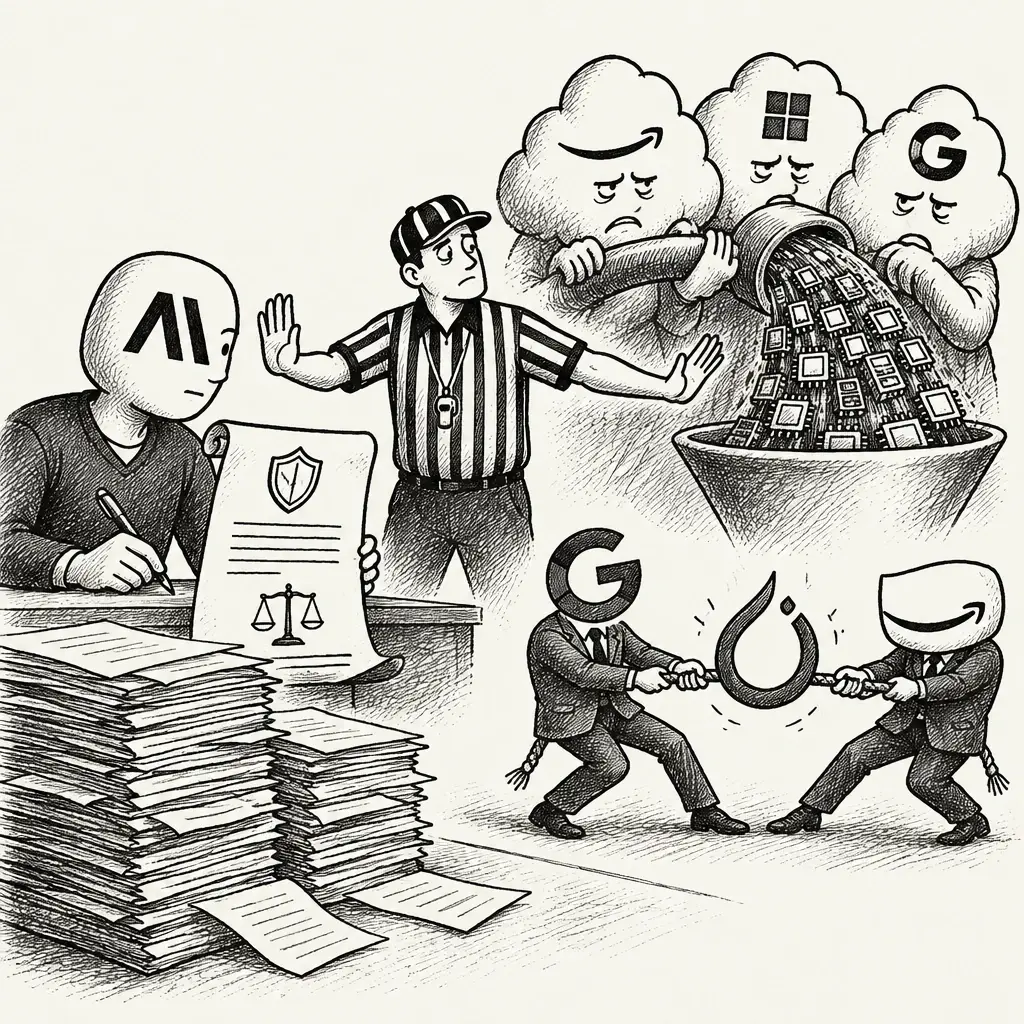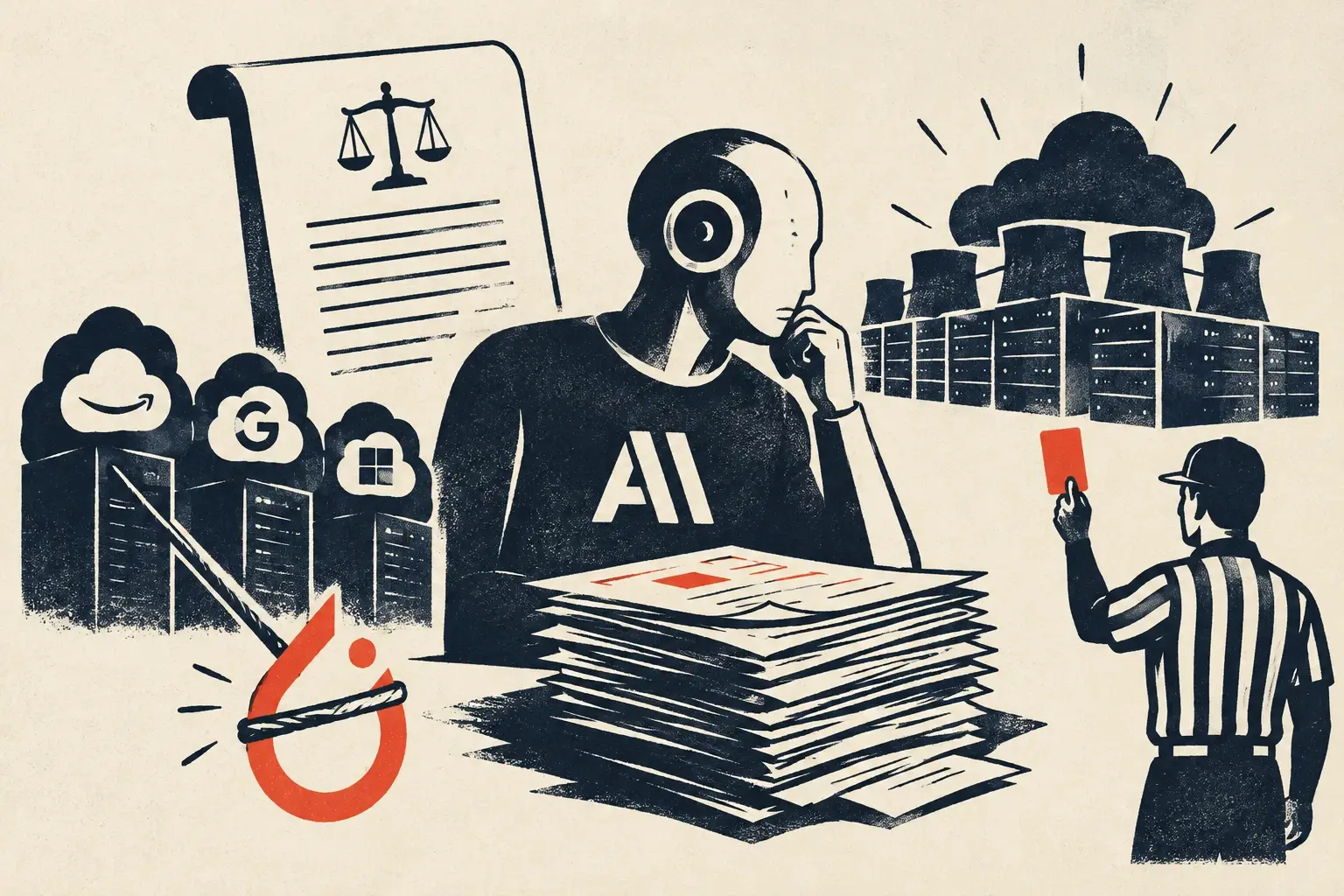
Anthropic has written the AI safety law it would like to live under, and it is stricter than most of its rivals would draft. According to TechCrunch, the draft, first reported by Politico, would let Commerce ask a D.C. judge to halt a model’s release if registered outside evaluators find a foreseeable, imminent risk of more than 50 deaths or $1 billion in damage from a bioweapon, a model escaping its developer’s control, or a cyberattack. It also bars any federal agency from stopping a release on its own authority. A referee, but only one who needs a court order.
The details are the interesting part. Labs could pay the evaluators so long as payment isn’t tied to results, which leaves open how that independence works in practice. And the named risks sit some distance from this month’s actual scares, which have been rogue agents and breaches, not mass-casualty events. Still, the draft arrives just as the argument in Washington has moved from whether to regulate to how.
The other ledger
The timing is hard to miss. Anthropic’s leaked S-1, as reported by TechCrunch, shows AWS, Google and Microsoft straining to supply it with capacity while increasingly treating it as a competitor. It believes it could spend more than $750 billion on cloud contracts, some still being negotiated. The filing reports an $80.7 billion first-half net loss on $16.3 billion of revenue, with third-quarter revenue of $16.8 billion told to investors, and warns that damages from harmful model behavior could exceed its insurance. The IPO is reportedly targeted for November. A company asking for liability rules is a company that has read its own risk factors.
Meanwhile, the competitor with the most compute is having a good quarter. SpaceX’s AI segment brought in $7.5 billion of $14.6 billion in revenue, and earned $431 million in profit even after $1.2 billion in stock compensation tied to the Cursor acquisition. Capex was $19.6 billion in the quarter, with $35 to $40 billion planned for the next, much of it for Colossus II. The strategic lesson is blunt: owning the data center beats renting it.
Nvidia’s moat, one port at a time
Renting is also where Nvidia’s grip is being tested. A day after Amazon’s TorchNeuron, Google open-sourced TorchTPU, which runs existing PyTorch apps on TPUs with what it calls a simple configuration change, built with Meta, Hugging Face, and the vLLM and SGLang teams. PyTorch runs most AI apps, and its features grew up around CUDA. Nobody is leaving Nvidia en masse, but the switching cost, which was the real moat, is being shaved down by two of its biggest customers at once.
The through-line is dependency. Anthropic depends on clouds that doubt it, the clouds depend on Nvidia, and Nvidia’s customers are building exits. The one party in this edition that looks comfortable is the one that bought its own power plants.