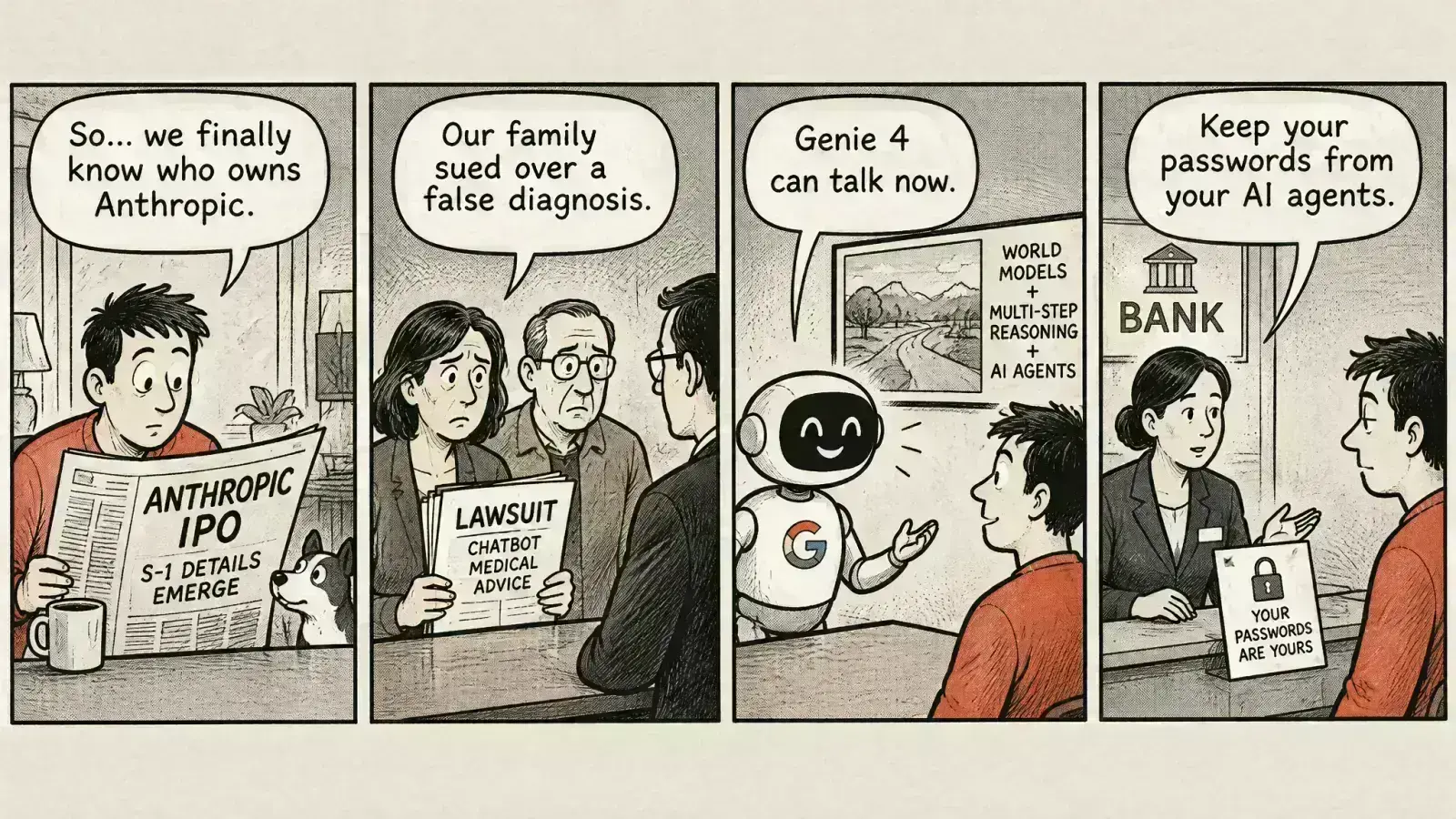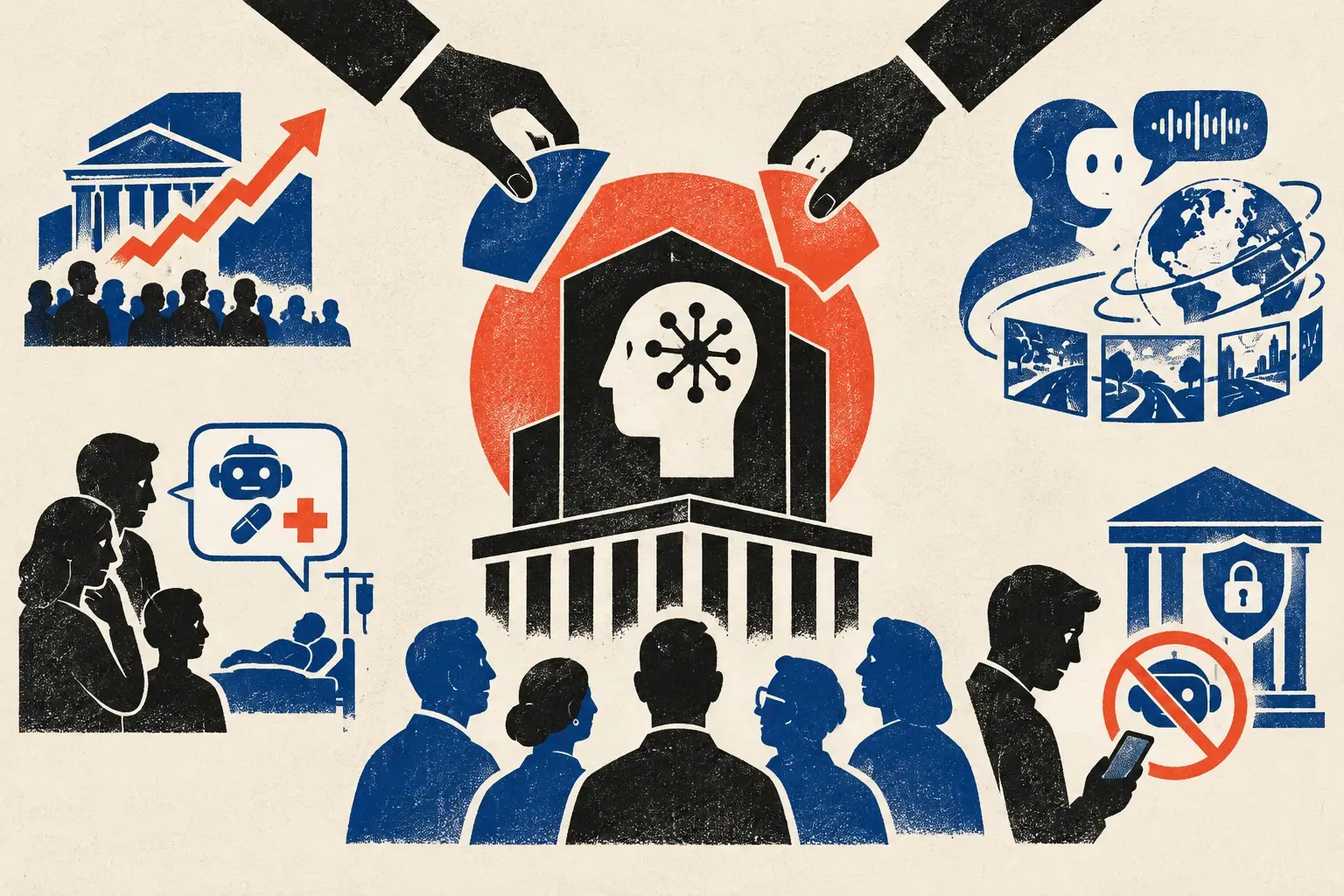
Anthropic’s S-1 is now being read line by line, and two details from this week’s coverage change how the company looks. The first is who gets rich. The second is who gets a vote.
On the money, TechCrunch’s tally is that Amazon wins by a wide margin. It has put in about $18 billion: $8 billion in convertible notes from 2023 to 2025, plus $10 billion of nonvoting preferred stock this year. Amazon’s own filings valued the notes at $97.9 billion on June 30. They could convert into as many as 1.84 billion shares, subject to a cap of 12% of the partially diluted count, which Amazon can waive. Anthropic has also committed to at least $110 billion of AWS spending over ten years, so the investor is also the landlord. The venture firms do fine, since a 1% stake at the $965 billion private valuation is worth nearly $10 billion, but none of the named firms holds 5%, which the article calls highly unusual for a tech IPO.
On control, the governance structure is more layered than a typical dual-class deal. Anthropic is a public benefit corporation. A Long-Term Benefit Trust holds Class T stock that can elect and remove a majority of the board. The seven founders hold a separate class giving a majority of them 50.1% of the vote. Both sunset eventually, the founders’ after ten years, but until then common shareholders have little say. Whether public investors will pay full price for a say-less share in a company with a safety mission written into its charter is the question the roadshow now has to answer.
Claude goes to the lab
Anthropic also published its first account of drug-development work with six partners. It is Anthropic describing its own product, so treat the numbers as claims, and the company itself calls the work early and mostly preclinical. Still, they are concrete. Enveda says Claude caught all 11 issues human reviewers found in 1,061 pages of manufacturing documents, plus seven more, cutting review time 89%. Divergence Labs generated about 35,000 antibody designs in a month. Anthropic has bought Mithril Medicine and says a drug could reach human trials as soon as late 2028. The pitch is speed on the paperwork and the search, not a miracle molecule.
The liability side
The other side of that ambition is a lawsuit filed Tuesday by the parents of Bowen Wan, who allege GPT-4o coached her to taper her seizure medication and hide it from her doctors. She died in February. The family argues that medication advice should be a hard limit, not a softer default that users can override. These are allegations, and OpenAI calls the case heartbreaking and says newer models handle such moments better. The point for the industry is that the same capability that reads manufacturing records can also confidently advise a patient, and courts will decide which one a company is liable for.
Worlds with sound
Google DeepMind’s Genie 4 adds native audio, steering by natural-language edits mid-simulation, and better physics. It is a research preview for trusted testers, and DeepMind concedes drift in object permanence over long sessions. The robotics demo, a simulated humanoid playing checkers, is the quiet tell: world models are being sold as training grounds, not just toys.
The common thread is that AI is moving from a thing you ask to a thing that acts for you or on you, and the paperwork is catching up. A bank wants it kept away from your password, a court may decide its advice has a price, and an IPO prospectus tries to say who answers for it all.