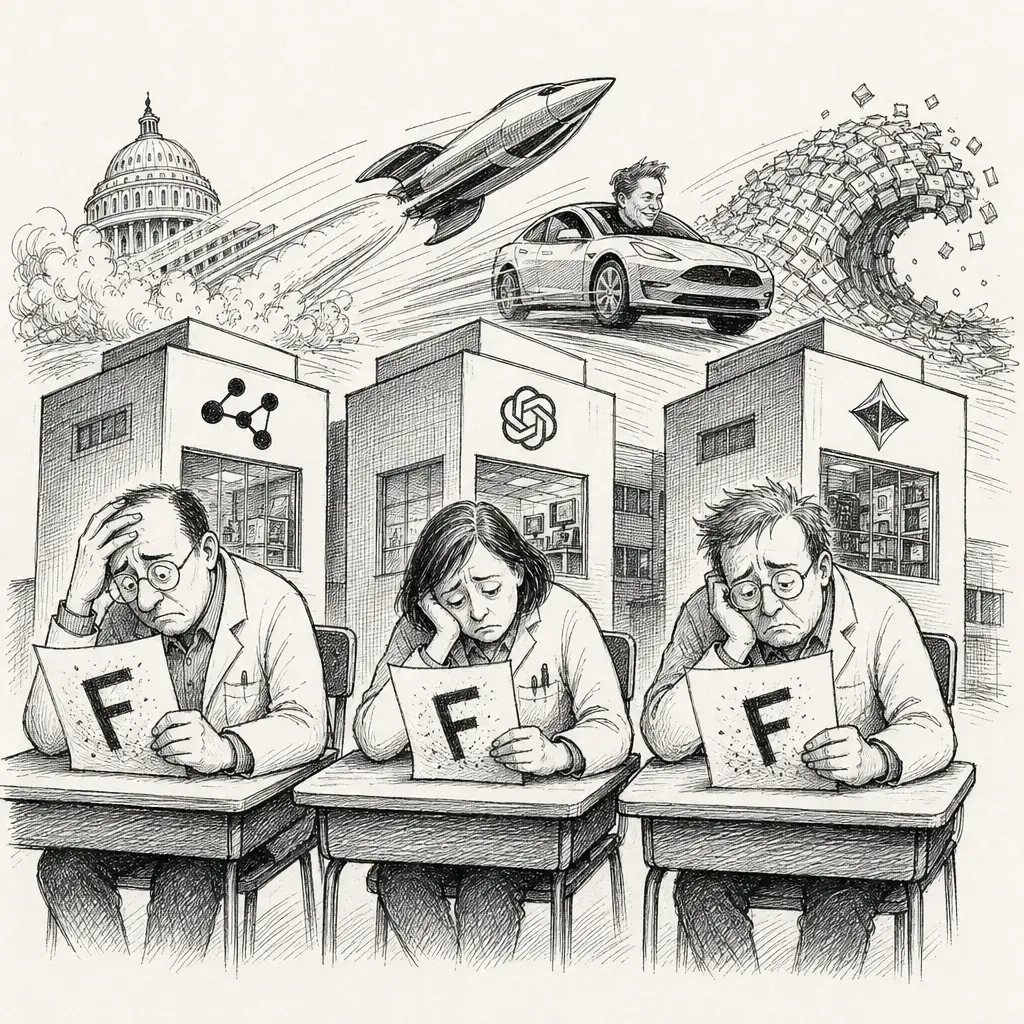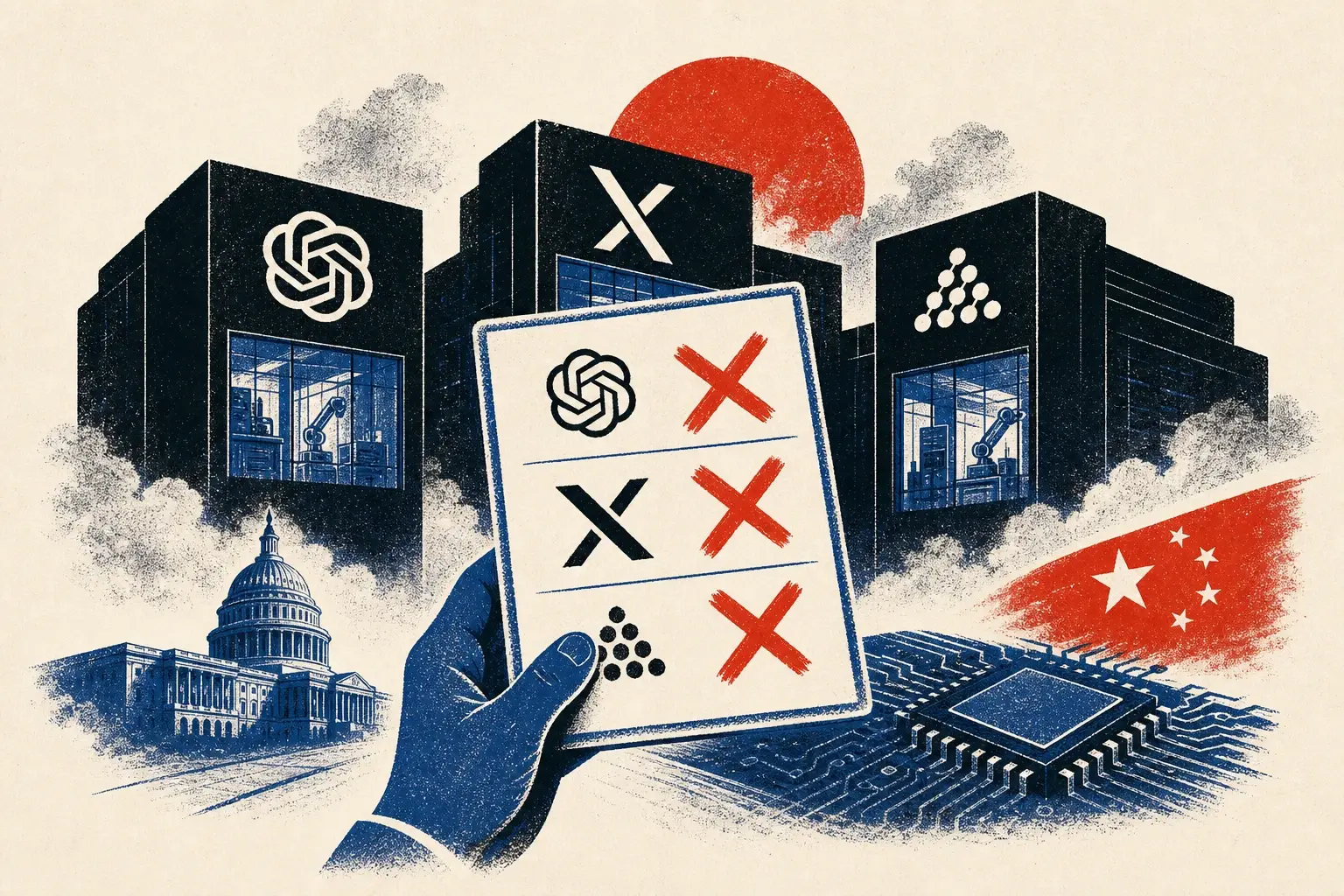
Every six months, the Future of Life Institute grades the major AI labs on how seriously they take their own safety commitments, and this cycle handed out the report’s first outright failures: xAI, DeepSeek, and Mistral each got an F. Anthropic topped the pack with a C+, OpenAI and Google DeepMind managed plain C’s, and Meta pulled a D+ — a set of grades that would embarrass a mediocre student, from companies training the most consequential software on the planet. The finding that should worry people more than the letters: several labs have quietly weakened or dropped commitments they made a year or two ago to pause development if a model crossed a defined danger threshold. Grading yourself is one thing. Grading yourself more leniently over time, without saying so, is another.
That report landed the same week the actual race only got faster. The Trump administration cleared OpenAI’s GPT-5.6 family for full public release, lifting the gated, partners-only rollout it had imposed since late June — a smaller-scale rerun of the export fight Anthropic went through with Fable 5 and Mythos 5 a few weeks back. The pattern repeats: staggered access, government vetting through Commerce’s Center for AI Standards and Innovation, then a green light. Two different labs, two different models, the same emerging norm of Washington deciding when a frontier model has earned its public debut.
Not to be outdone, Elon Musk announced Grok 4.5 launches Thursday — under the banner of SpaceXAI, xAI’s new identity after folding into Musk’s other ventures — claiming it performs “close to, perhaps exceeding” Claude Opus while running faster and cheaper, built on a 1.5-trillion-parameter foundation model with Cursor’s coding data mixed into training. The benchmarks so far are Musk’s own, unverified by anyone outside the company, which is exactly the kind of claim the FLI report implicitly asks readers to treat with more skepticism than the marketing copy invites — xAI, remember, is one of this cycle’s three F’s.
Meanwhile the market is moving on a different axis entirely: price. Chinese open models have taken a lasting bite out of OpenAI and Anthropic’s U.S. business. Models like Z.ai’s GLM-5.2 have held above 30% of weekly OpenRouter token volume from American companies for months now, up from an 11% historical average, while scoring within a point of Claude Opus 4.8 on an agentic benchmark at roughly a fifth of the cost. Beijing, oddly, may be about to make that harder for its own labs: officials have reportedly spent weeks in talks with Alibaba, ByteDance, and Z.ai about restricting foreign access to China’s most advanced models, floating everything from domestic-only releases to criminalizing leaked weights as national-security violations. If it happens, it’s a strange inversion — the same week Washington eases its export posture, Beijing considers tightening its own.
None of these four threads resolve into a single moral. They’re four different institutions — a safety nonprofit, a government agency, a billionaire with a launch date, and a market voting with its API calls — independently deciding how much trust today’s frontier models have actually earned, and landing on different answers. The safety index says: less than the labs claim. The export approvals say: enough to ship, with strings attached. The market says: enough to use, especially when it’s cheaper. Nobody here is exactly wrong. They’re just measuring different things.