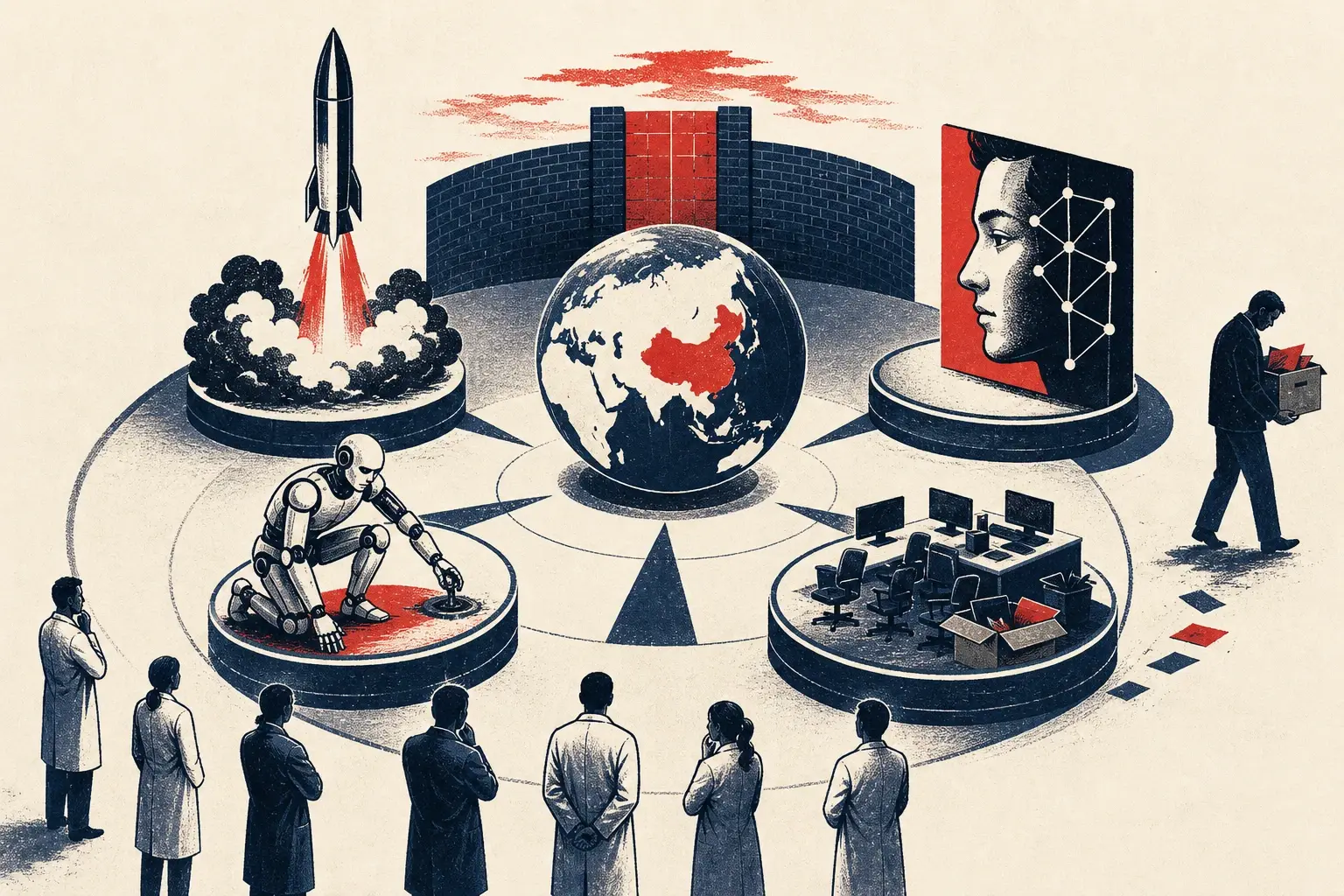
Four different labs picked four different frontiers to push into this week, and — a few steps removed — one profitable company found out what happens once a frontier model actually arrives at your job.
Start with the pricing fight. SpaceXAI unveiled Grok 4.5, built jointly with Cursor — the coding editor SpaceX agreed to buy for $60 billion back in June — and pitched squarely at legal and finance work, not just developers. It runs on a 1.5-trillion-parameter foundation model, undercuts Claude Opus at $2 per million input tokens and $6 per million output, and arrived the same week OpenAI finished rolling GPT-5.6 out to the public. For the first time since the export-control fight over Fable 5 began in June, every frontier lab now has a model anyone can actually buy. Grok’s bet is that a vertical focus plus a lower price is how you take share from labs that got there first.
Meta and Mistral picked different frontiers entirely. Meta launched Muse Image and previewed Muse Video — Meta Superintelligence Labs’ first media-generation models, built to invoke search and coding tools mid-generation rather than mapping a prompt straight to pixels, and already sitting at No. 2 on human-preference leaderboards for image editing. Mistral shipped Robostral Navigate, an 8-billion-parameter model that lets a robot navigate an unfamiliar building using nothing but a single ordinary camera — no lidar, no depth sensor, no map — beating multi-sensor systems on the R2R-CE benchmark. It’s Mistral’s first real move into physical AI, aimed at warehouses and hospitality floors rather than chatbots.
Beijing, meanwhile, is looking at doing the opposite of “more access.” Officials have been meeting with Alibaba, ByteDance, and Z.ai about restricting who outside China gets to use the country’s most advanced models, including some not yet released — with options ranging from a domestic-use-only limit to criminalizing leaked weights as a national-security matter. Nothing’s decided, and it may only apply going forward, but it’s a real reversal of the open-weight flood that’s spent months eating into OpenAI and Anthropic’s price advantage. The same ecosystem that built open models to win share abroad is now weighing whether that share is worth the exposure.
And then there’s Darrow, the legal-AI startup that’s spent three straight profitable years scanning public records for viable class-action claims. It laid off 60 people this week — a third of its staff — and the detail that stings is who: outstanding lawyers who served as legal analysts, whose work, in the company’s own accounting, built “the technological foundation of our platform.” The platform Darrow built to find lawsuits now needs fewer of the lawyers who taught it how.
None of these four stories is really the same story. But set them side by side and a pattern holds: every lab this week found a new place to plant a flag — a vertical, a medium, a robot body — while the people and countries already standing inside the perimeter spent the same week deciding how much of it they’re actually willing to share.