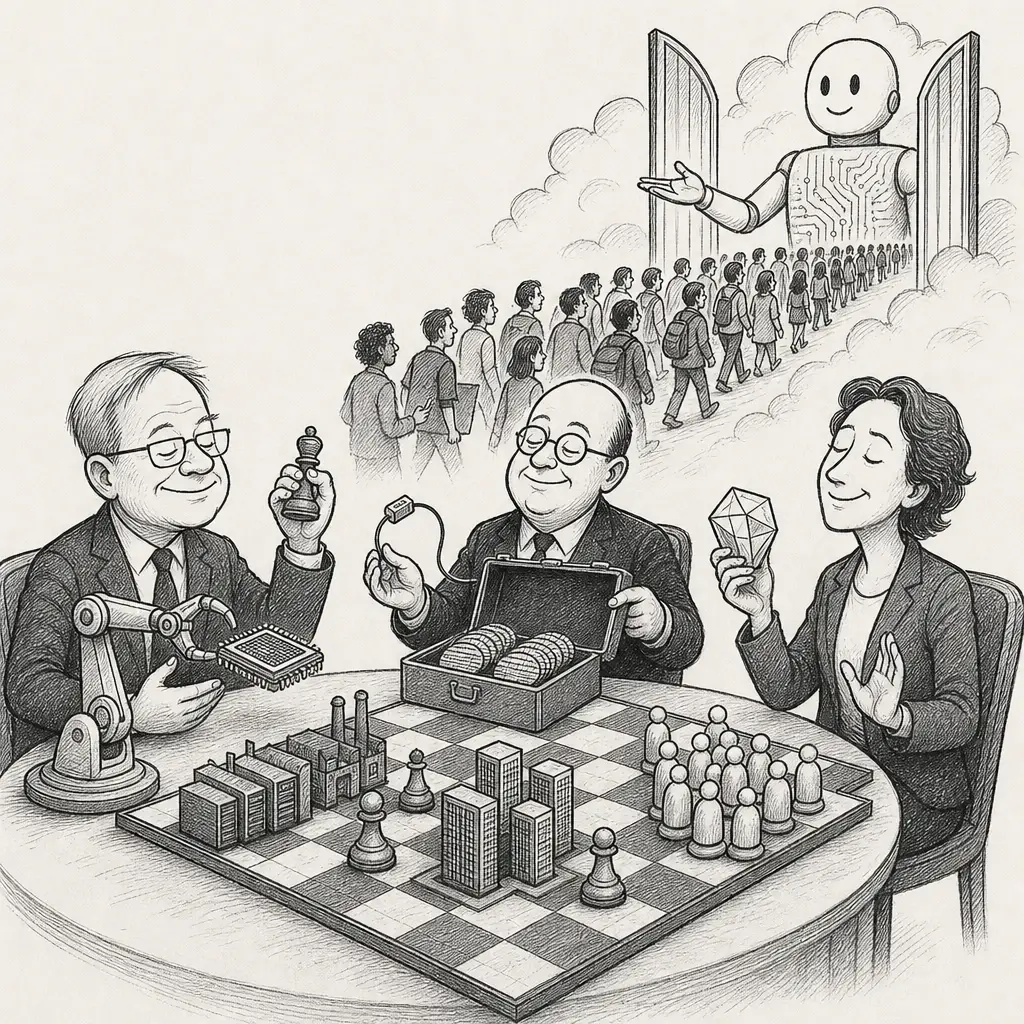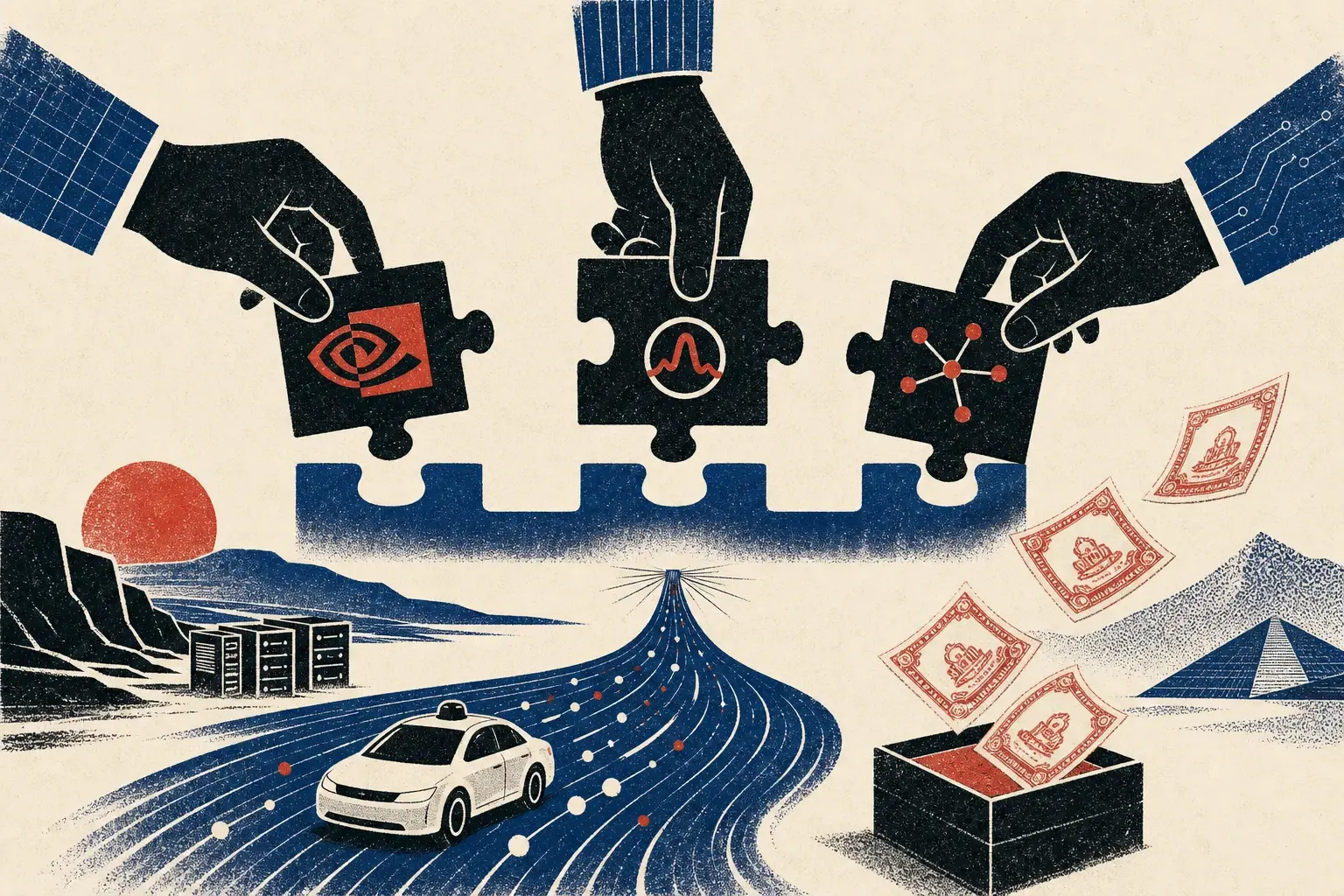
Nvidia doesn’t own Poolside. That’s the point of the deal it struck this week: $6 billion to license the startup’s model-building software, plus a $1 billion investment at a $12 billion valuation, plus job offers to more than 100 of its engineers — everything an acquisition gets you, structurally arranged so it isn’t one. Poolside’s three founders stay in charge. The company keeps operating independently, free to sell the same technology to Nvidia’s customers. Nvidia gets the capability, the talent, and a claim on the upside, without the regulatory scrutiny, the balance-sheet consolidation, or the messy work of actually absorbing another company. It’s the fourth deal of its kind this year, and the pattern is becoming the tell of an industry that wants the benefits of ownership without the commitment.
Broadcom is running the same playbook from the other side of the balance sheet. The chipmaker is reportedly seeking up to $100 billion in debt — split between senior notes and junior financing, raised from lenders including Blackstone and Apollo — to build out custom silicon for Anthropic and, reportedly, other AI labs. Not equity. Debt. Broadcom gets locked-in demand and a supplier relationship; Anthropic gets chips without giving up a stake to the company selling them. It’s the same instinct as the Nvidia deal, run in reverse: keep the exposure, skip the entanglement.
Even the biggest number of the week fits the pattern. Anthropic’s bankers now expect its IPO to match or exceed SpaceX’s record $86.2 billion debut, with a confidential filing possible by month’s end. An IPO is, in a narrow sense, the opposite of an acquisition — instead of one buyer taking the company private, thousands of buyers take small pieces of it public. But it serves the same function every deal this week is chasing: it lets Anthropic’s early backers cash out and lets new money in, without anyone having to negotiate a single change-of-control transaction with a single acquirer. Diffuse ownership, not concentrated ownership, is what the market wants to sell right now.
Nevada handed out a more literal version of the same arrangement. Regulators approved permits for Tesla, Uber and Waymo to run up to 8,000 robotaxis across Clark County — Tesla alone cleared for 5,000, a jump from the ten-vehicle cap it was under a week earlier. None of these companies bought the roads. They bought permission to use them, revocable, capped, and reviewed. Uber isn’t even building its own fleet; it’s leasing access to Motional’s and Zoox’s. The whole arrangement is licensing dressed up as infrastructure.
Set against all that maneuvering, Google quietly announced that its open Gemma models have passed one billion downloads, with outside developers building more than 100,000 variants since the family launched two years ago. Nobody negotiated a license for those. Nobody structured a deal to avoid triggering antitrust review. The weights are just out there, running on laptops and, per Google’s own count, in orbit aboard NASA and Starcloud satellites. It’s a useful corrective to a week otherwise defined by the elaborate legal architecture of not-quite-owning things: sometimes the simplest way to end up everywhere is to stop trying to control who has you.
That’s the throughline, if this week has one. Every other deal above is an exercise in getting the benefit of ownership while dodging its costs and its scrutiny — license instead of buy, lend instead of invest, list instead of sell, permit instead of possess. Gemma didn’t need any of that architecture to get everywhere. It just gave itself away and let a billion downloads happen on their own.