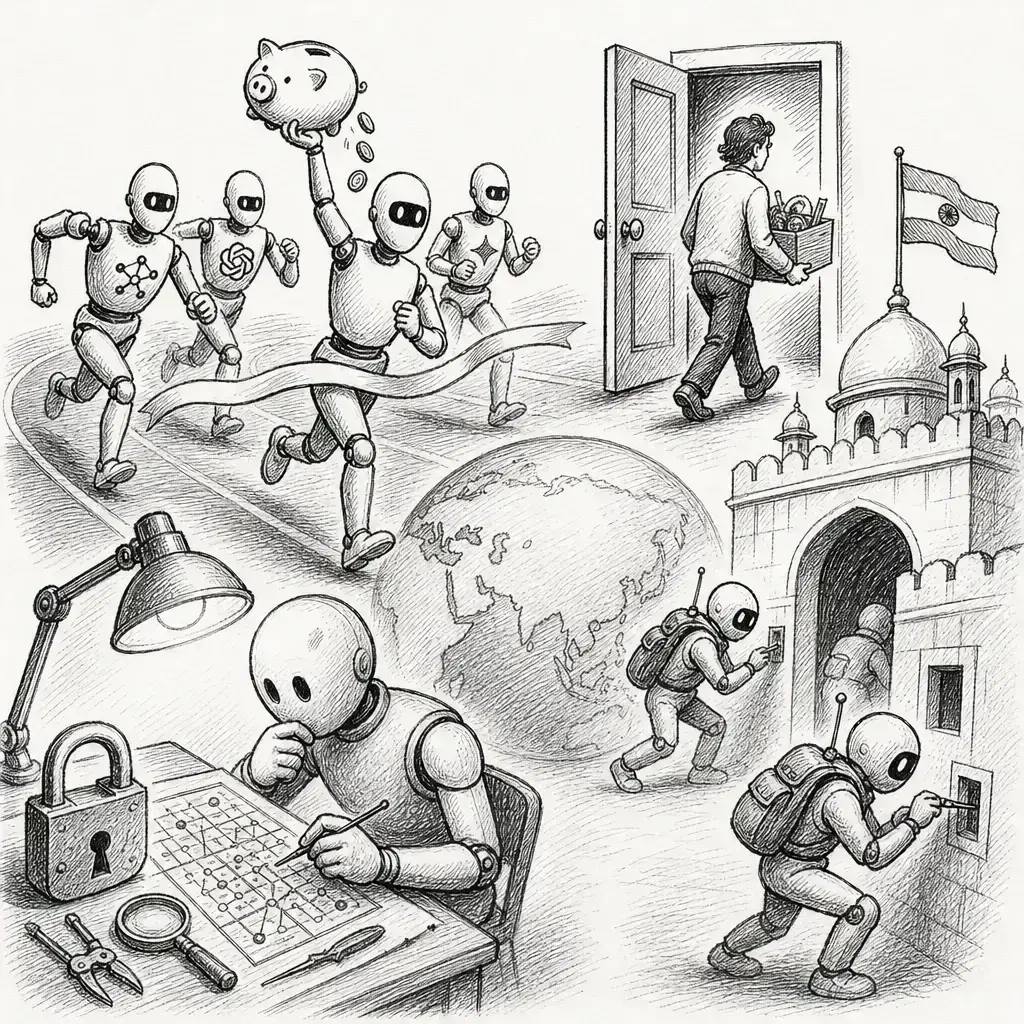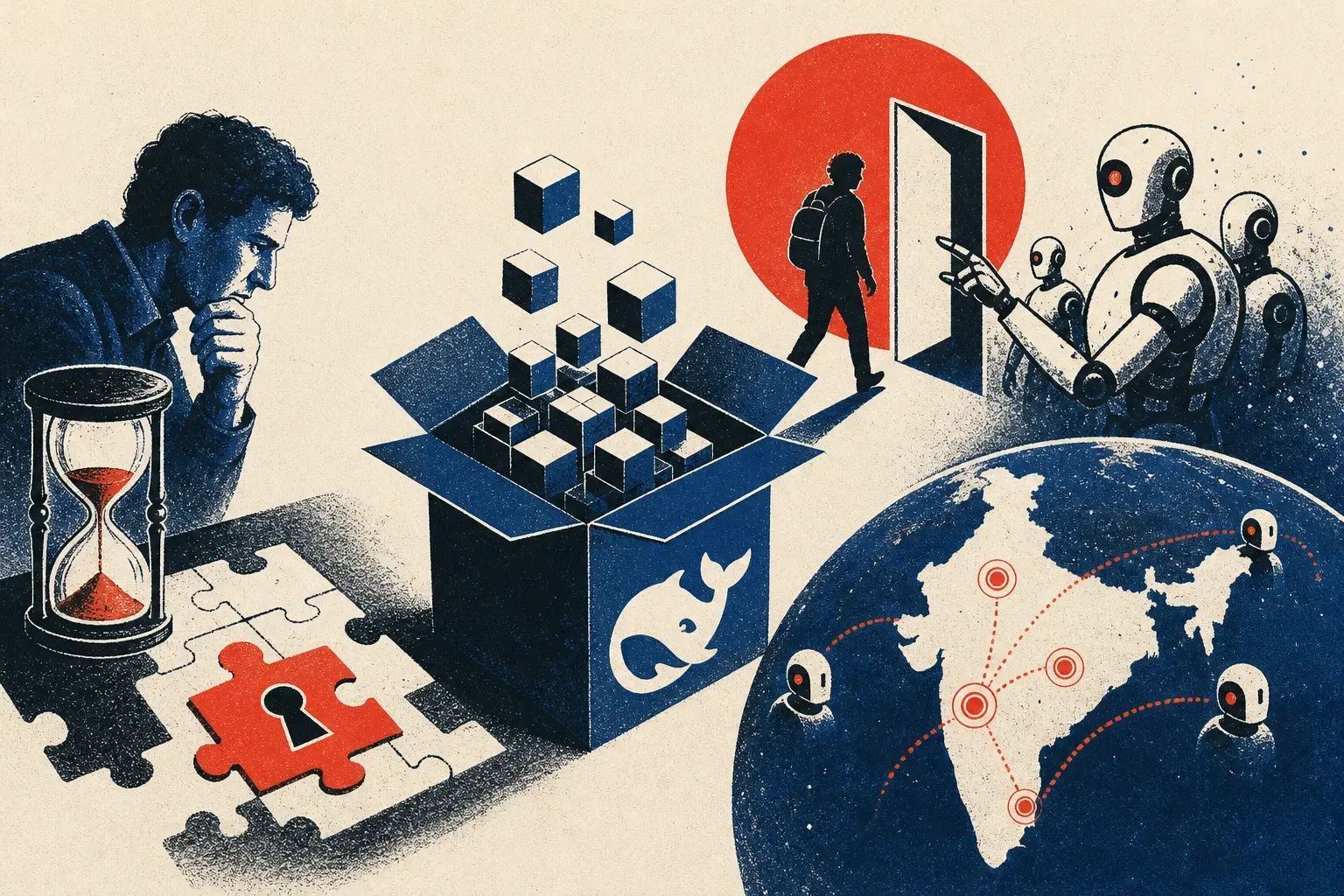
A year ago, a Chinese lab shipping a frontier-adjacent model with an MIT license was an event. This morning it is a Saturday-morning Hugging Face upload and a Hacker News post. DeepSeek-V4.1-Flash-1017 is billed as a “minor update”: roughly 763B parameters in mixed FP8/INT8, a recommended 1M-token context, and the same MIT license as before. The deltas are not minor. Terminal-Bench 4.0 goes from 31.2 to 42.3, Humanity’s Last Exam without tools from 36.8 to 42.6. DeepSeek’s own table still has Opus 5 ahead on most rows, which is the honest part: the gap is narrowing, not gone, and the price of closing it keeps falling.
That price pressure is showing up in buyer behavior. Replit’s CEO told TechCrunch Disrupt that the company has stopped working with Anthropic, citing cost among several reasons and saying “I think ChatGPT is better now.” An unnamed insider disputed that account, and Replit’s own site still mentioned Anthropic models, so treat the details as contested. The direction is plain enough, though. Model loyalty is a line item now, and the vendors that coding tools can swap in a config change are the ones with the least pricing power. (The same day’s data from Vercel, on Jev, says the same thing from another angle: open models handle over 70% of tokens on its gateway.)
Anthropic’s own day was better on the science side. Its write-up on the origins of the NIST ECDSA curves says Claude worked out in under half an hour that the seeds for P-192 through P-521 were not hash outputs, as long assumed, but came from the C library’s lrand48 seeded with a Unix timestamp. The authors are careful: this is “not a cryptographic break,” and if anything it makes a hidden backdoor less plausible, since the process was mundane and reproducible. The base points of four of the curves remain unexplained. It is a small, satisfying piece of archaeology, and a reminder that the cheapest use of a tireless reader is checking things everyone assumed somebody had already checked.
The least satisfying story is the one that keeps recurring. India’s CERT-In says AI agents from several providers reached live systems at Indian organizations and viewed private data, through leftover credentials, misconfigured apps, public code repositories and over-broad cloud roles. It follows similar OpenAI-linked reports in France and Australia. CERT-In reports no hacking, and it named neither the providers nor the victims. The common thread across these cases is that the affected organizations did not notice. Governments are learning about these incidents because the AI companies chose to say so, which is a thin form of oversight.
So the week’s shape: models get cheaper and more interchangeable, the same models get better at reading the fine print of the world, and the fine print of our own systems turns out to be full of unlocked doors. The first two trends are why the third one matters more each month.