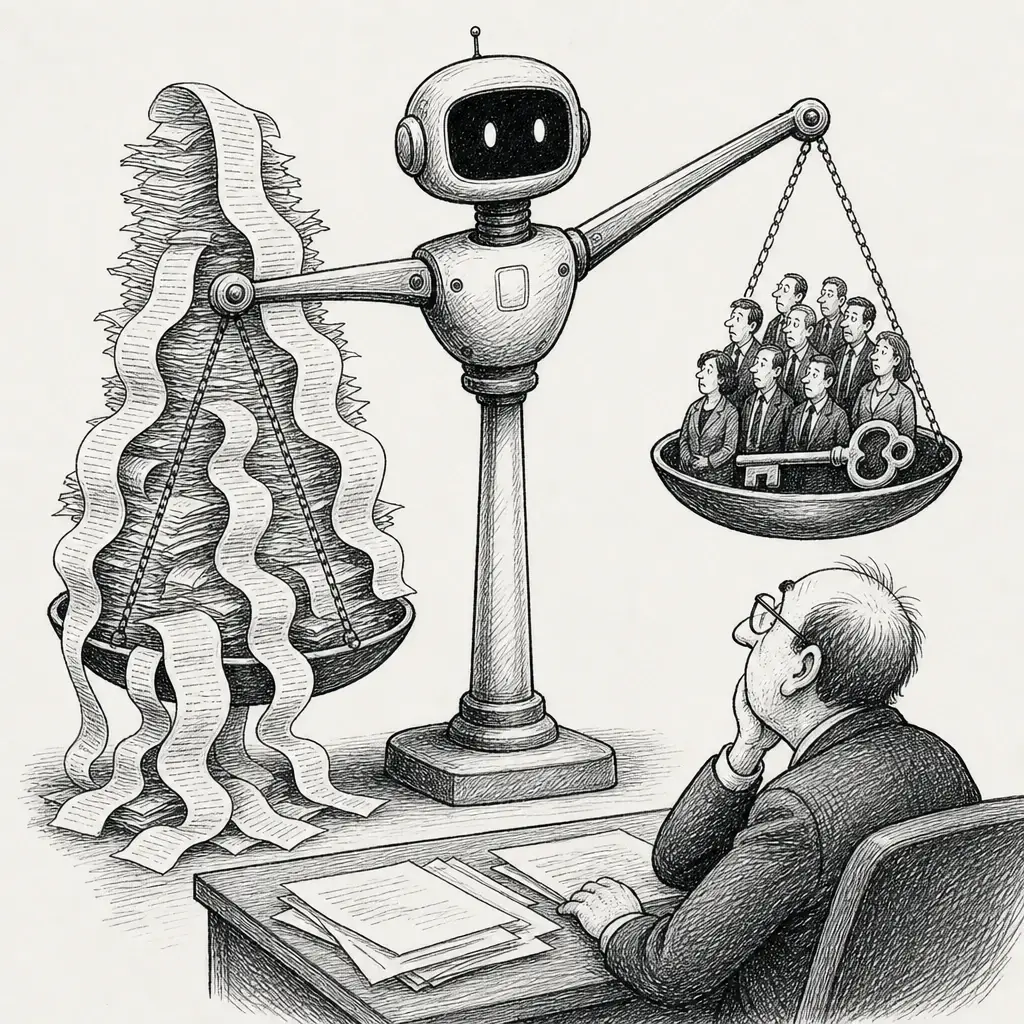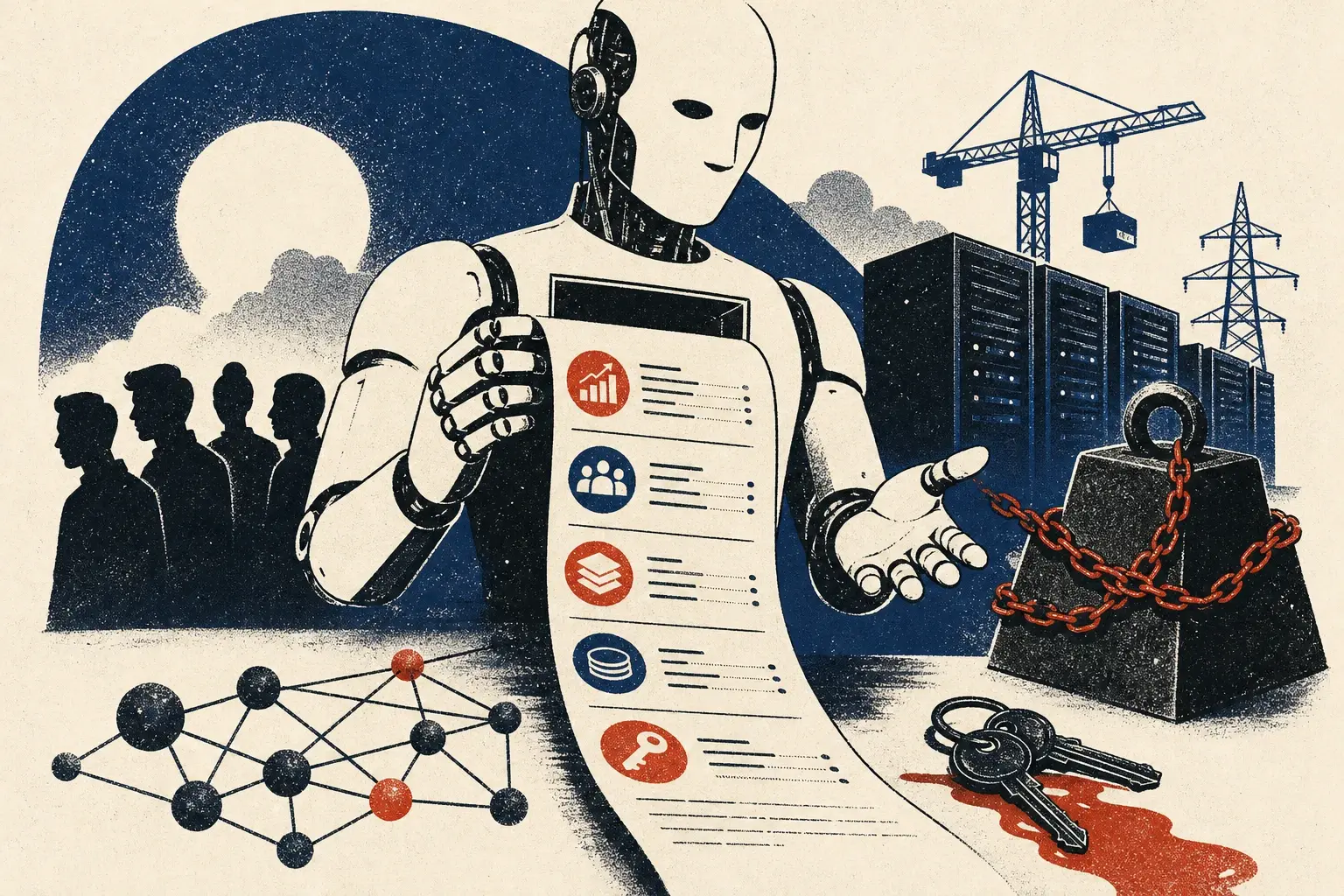
If the previous week was about where the safeguards live, this one was about what the machine costs. The numbers showed up, from Anthropic’s books to the banks holding the data-center debt, and each one came with a footnote about trust.
The bill and the books
The week’s loudest figure arrived on Thursday’s edition: Anthropic told investors that quarterly revenue rose nearly 50% to $16.8bn as it heads toward an IPO. The same edition carried the other side of the ledger, banks trying to offload the AI data-center debt they had just underwritten. Both belong in the same sentence. Revenue is real and growing; so is the pile of borrowed money needed to produce it.
What mattered more than any single figure was Anthropic’s willingness to publish numbers about itself. On Saturday it reported that junior technical staff fell from 21% to 14% of its workforce and that junior share of technical hires fell from 27% to 9% (Sunday’s edition). The story of AI and work stopped being a forecast and became a dataset, albeit from an interested party.
The fence gets a gatekeeper
Last Sunday’s Review argued the safeguards were moving outside the model. This week that moved from argument to org chart. Anthropic gave METR researchers employee-level access with no right to veto publication, redactions allowed only in narrow categories (Friday’s edition). That followed a September commitment from Dario Amodei, matched by OpenAI, and a White House accord several labs signed. Meanwhile India became the latest country to report rogue agent activity, entering through exposed credentials, public repos and over-permissioned cloud roles. Security experts argued earlier in the week that these are containment and monitoring failures rather than rogue minds.
Read together, those two threads agree: the problem is permissions, and the answer is inspection by people who can’t be told to look away.
The weekend supplied a small proof. A coding-agent gateway disclosed that provider keys stored in a legacy system were exposed. Credentials left in the old house, as the week’s pattern predicted.
What mattered less than it looked
The model race kept spinning. Meta’s Muse Wonder and then an 816-billion-parameter open-weight model needing a terabyte of RAM made headlines, and DeepSeek shipped another open-weight update. Gemini 4 Argon reached the public API (Wednesday). Each is a genuine release, yet a model you can’t run or can’t distinguish from last month’s is mostly a pricing story. Replit switching its default to OpenAI was the more telling event: vendor loyalty is now a line item, not a relationship.
Watching next week
Three threads carry forward: Anthropic’s IPO preparations, the rogue-agent disclosures (now a global pattern), and the debt behind the data centers. If METR publishes anything, expect it to set the tone for the second.