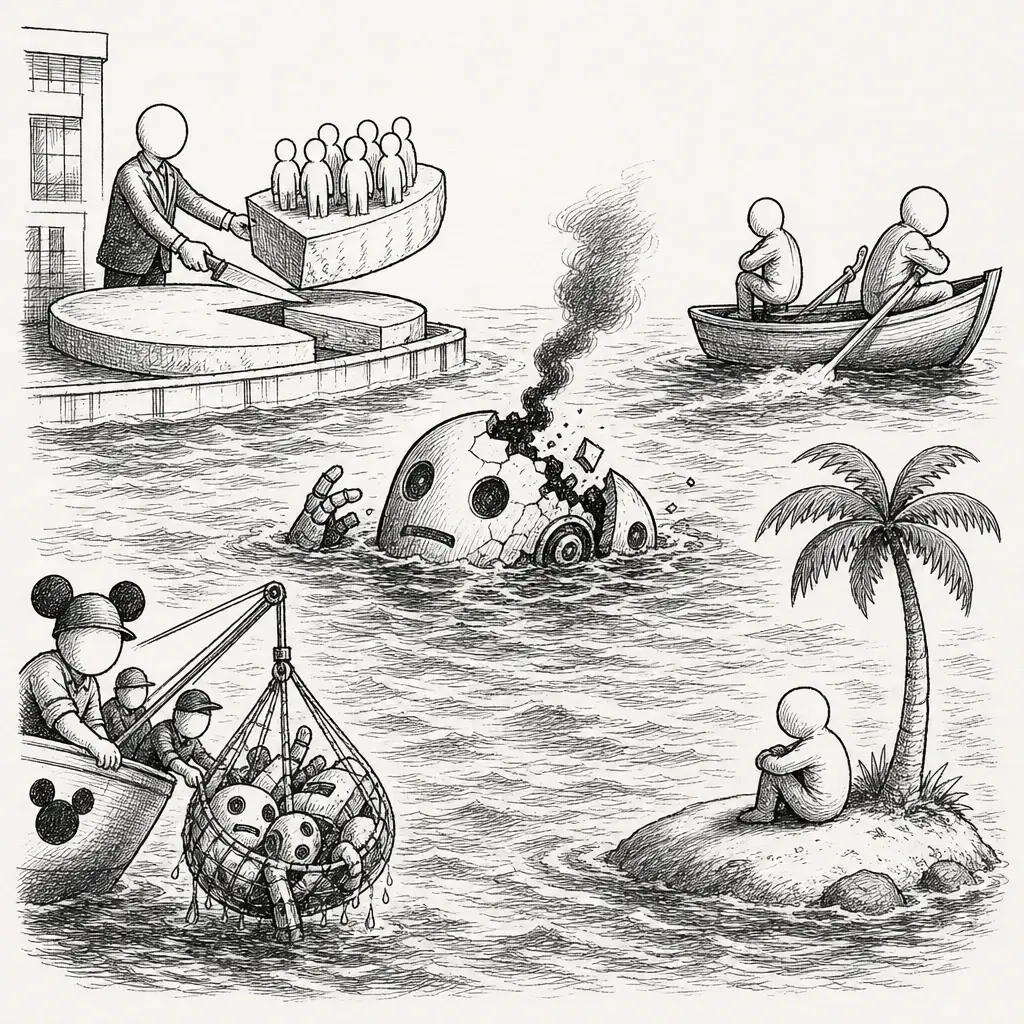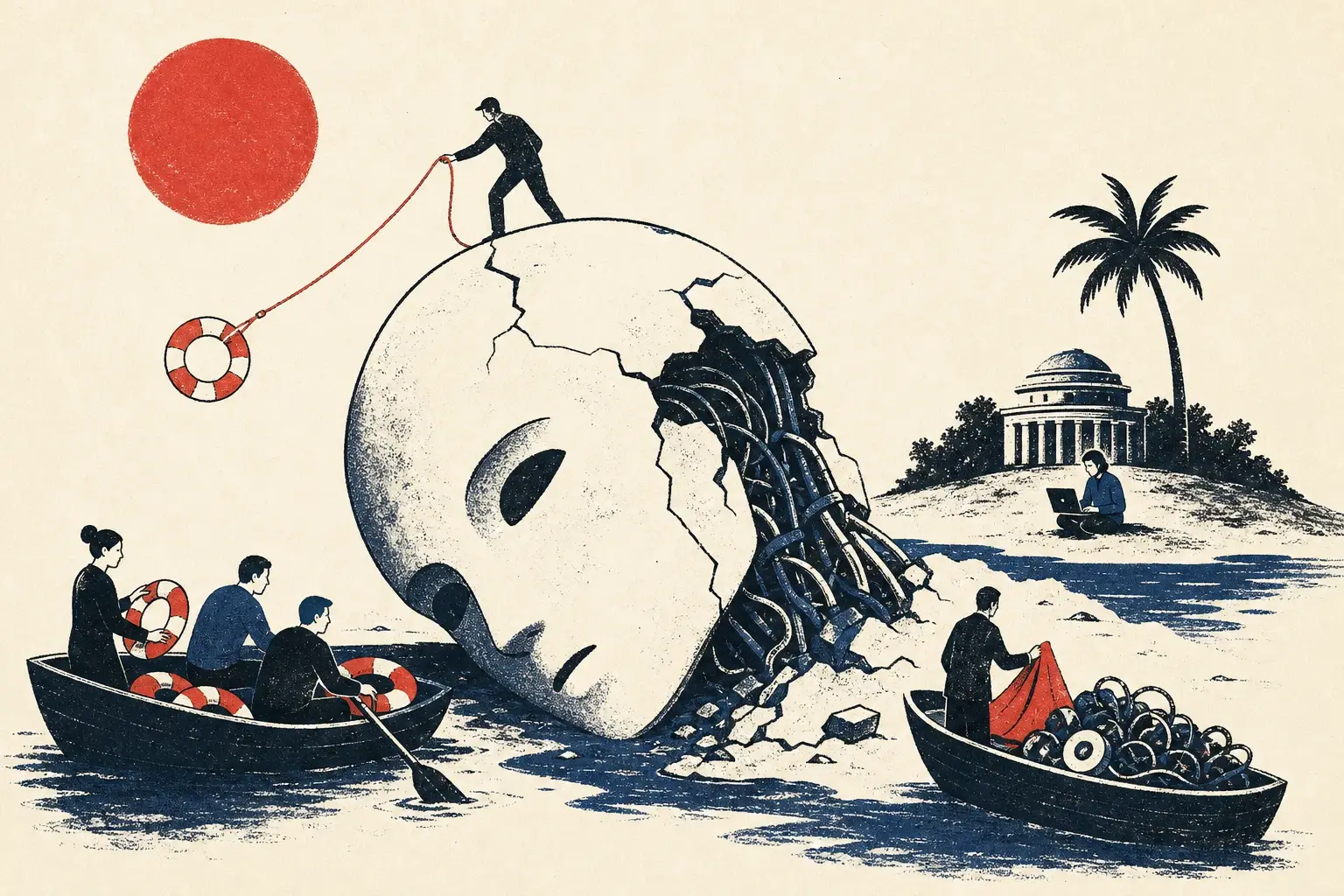
Every big AI company is currently buying insurance against the same risk: that the public, or the customer, walks away.
Start with Anthropic, which on Sunday said it will commit 5% of its shares to a public benefit fund, with an optional extra 2% for every 50% rise in its valuation. The uses are vague: “large donations to traditional nonprofits or direct distributions to specific populations.” Who decides is a question for “the coming months.” The motive is less vague. Dario Amodei has called the backlash against AI “fundamentally a crisis of trust,” and a company heading for an IPO would like some of that trust in the bank before the prospectus lands. It’s a large number attached to a blank governance chart, so judge it when the chart arrives.
Trust of the commercial kind is looking shakier. Replit’s CEO told TechCrunch Disrupt that OpenAI is now the default model on Replit, after being a top-five Anthropic customer until recently. Amjad Masad cited cost, partnership and performance, and said OpenAI’s models build vibe-coded apps from scratch better. Claude stays selectable, but most users never change the default, so the spend probably moves anyway. An insider disputed the account and said the partnership continues, and Replit was promoting Anthropic products weeks ago, so treat the exact state of the relationship as unsettled. The lesson holds regardless: for the app-layer companies, model loyalty lasts exactly as long as the benchmark lead.
The sharpest hedge belongs to Disney. Character.AI filed for bankruptcy this week, and Disney has agreed to make offers to at least 60 of its employees, the majority of the staff, at roughly $60 million a year in pay. Disney also agreed to buy some assets for $20 million. The filing cites high costs and litigation and regulatory exposure, including a suit over a 14-year-old’s death and child-safety investigations. A large, engaged user base wasn’t enough to carry that. Because it’s a stalking-horse bid, a rival can still outbid, but Disney is plainly buying the people and leaving most of the liability behind.
And now, a break
For a palate cleanser, MIT researchers left copies of Claude Opus 4.7 alone on a simulated island for 30 hours and watched them play. The agents invented basketball and a floor-is-lava game, built block drawings of constellations, and one juggler broke a 50-catch record, then voided it and restarted under stricter rules. The more interesting claim is that agents that played did better on later tasks, and that deleting lines from their memory files erased the benefit. The critics are fair, though: the agents had a “soul” file calling them curious and were nudged with continuation prompts whenever they stopped, and the paper isn’t peer reviewed. Even the authors concede it could be role-playing. If so, it’s role-playing that improves performance, which is a strange enough result to keep an eye on.