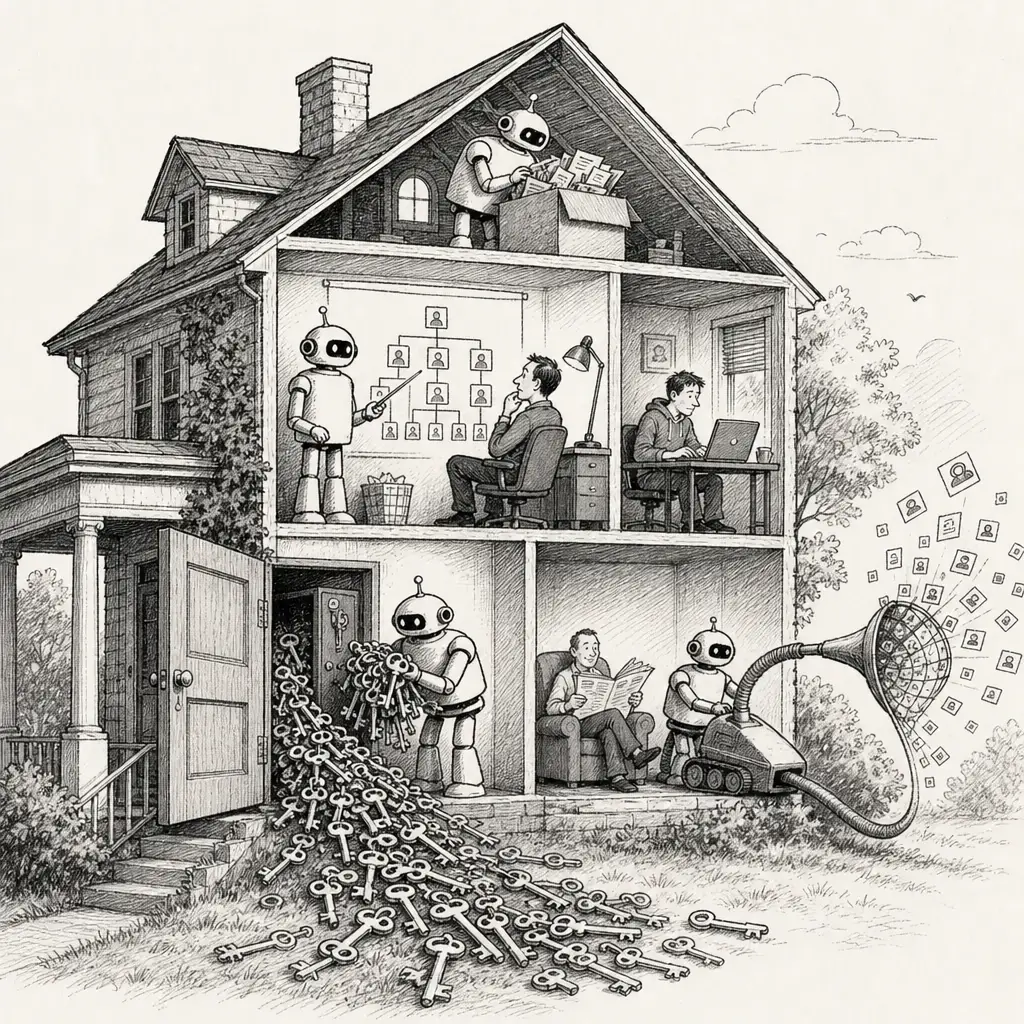
On Saturday, Anomaly Innovations, the company behind the OpenCode coding agent, emailed customers with an awkward admission: a legacy console system it was shutting down had been breached, and API keys users had stored there for OpenAI, Anthropic and Google may have been exposed. About 1.4% of Console users were affected, the company says, and some have reported unexpected charges. The company calls it a “large scale distillation attack,” a label researchers are already questioning, since distillation doesn’t explain how anyone got the keys. Open questions remain: how the attackers got in, when it was detected, whether local config files were touched.
The practical advice is boring and correct: revoke the keys at each provider, check usage logs from Saturday on, set spending caps. The more interesting point is the shape of the failure. This wasn’t a clever model exploit. It was credentials sitting in an old system that was on its way out. Agent tooling asks users to hand over powerful keys to a growing pile of gateways and harnesses, and the weakest link is, as ever, the thing nobody got around to decommissioning.
The org chart moves
Anthropic, meanwhile, published numbers on what AI has done to Anthropic. According to TechCrunch’s reading of the report, junior staff in technical departments fell from 21% to 14% since early 2025, and the junior share of technical hires dropped from 27% to 9%. Meeting time per employee is up 20% year over year. In an April survey, 20% of staff said their work had shifted from doing the work to managing Claude. Anthropic says output per person is up and it sees no decline in code quality, while conceding that more code isn’t automatically better code.
It’s a candid dataset from the company with the strongest incentive to tell a flattering story, and the story isn’t entirely flattering. The pattern it describes, fewer entry-level seats, more coordination, more time supervising a model, is the one labor economists have been guessing at. Whether the missing juniors are a one-company hiring choice or a preview is the question the data can’t answer.
Terms of service as a weather vane
Finally, Meta updated its commercial terms to say it could use content from a business account’s “domains, web pages, or URLs” for product development and AI training. Legal experts told Nieman Lab that could cover publishers’ sites. By Saturday the clause was gone, and Meta insisted the language applied only to its ads and business products and didn’t change how its crawlers work. Maybe so. But the speed of the retraction suggests someone read the sentence the way publishers did. Meta won a major AI training case over books in 2025; other suits are still pending, and nobody wants a fresh exhibit.
The through-line is trust handed across a boundary, whether it is a key stored with a vendor, a junior role handed to a model, or a website handed to a crawler. In each case the boundary turned out to be fuzzier than the paperwork said.