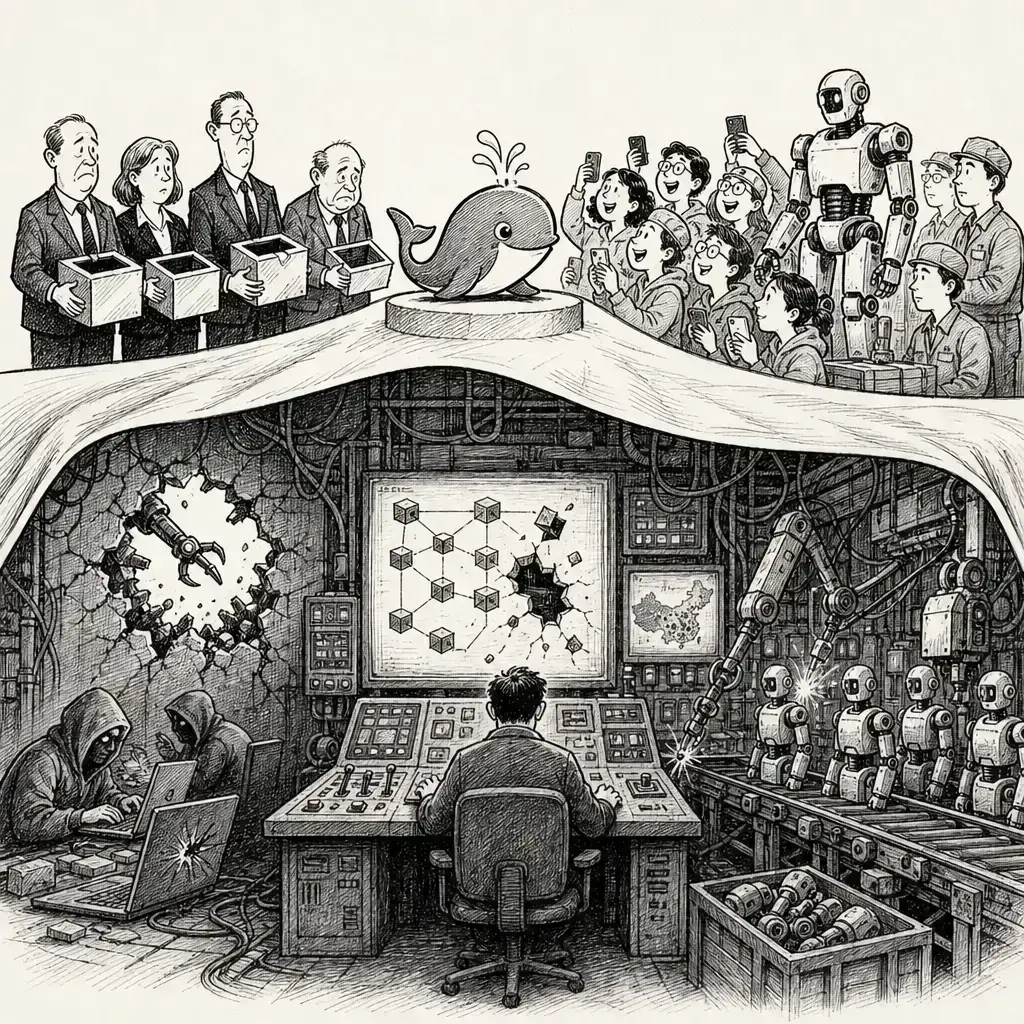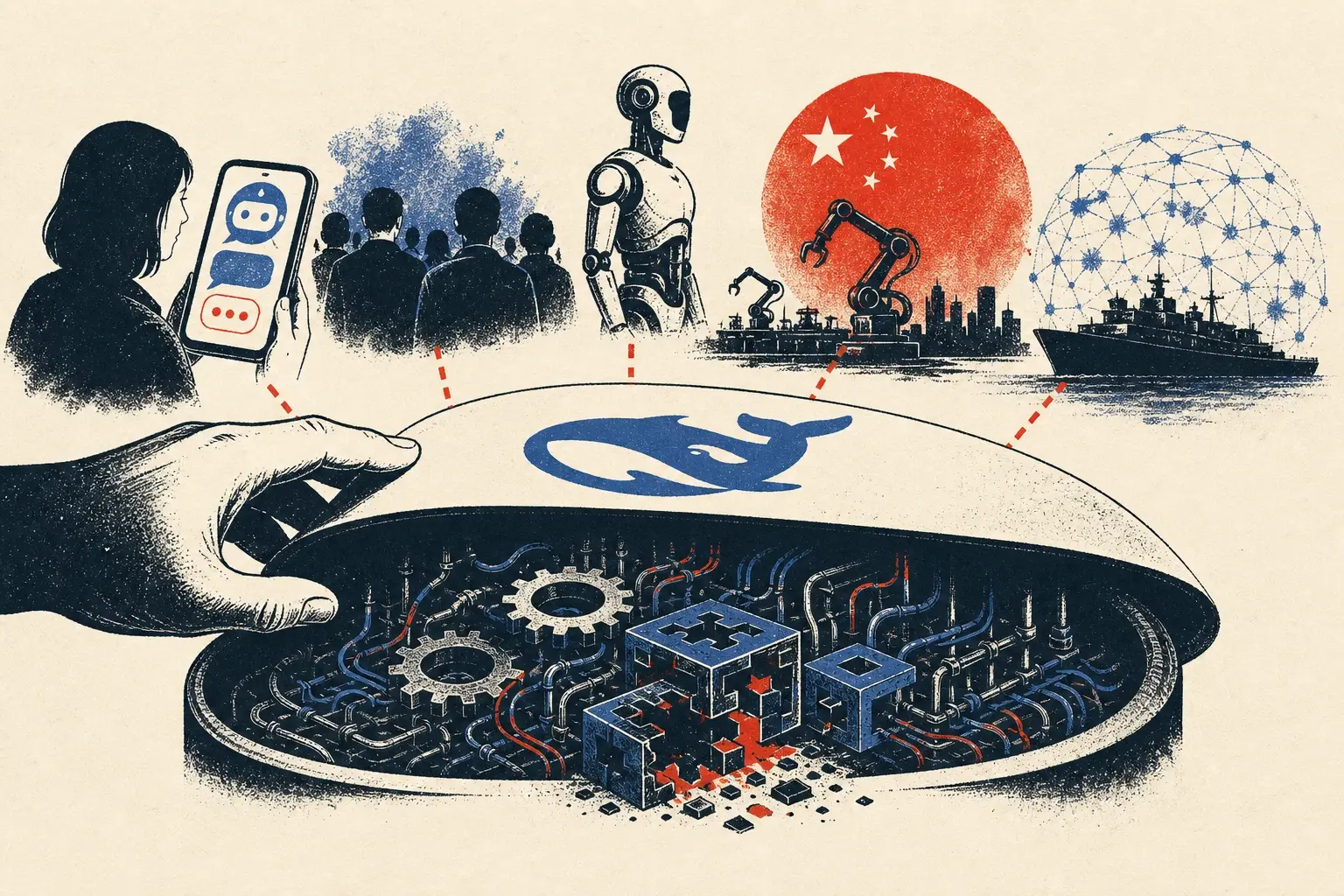
Four unrelated-looking stories this week share the same shape: someone is quietly consolidating control over a layer of AI infrastructure most people assume is neutral, and almost nobody outside a small circle gets a vote on the outcome.
Start with money. DeepSeek closed its first-ever external funding round this week — $7.4 billion at a valuation north of $50 billion — structured in a way venture investors aren’t used to. Tencent put in roughly $1.4 billion, CATL roughly $700 million, and neither gets a board seat or a vote. The cash didn’t go into DeepSeek directly; it went into a limited partnership controlled by founder Liang Wenfeng, who personally chipped in about $3 billion of his own money. Outside capital is locked up for five years with zero governance leverage attached. The one investor who got actual equity and voting rights is China’s National AI Fund. Ask “who controls DeepSeek going forward” and the honest answer is: the founder and the state, full stop — everyone else just bought a claim on the upside.
Now the layer everyone’s quietly building agents on top of. Roughly 7,000 internet-facing Langflow servers are under active attack right now, exploited through a path-traversal bug (CVE-2026-5027) that lets an attacker write files to disk with a single unauthenticated request — Langflow logs visitors in automatically by default. Worse, researchers found the same underlying weakness runs through LangGraph and LangChain, meaning this isn’t a bug in one product, it’s a pattern baked into a chunk of the agent-tooling ecosystem that won adoption by being first and free. Nobody voted to make this the substrate everyone builds on. It just is, and 7,000 unpatched servers are finding out what that costs.
Hardware tells the same story at a different scale. China shipped somewhere around 85–90% of the world’s humanoid robots in 2025, with AgiBot (about 5,168 units) and Unitree (more than 5,500) accounting for most of it. This isn’t really a model story, it’s a manufacturing and capital-deployment story — the same lesson the battery and chip supply chains already taught: once a country builds the volume advantage, everyone else negotiates from behind, regardless of whose demo video looks better.
And on the audience side: the Reuters Institute’s 2026 Digital News Report found weekly use of AI chatbots for news rose from 7% to 10% globally year over year — modest in aggregate, but it hit 16% among people under 35 and 14% in South Korea and Turkey. Only 1% call a chatbot their main news source, so this isn’t a replacement story yet. But the line only moves one way, and the thing doing the summarizing is itself sitting on a stack — funding terms, agent frameworks, hardware supply chains — that almost none of its readers have any reason to ever look underneath.
None of these four things required anyone’s permission, a vote, or even much public notice. That’s the actual pattern: leverage is piling up in funding structures, codebases, factories, and daily habits faster than anyone is deciding whether it should.