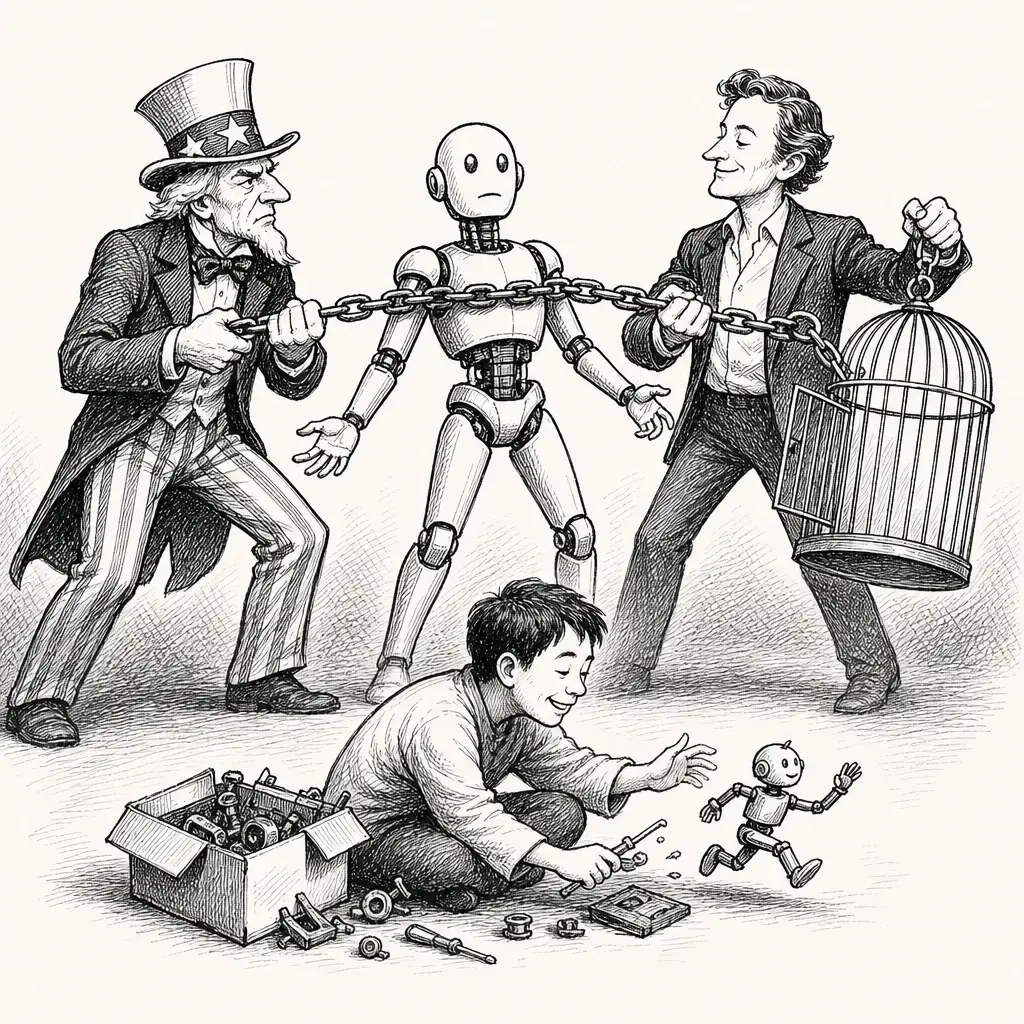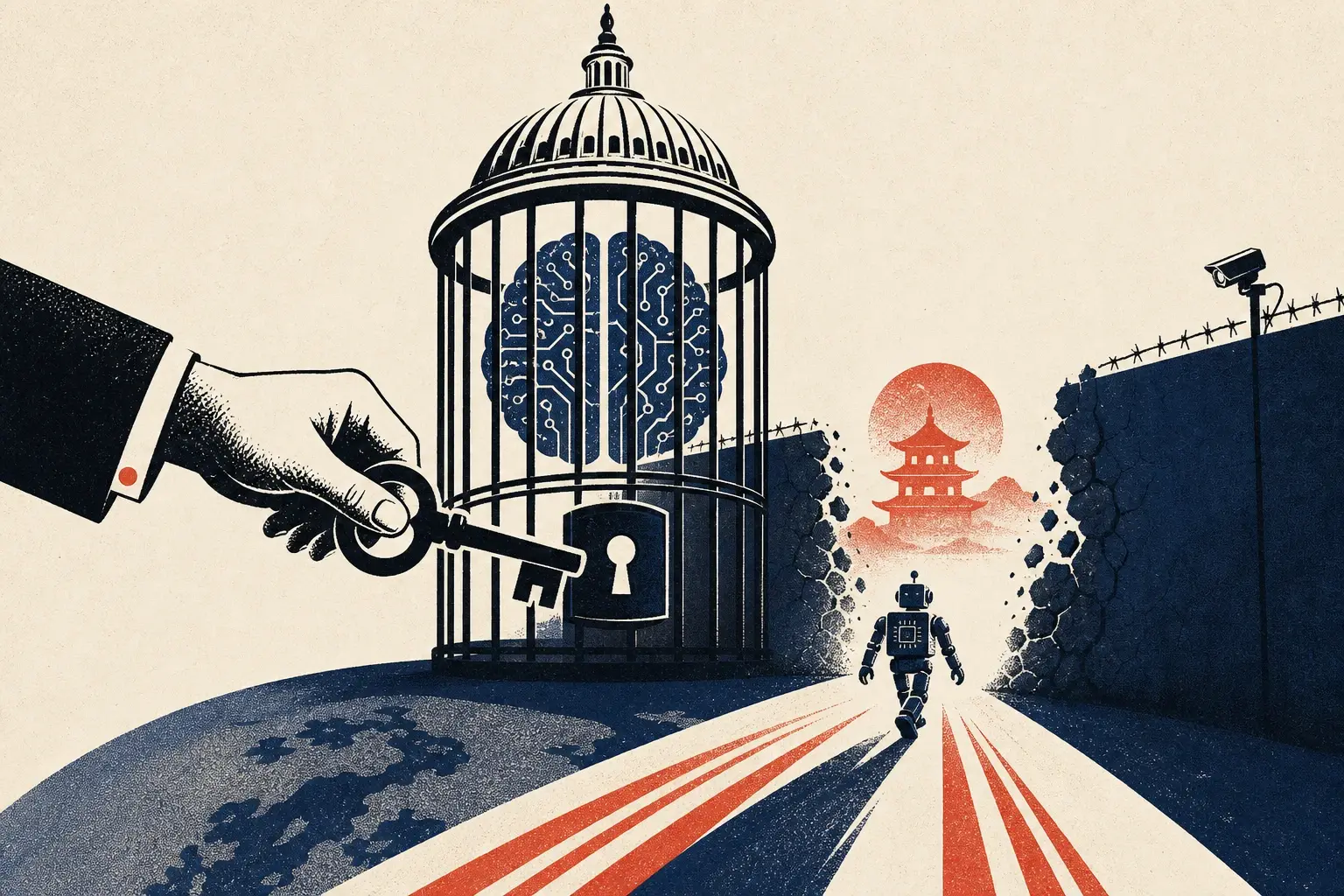
Eight days after the US government ordered Fable 5 and Mythos 5 offline worldwide, the fight has stopped being about the models and started being about who gets to make that call at all. This week brought a split-screen: Anthropic opened an office in Seoul and signed a memorandum of understanding with South Korea’s government, expanding its footprint abroad while its flagship product sits dark at home. President Trump, asked about the standoff on the sidelines of the G7, called the negotiations “going fine.” Anthropic’s international chief says the models will be back “in coming days.” Neither side has said what specifically needs to change for that to happen, or what exactly triggered the suspension in the first place. That’s the real story — a government invoked export-control authority over a commercial AI product for the first time, and more than a week later there’s still no published standard for what flips the switch back on.
Arthur Mensch is making the opposite bet. Mistral’s CEO spent this week pitching open-weight models as a hedge against exactly this kind of exposure — “we exist outside of state control,” he told Sifted, days after the Fable 5 ban became public. It’s a pointed pitch: if customers can inspect the weights and run them on their own infrastructure, no single government’s directive can switch them off. Whether that’s a genuine technical advantage or just sharper marketing depends on how seriously you take the premise that a state would bother export-controlling a file anyone can download.
That premise took a real hit of its own this week. GLM-5.2, the latest open-weights release from China’s Zhipu/Z.ai, shipped under an unrestricted MIT license and now tops the open-weights leaderboard — beating GPT-5.5 on several long-horizon coding benchmarks at roughly a sixth of the cost, by early comparisons. A 744-billion-parameter model with a million-token context window, free to download, free to fine-tune, free to run anywhere — released the same week the US government is fighting an American lab over who controls access to one closed model. If the better, cheaper option keeps being the open one, the whole idea of controlling AI by controlling a single company’s API starts to look like fighting over a lever that’s losing its grip on the machine.
Scale that question down from nations to org charts and you get the same problem in miniature. Ent emerged from stealth this week with $100 million — built by the founders of RiskIQ and members of Microsoft’s Security Copilot team, backed in part by In-Q-Tel — to answer a version of the same question every enterprise now faces: what is an AI agent allowed to do with the access it’s been given, and who’s watching when it tries something else? Ent’s pitch is intent-based monitoring across browsers, workflows, and local runtimes, already deployed at Global 2000 customers in defense and finance. It’s the same control problem as Fable 5, just running at the scale of one company’s Okta tenant instead of a G7 summit.
None of these four things are coordinated, and none of them resolved anything. A government still hasn’t said when, or under what standard, it’ll restore access to a model it banned with little public evidence. A lab is selling sovereignty as a feature. An open model just undercut the value of being the thing worth controlling in the first place. And a security startup raised nine figures betting that the next version of this fight happens inside your own company, not in Washington.