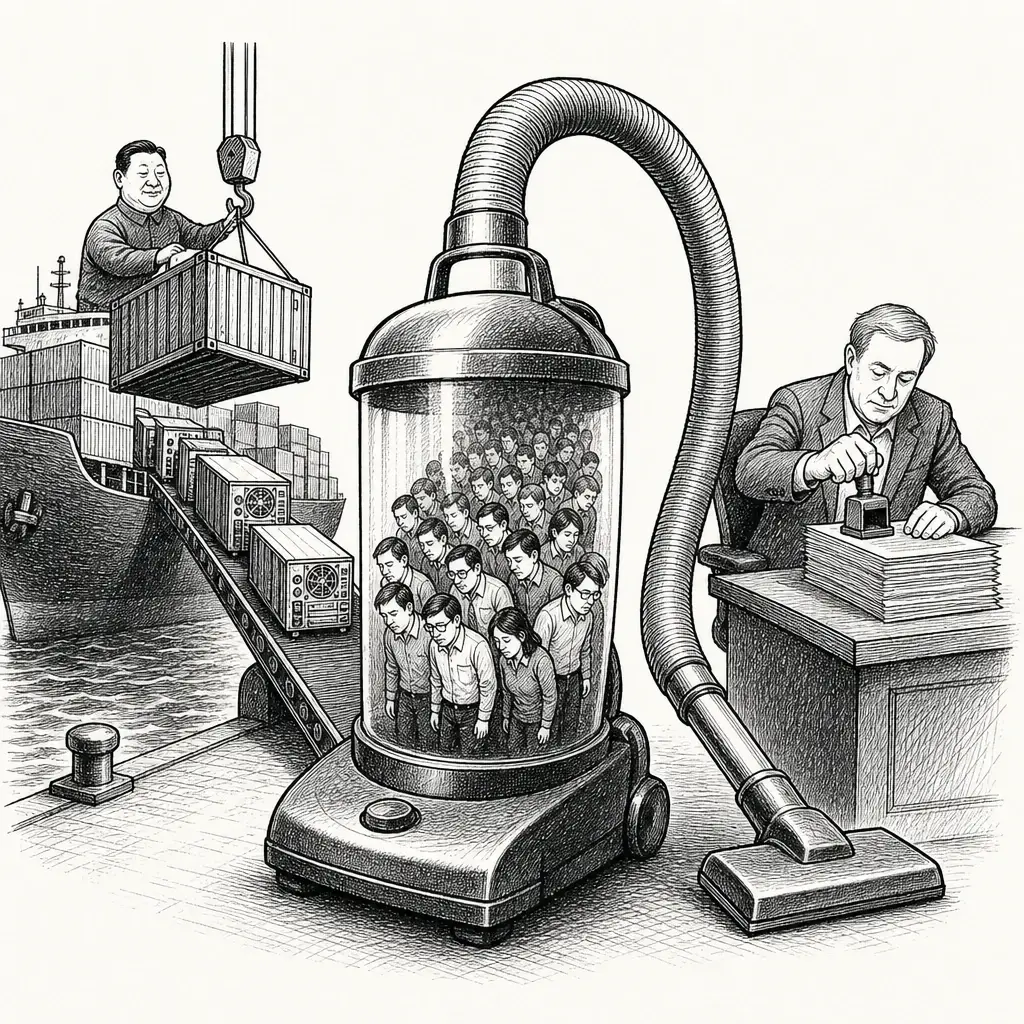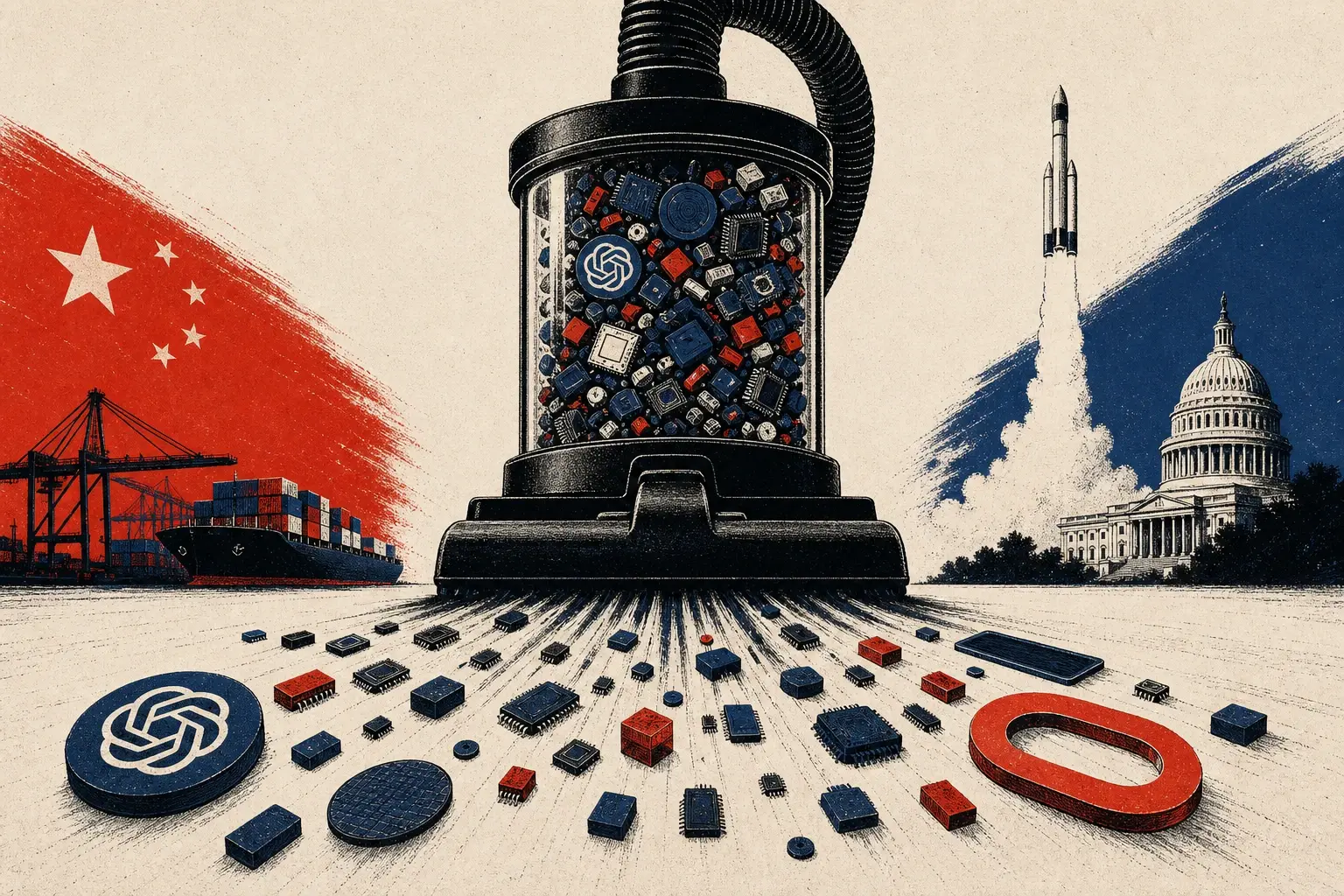
Access has become the key variable in the AI race. Not capability — access.
Seventeen days ago, Anthropic pulled Claude Fable 5 and Mythos offline worldwide, complying with a US government export-control directive. Fable 5 still isn’t back. GPT-5.6 launched Friday to twenty approved companies. The frontier is available by appointment. The result, this week, is easy to read: if you restrict the models, you create the vacuum, and the vacuum fills.
Z.ai’s GLM-5.2 — an open-weight 753-billion-parameter model released June 16 — now beats GPT-5.5 on multiple long-horizon coding benchmarks at roughly one-sixth the per-token cost. Semgrep’s independent security evaluation found it matching Claude Mythos on vulnerability detection. On the same week, Chinese cybersecurity firm 360 Security unveiled Tulongfeng at ISC.AI 2026 in Beijing — its founder explicitly calling it “China’s version of Mythos” — claiming 3,432 confirmed software vulnerabilities found so far. And Tokyo-based Sakana AI launched Fugu, an orchestration system that routes tasks across a pool of available models and benchmarks shoulder-to-shoulder with Fable 5. Sakana positioned it explicitly as a response to the export ban: “No Claude Fable 5? No problem.” The Tulongfeng founder was blunter: “China cannot wait until model capabilities have fully caught up before starting vulnerability discovery.”
The government probably understood it was taking this risk when it issued the directive. What this week showed is what the risk actually looks like in practice: not a hypothetical future state, but a measurable, documented, six-week gap that’s already being filled.
Meanwhile, Oracle disclosed in its annual 10-K filing that its workforce fell by 21,000 people over the past year — about 13% of its global headcount — and cited “the adoption and deployment of AI technologies” as the reason, in a securities document. This is worth paying attention to because of the document type. Companies say things at earnings calls that lawyers scrub from formal filings. When a company puts “AI reduced our headcount” in the 10-K, it’s a statement that comes with legal exposure for being wrong. Oracle’s capex jumped 162% to $55.7 billion simultaneously — the same announcement that says AI replaced 21,000 people also shows Oracle spending $55.7 billion on the infrastructure to run it. The displacement and the investment are the same event.
SpaceX closed a deal to acquire Cursor — the AI coding assistant from Anysphere — for $60 billion in all-stock, at a premium to the company’s $38 billion private valuation. The combined entity, post-xAI merger, gives Musk a company that owns rockets, satellites, AI models (Grok), AI coding tools (Cursor), and the Colossus supercluster. Cursor was generating $2.6 billion in annualized B2B revenue at deal close. SpaceX says they’ve been jointly training a new model with Cursor and will release it “soon.” That’s notable because it means the $60B wasn’t just an infrastructure buy — they were already building something together.
And Samsung announced it will invest $648 billion in South Korea over the next decade: chip factories in the southwest, AI data centers, advanced manufacturing hubs. It’s the largest corporate investment commitment in South Korean history. The framing is not subtle — Samsung is betting on being indispensable to the AI infrastructure chain regardless of which models, which labs, or which governments end up controlling the frontier. The export-control cycle teaches the same lesson to every observer: the companies and countries that control the hardware, the packaging, and the power don’t need a government’s permission to participate in the next round.
What connects all four stories is the same variable. When access to the frontier gets managed by governments, the race shifts to whoever can replicate it, build around it, or make the question moot by owning the layer underneath.